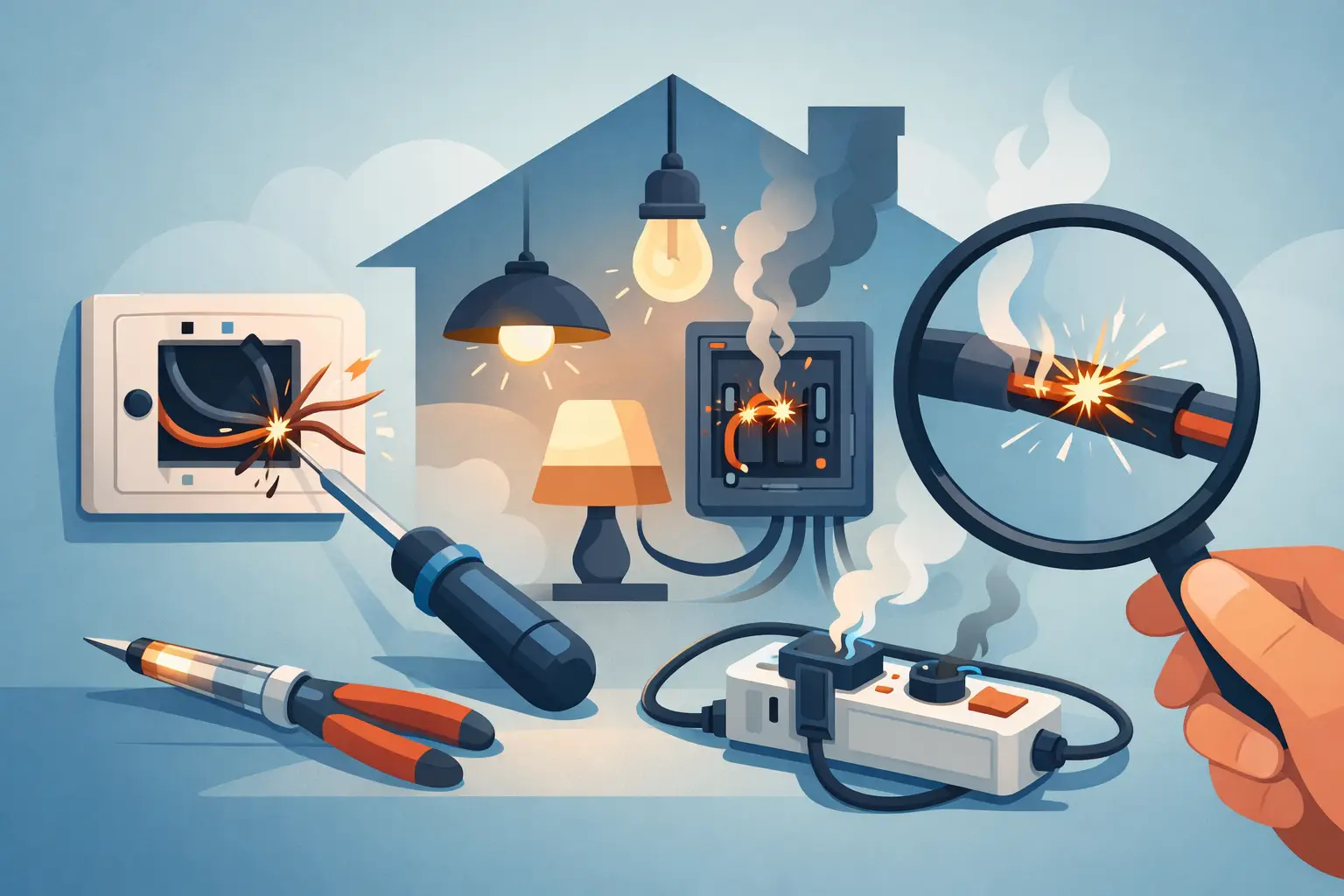
A light that flickers for no clear reason, a socket that feels warm, or a breaker that keeps tripping is easy to brush off when you have a busy property to run. But if you are wondering how to spot faulty wiring, those small warning signs are often the point where a minor issue can still be dealt with safely and cost-effectively.
Faulty wiring does not always announce itself with sparks or complete power loss. In homes, rental properties, offices and light commercial premises, the early signs are usually more subtle. The key is knowing what is normal, what is not, and when to stop investigating and bring in a qualified electrician.
How to spot faulty wiring before it becomes dangerous
The most common signs of faulty wiring tend to show up in everyday use. Lights may dim when another appliance starts up. Sockets may stop working intermittently. You might notice a faint burning smell near a switch or consumer unit, even though nothing appears visibly damaged.
These issues matter because wiring faults create heat. Heat is where electrical deterioration becomes a safety risk. Loose connections, overloaded circuits, ageing cable insulation and poor previous workmanship can all lead to overheating behind walls, above ceilings or inside accessories.
One isolated symptom does not always mean a full rewire is needed. Sometimes the issue is localised to one circuit, one connection or one damaged fitting. Equally, if a property has older wiring or a history of alterations, several minor symptoms together can point to a wider problem that needs proper testing.
Flickering or dimming lights
A single bulb flickering may simply be a failed lamp or loose bulb. But if multiple lights flicker, especially when you use kettles, showers, cookers or other heavy-load equipment, the issue may sit deeper in the circuit.
This can suggest loose connections, voltage drop, overloaded circuits or deteriorating wiring. In older properties across London and Kent, we often see lighting circuits that have been extended over time without enough thought given to the original installation. The result is inconsistent performance that gets worse gradually.
Tripping breakers or blown fuses
A breaker that trips once after a clear overload is one thing. A breaker that trips repeatedly, or without an obvious trigger, needs attention. This is one of the clearest clues when assessing how to spot faulty wiring.
The trip may be doing exactly what it should - protecting the circuit from a fault. The cause could be a damaged cable, a faulty appliance, moisture ingress, or an earth fault somewhere on the circuit. It is not wise to keep resetting the breaker and hoping for the best. If it trips again, there is a reason.
Warm sockets, switches or consumer units
Electrical accessories should not become noticeably hot in normal use. A plug may feel slightly warm when powering a heavy-load appliance, but a socket faceplate, light switch or fuse board that feels hot to the touch is a red flag.
Heat usually points to resistance where electricity is not flowing cleanly. That often means loose terminations, internal damage, overloading or wear. This is especially important in rental properties and commercial spaces, where high usage can mask a developing issue until it becomes urgent.
Buzzing sounds or crackling
Electricity should be quiet. A low hum from certain equipment may be normal, but buzzing, crackling or sizzling from sockets, switches, light fittings or the consumer unit is not.
These noises can indicate arcing or poor connections. That is not something to monitor for a few weeks. Turn off the affected circuit if it is safe to do so and arrange an inspection promptly.
Burning smells or discolouration
A persistent burning smell near electrical points is one of the most serious warning signs. You may also see brown marks, blackening or slight melting around sockets and switches.
At that stage, the fault may already be producing enough heat to damage insulation or surrounding materials. Do not use the fitting. Isolate the circuit if possible and get it checked without delay.
Signs of faulty wiring that people often miss
Some problems are less obvious because they develop slowly. They are easy to put down to an old building, cheap bulbs or temperamental appliances.
One example is intermittent power. If a socket works one day and not the next, or a light starts behaving normally again after flickering for weeks, that does not mean the issue has resolved itself. Loose connections often appear and disappear before failing properly.
Another missed sign is mild electric shocks or tingling when touching metal switches, appliances or fittings. Even a small shock is not something to ignore. It may indicate poor earthing, a fault within an appliance, or a defect in the wiring system.
There is also the age factor. If a property still has very old wiring, outdated accessories, or a consumer unit that has not been upgraded for years, the installation may no longer meet current safety expectations. That does not automatically mean it is unsafe, but it does mean condition and test results matter more than assumptions.
When the problem is the wiring - and when it might not be
Not every electrical issue is caused by faulty fixed wiring. Sometimes the problem is a faulty appliance, a failed light fitting, a worn plug top or moisture affecting an outside accessory.
That is why diagnosis matters. Replacing visible parts without testing the circuit can waste time and money. It can also leave the real fault in place. For landlords, property managers and business owners, this matters from both a safety and compliance point of view. If there is a recurring issue, proper fault-finding is the sensible route.
The trade-off is simple. It may be cheaper upfront to replace a socket and hope that sorts it, but if the underlying cause is damaged cable or overloaded wiring, the callout tends to come back later as a larger repair.
How to check safely without taking risks
There are a few sensible observations you can make yourself. You can note which circuits trip, whether the issue happens at certain times, whether one room is affected, and whether any accessories show visible damage or heat marks.
You can also unplug portable appliances one by one if a breaker keeps tripping, as this may help show whether the fault is appliance-related. But that is where self-checks should stop.
Do not remove socket fronts, open the consumer unit, or start testing live parts yourself. DIY electrical investigation often turns a manageable fault into a dangerous one. Safe diagnosis requires the right test equipment and the experience to interpret the results properly.
How a qualified electrician confirms faulty wiring
A proper inspection goes beyond what can be seen on the surface. An electrician will test the integrity of the circuits, insulation resistance, polarity, earthing and protective devices. They will also look at condition, loading and signs of poor alterations or non-compliant work.
In some cases, the fix is straightforward - perhaps a damaged accessory, a loose connection or a localised cable fault. In others, test results may show broader deterioration, especially in older homes, HMOs, retail units or offices that have been altered over many years.
That is where an EICR can be especially useful. It provides a clear picture of the installation's condition and highlights what is unsafe, what needs improvement and what should be monitored. For landlords and commercial operators, it also supports compliance and record-keeping.
When to call immediately
Some signs should never wait. Call an electrician urgently if you notice burning smells, visible scorching, repeated breaker trips, buzzing at the consumer unit, shocks from fittings, or power loss combined with signs of overheating.
The same applies if a tenant reports sparks, dead sockets with heat damage, or lights failing alongside tripping circuits. Fast response is not just about convenience. It helps prevent further damage, reduces fire risk and protects the people using the property.
For homeowners, landlords and businesses, the safest approach is straightforward. If an electrical problem is new, recurring or getting worse, treat it as a fault until proven otherwise. Knowing how to spot faulty wiring is useful, but acting on the warning signs is what keeps a property safe. If something does not look, sound or smell right, trust that instinct and get it checked properly.