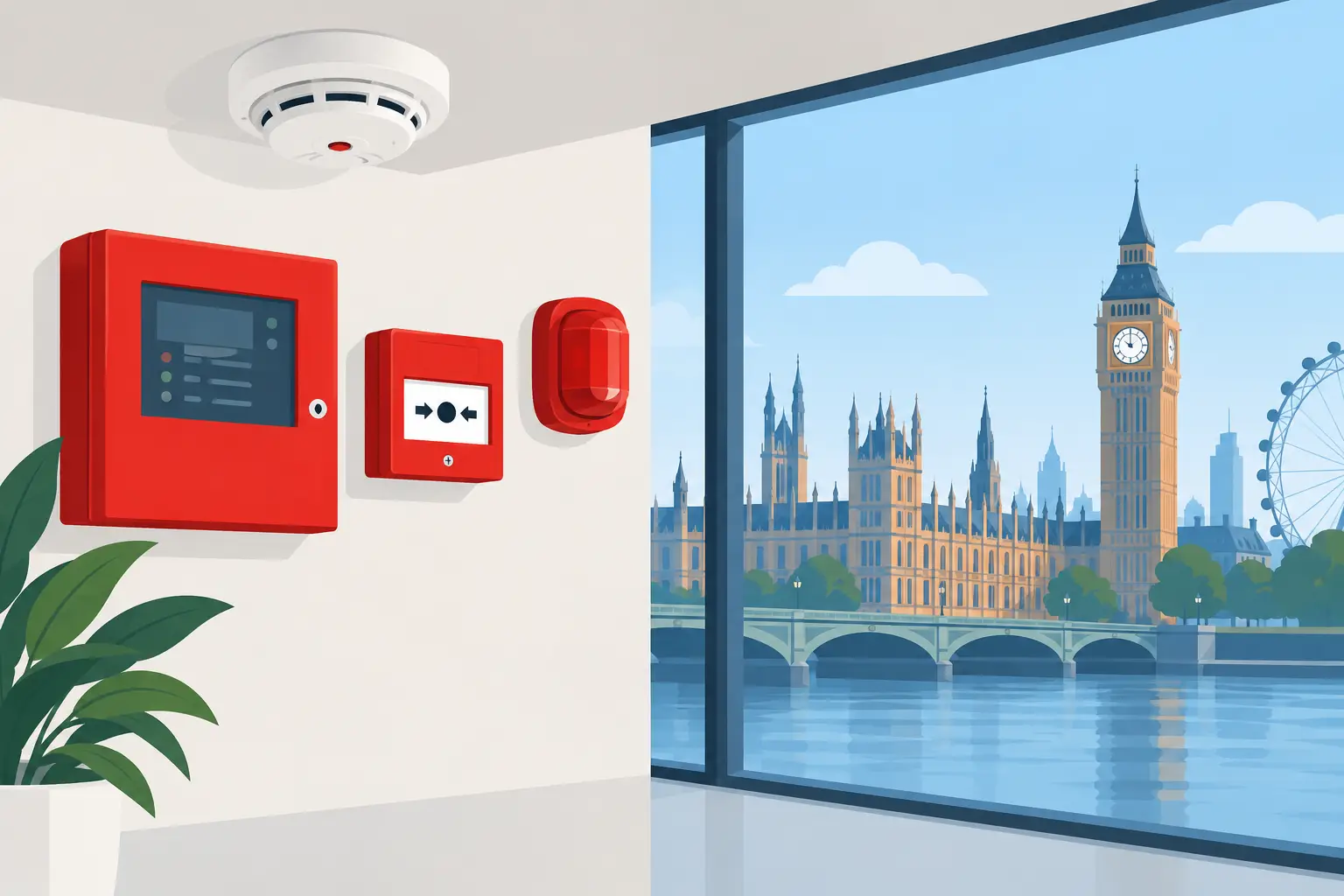
A fire alarm that sounds promptly but cannot be heard in a rear office, top-floor bedroom or noisy workshop has already failed a critical part of its job. The best fire alarm systems are not simply the most expensive or feature-heavy options. They are systems designed around the building, the people using it and the level of risk, then installed, tested and maintained correctly.
For homeowners, landlords and businesses across London and Kent, the right answer can range from interconnected domestic alarms to a fully addressable commercial fire alarm system. Getting the specification right protects people, supports compliance and avoids spending money on equipment that does not suit the property.
What makes a fire alarm system the right choice?
A suitable system detects fire at the earliest appropriate point, gives occupants a clear warning and remains dependable between inspections. It should also be straightforward for the responsible person to test and manage. The right system is based on a fire risk assessment and the building's layout, occupancy, escape routes and day-to-day activity.
A small owner-occupied house has very different needs from an HMO, a restaurant, an office with separate tenants or a light industrial unit. In a larger or more complex property, the fire alarm must work alongside emergency lighting, fire doors, evacuation procedures and other life-safety measures.
Cost matters, but it should not drive the decision alone. A basic system may cost less to install yet create problems if it causes repeated false alarms, does not cover a risk area or is difficult to extend after a refurbishment. Equally, a highly sophisticated panel is not automatically the best choice for a straightforward property. Good design is proportionate design.
The best fire alarm systems by property type
Houses and flats
For most domestic properties, interlinked smoke alarms are the practical starting point. When one alarm detects smoke or heat, every linked alarm sounds, giving occupants the best possible chance of hearing the warning wherever they are in the home.
Mains-powered alarms with a tamper-proof backup battery are often a dependable long-term option, particularly during renovations, rewires and loft conversions where cabling can be installed neatly. Wireless interlinked alarms can be appropriate where running cables would cause unnecessary disruption, although battery condition and signal performance still need to be checked as part of regular maintenance.
Detector selection matters. Smoke alarms are normally suited to circulation spaces such as hallways and landings, while heat alarms are typically better for kitchens, garages and areas where cooking fumes or steam could otherwise trigger nuisance alarms. Carbon monoxide alarms perform a separate role and should be considered where fuel-burning appliances are present. They should not be treated as a replacement for smoke or heat detection.
Rental properties and HMOs
Landlords have additional responsibilities, and higher-risk or multi-occupancy buildings often require a more carefully designed system. The required level of detection can depend on the property type, licensing conditions, fire risk assessment and local authority expectations.
An HMO may need detection in communal escape routes, individual rooms or both, with suitable audible warning throughout the building. In some properties, a Grade A system is appropriate: a conventional or addressable fire alarm panel with call points, sounders and automatic detectors. In others, an interlinked domestic-style system may be suitable. This is not a decision to make from a generic online checklist.
False alarms are a common operational issue in shared accommodation. Selecting heat detection for kitchens, placing detectors correctly and using suitable equipment can reduce disruption without compromising protection. A system also needs clear arrangements for weekly testing, recording checks, dealing with faults and ensuring tenants know what to do when it activates.
Offices, shops and commercial premises
Commercial properties are commonly designed to BS 5839-1, with the category of protection determined through the fire risk assessment. Categories such as L1, L2, L3, L4 and L5 describe differing levels and locations of automatic life-protection detection. P categories relate to property protection, helping limit damage and business interruption.
For example, an L3 system generally focuses on escape routes and rooms opening onto them, while L1 provides more extensive automatic detection throughout the building. Neither is universally “best”. A premises with sleeping accommodation, multiple floors, public access or higher fire risk will usually need more extensive coverage than a small single-storey office.
Manual call points allow a person who discovers a fire to raise the alarm immediately. Sounders and visual alarm devices must be sufficient for the building and its occupants, including areas with high background noise or people who may not hear an audible alarm. Emergency lighting is also essential where people need to find their way out safely if normal lighting fails.
Warehouses and light industrial units
Large open spaces, high ceilings, machinery, dust and changing layouts make industrial environments particularly dependent on proper design. Standard point smoke detectors may not be appropriate in every area. Beam detection, heat detection or other specialist solutions can sometimes be considered, depending on the risk and building configuration.
The alarm system should reflect how the site operates. Can a forklift driver hear the warning? Are contractors, visitors and lone workers familiar with the evacuation route? Is the panel accessible to the person responsible for checking it? These practical details are as important as the hardware specification.
Conventional or addressable fire alarms?
This is one of the key choices for commercial properties. A conventional system divides a building into detection zones. When the panel reports an alarm or fault, it identifies the zone, and someone must investigate the devices within it. It can be a sensible, cost-effective solution for smaller or simpler premises.
An addressable system identifies the individual detector, call point or interface that has operated. This makes fault finding faster and can be particularly valuable in larger buildings, multi-floor premises and sites where downtime is costly. Addressable systems are also easier to manage when a building is likely to expand or change use.
The trade-off is initial cost. Addressable equipment and commissioning can cost more, so it is worth considering the full life-cycle value rather than the installation price alone. For a small shop, conventional may be entirely suitable. For a managed block, busy office or complex commercial site, the time saved locating faults and alarms can justify the investment.
Design and installation are as important as the equipment
Even quality devices cannot compensate for poor positioning, inadequate sound levels or unsuitable cable routes. Detectors need to be located with the room use, ceiling height, airflow and potential sources of false alarms in mind. Sounders must be audible where people work, sleep or may be temporarily isolated.
A professional installation should include a clear scope of works, suitable equipment selection, proper containment and cabling where required, labelling, commissioning and handover information. The system should be tested at completion, with the responsible person shown how to operate the panel, silence and reset alarms where authorised, recognise faults and carry out routine checks.
If the building is being refurbished, discuss the fire alarm early. Changes to partitions, ceilings, office layouts or the use of a room can affect detector coverage and alarm audibility. Planning the work alongside rewiring, data cabling, emergency lighting and access control is usually cleaner and more cost-effective than making changes after finishes are complete.
Testing and maintenance keep protection reliable
A fire alarm is not a fit-and-forget installation. Dust, accidental damage, depleted batteries, building alterations and neglected faults can all reduce reliability. Regular testing confirms that the warning can be raised, while periodic inspection and servicing checks the wider condition of the system.
In commercial and managed properties, routine testing should be recorded in the fire alarm logbook. The frequency and scope of inspection should reflect the relevant standard, the system design and the fire risk assessment. The responsible person should also act on faults promptly rather than repeatedly silencing or isolating a troublesome device.
For domestic alarms, test buttons should be used regularly and batteries replaced where the model requires it. If an alarm chirps, shows a fault indication or reaches the end of its stated service life, replace it promptly. Disabling an alarm because it has activated during cooking leaves the property less safe and may indicate the detector type or location needs review.
Questions to ask before choosing a system
Before approving a quotation, ask what standard and category the proposed system is designed to meet, why that level of coverage is appropriate, and how future changes can be accommodated. Confirm whether the price includes design, installation, commissioning, certification, user instruction and ongoing maintenance.
It is also sensible to ask how false alarms will be minimised, whether emergency lighting needs attention at the same time, and who will be responsible for weekly checks and record keeping. Clear answers at this stage prevent uncertainty after installation.
For landlord, HMO and commercial projects, requirements can vary according to the fire risk assessment, insurer, licensing conditions and the building's intended use. A site assessment is therefore far more valuable than selecting a package based only on floor area.
PG Electrical provides practical fire alarm assessment, installation, testing and support for homes, rental properties and commercial premises across Greater London and Kent. The focus should always be a system that people can rely on when it matters, with clear advice and no unnecessary complication.
The best next step is to assess the property as it is now, not as it was when the last alarm was fitted. A short review of occupancy, escape routes, current devices and planned changes can reveal whether a simple upgrade is sufficient or a properly designed system is needed.