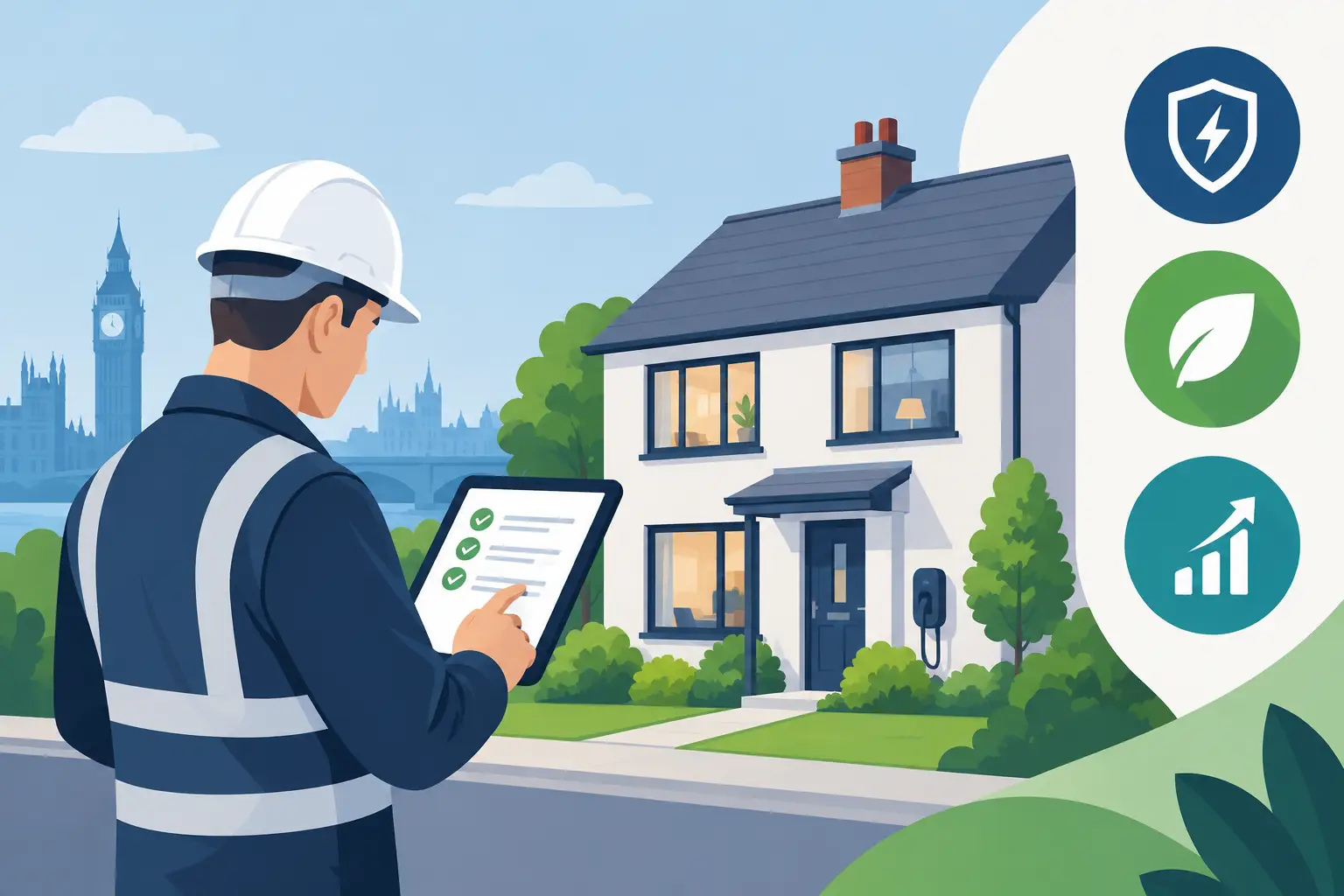
A satisfactory EICR is no longer the finish line for a property owner. It is one part of a wider safety record that increasingly includes emergency lighting, fire alarm interfaces, EV charging capacity, clear certification and a plan for maintaining the installation. Electrical compliance trends 2026 point towards more joined-up electrical safety management, particularly in rented, commercial and multi-occupancy properties.
For homeowners, landlords and business owners across London and Kent, the practical message is straightforward: do not wait for a failed inspection, a tenant complaint or a tripped supply to reveal a problem. A well-planned inspection and upgrade programme protects people, reduces disruption and gives you the evidence needed to show that electrical safety has been properly managed.
Electrical compliance trends 2026: greater scrutiny, better records
The direction of travel is towards accountability. Duty holders are expected to understand the condition of the electrical systems they are responsible for, act on defects promptly and retain clear evidence of what has been checked, repaired and installed.
For landlords in England, electrical safety duties in private rented homes remain clear: the installation must be inspected and tested at the required interval, normally at least every five years, with a copy of the report provided to tenants and remedial work completed when required. An EICR may specify a shorter interval depending on the installation’s condition and use. Landlords should follow the report rather than assume five years is always appropriate.
Commercial premises work differently. There is no single testing interval that suits every office, shop, warehouse or communal area. The right frequency depends on the type of premises, how the installation is used, its age, the working environment and previous inspection findings. A busy kitchen, workshop or HMO communal area may need more attention than a low-use office suite.
In 2026, organised records will matter as much as arranging the inspection itself. Keep EICRs, minor works certificates, electrical installation certificates, test schedules, emergency lighting records and evidence of remedial work together. This is particularly valuable when a property changes hands, a managing agent takes over or an insurer asks for information after an incident.
EICRs are becoming part of planned maintenance
An EICR is a detailed assessment of the fixed wiring and associated equipment. It is not a quick visual check, and it should not be treated as a certificate to obtain at the lowest possible price. The inspection can identify damaged accessories, insufficient earthing, overloaded circuits, unsuitable protective devices, signs of overheating and older equipment that no longer provides an acceptable level of safety.
The more useful approach is to use the report to plan work in priority order. Observations coded as C1 require immediate attention because danger is present. C2 observations identify potentially dangerous conditions that need urgent remedial action. FI means further investigation is required before safety can be confirmed. C3 observations are improvements recommended by the electrician, but do not by themselves make a report unsatisfactory.
This distinction matters. Not every older installation needs a full rewire, and a consumer unit replacement is not automatically the correct response to every unsatisfactory report. Sometimes targeted repairs, improved earthing or the replacement of damaged circuits will address the identified risks. In other cases, repeated defects, limited circuit capacity and ageing cabling make a wider upgrade the more sensible long-term investment.
For property managers, combining EICR remedials with planned refurbishment periods can reduce access issues and tenant disruption. For homeowners, an EICR before a major renovation can prevent new kitchens, bathrooms or smart systems being added to wiring that is already at its limit.
Electrification is putting capacity under pressure
EV chargers, heat pumps, induction hobs, air conditioning and electrically powered workplace equipment are changing how properties use electricity. The compliance issue is not simply whether a new device can be connected. It is whether the existing supply, consumer unit, earthing arrangement and circuit design can safely support the additional load.
EV charging is a clear example. A charger should be selected and installed for the property, not treated as a standard add-on. Load management may be needed where several chargers share a supply or where a building already has significant demand. In flats, offices and mixed-use buildings, early consideration of distribution routes, metering, landlord permissions and future expansion can avoid expensive alterations later.
A compliant installation should also be designed around the current edition of the IET Wiring Regulations, BS 7671, and the manufacturer’s instructions. An experienced electrician will assess the installation before recommending equipment, rather than promising a fixed solution without checking the site.
Fire safety and emergency lighting require active management
Electrical compliance increasingly overlaps with wider life-safety responsibilities. This is most evident in HMOs, blocks of flats, offices, retail units and other buildings with shared or public areas.
Emergency lighting must work when normal lighting fails, but its value depends on regular testing and clear records. A system can look fine during the day yet fail to provide the required duration during a power loss. Functional checks and full-duration tests should be planned around the building’s risk assessment and the relevant standard, with faults rectified without delay.
Fire alarm systems need the same disciplined approach. Alterations to layouts, ceiling works, new partitions and changes in occupancy can all affect detector coverage, audibility and system suitability. Electrical contractors, fire specialists and responsible persons may all have a role, so communication is essential. A certificate alone will not make a poorly maintained or unsuitable system safe.
Smarter buildings need sensible electrical design
Smart lighting, occupancy sensors, app-controlled heating and remote monitoring can help reduce energy use and make buildings easier to manage. They also introduce additional points of failure. Poorly planned systems can leave occupiers unable to operate basic lighting, create compatibility problems or complicate fault finding when products are changed.
The trend for 2026 is not smart technology for its own sake. It is practical control systems that suit how a property is used. In an office, that may mean occupancy controls in meeting rooms and circulation spaces. In a rental property, it may mean durable, straightforward controls that tenants can use without an app. In a home, it could be carefully positioned lighting controls and upgraded circuits during a renovation.
Any smart upgrade should begin with the electrical basics: suitable circuit protection, accessible isolation, correctly rated accessories and sufficient capacity. If data cabling is part of the project, plan it alongside the electrical work rather than adding it after finishes have been completed.
What property owners should do now
The strongest response to electrical compliance trends 2026 is a simple, documented maintenance plan. Start by checking when each property was last inspected and whether all remedial observations have been closed out. Then consider upcoming changes that could affect safety, including tenancy turnover, refurbishment, new high-load equipment or changes to the building’s use.
A practical review should cover four areas:
- the condition and testing date of fixed wiring, consumer units and distribution boards;
- certificates and records for completed electrical work and remedial repairs;
- emergency lighting, fire alarm and communal-area safety arrangements where applicable; and
- future electrical demand from EV charging, heating, ventilation or expansion plans.
It is worth scheduling work before deadlines become urgent. Planned inspections give time to obtain a detailed quotation, arrange access and complete repairs properly. Emergency callouts remain essential when faults occur, but they are rarely the most cost-effective way to manage predictable maintenance.
For older properties, ask for clear advice on options. The right answer may be a targeted repair, a consumer unit upgrade, partial rewiring or a full rewire. The decision should be based on inspection findings, future use and the level of disruption you can reasonably accommodate, not on a one-size-fits-all recommendation.
A safe property is easier to let, operate, insure and maintain. Put the next inspection, upgrade or remedial project in the diary now, while you still have the choice to plan it around your property rather than an unexpected fault.