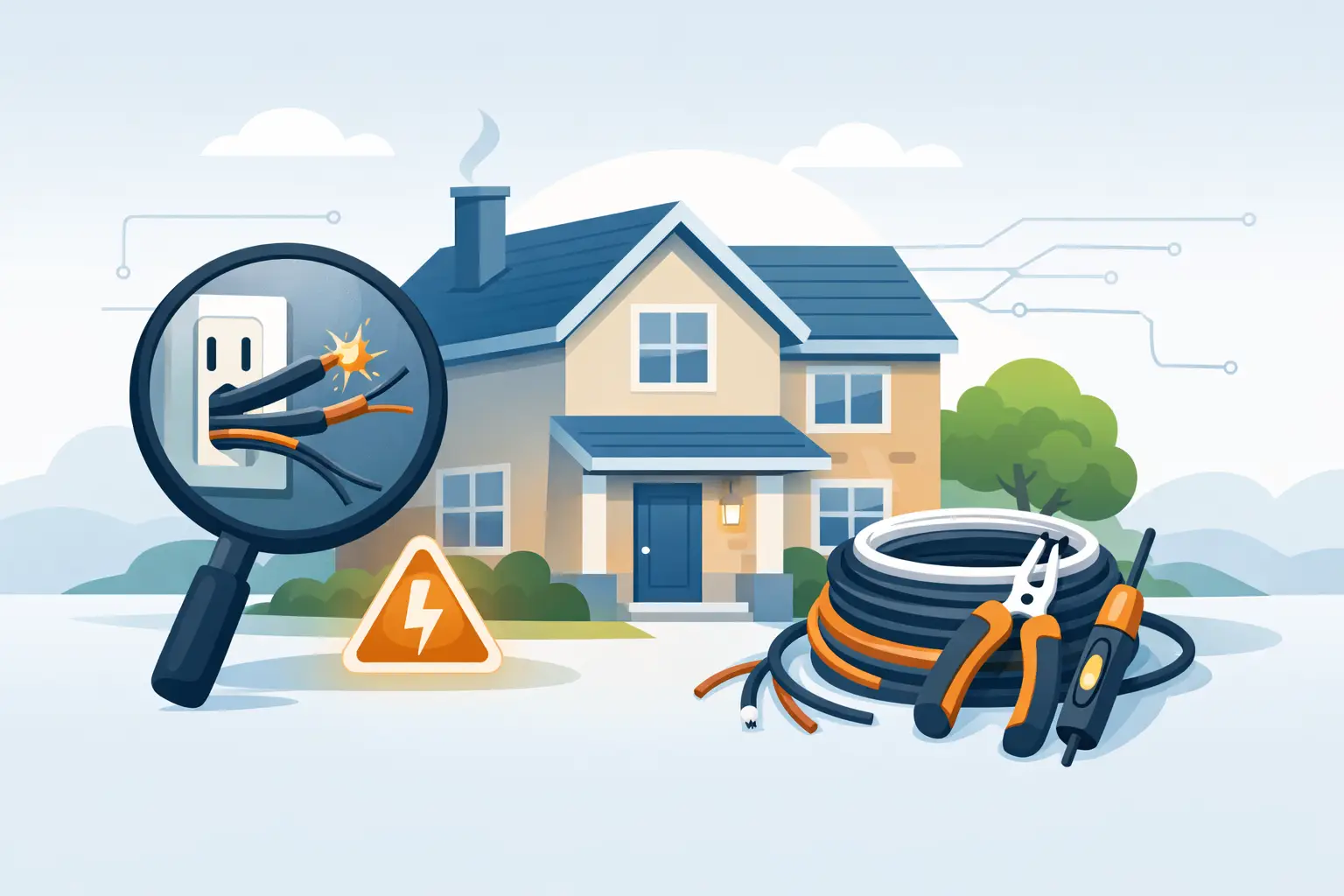
If you are asking, does my house need rewiring, there is usually a reason. Maybe sockets are old and cracked, lights flicker when appliances are switched on, or you have just bought an older property in London or Kent and want to know what you are dealing with before renovation starts. In most cases, the question is less about the age of the house itself and more about the condition, safety and capacity of the electrical installation inside it.
Rewiring is not something property owners want to do unless it is necessary. It creates disruption, involves access to walls and ceilings, and needs careful planning. But leaving unsafe or outdated wiring in place can be the more expensive decision if it leads to faults, failed inspections or avoidable fire risk.
Does my house need rewiring or just repairs?
That depends on what is actually wrong with the installation. A single damaged socket, a faulty light fitting or an ageing consumer unit does not automatically mean the whole property needs to be rewired. Some homes only need localised repairs, targeted upgrades or replacement of specific circuits.
A full rewire is more likely when the wiring is old throughout the property, the installation has been altered badly over time, or the system can no longer support modern demand safely. Homes that have had decades of piecemeal electrical work often reach a point where repairing one issue at a time stops making sense.
The clearest way to separate minor issues from larger ones is with proper inspection and testing. An Electrical Installation Condition Report, or EICR, gives a much clearer picture than guesswork. It helps identify whether the installation is broadly serviceable, whether there are dangerous defects, and whether improvement is strongly recommended.
Common signs your house may need rewiring
Some warning signs are obvious. Others are easy to dismiss until they become more serious.
Frequent tripping, especially when normal household appliances are in use, can point to overloaded circuits, poor connections or deteriorated wiring. Flickering lights may be caused by something simple, but if the issue appears in more than one room or keeps returning, it needs investigation.
Old-style fittings are another clue. If your property still has round pin sockets, fabric-covered wiring, lead-sheathed cables or a very dated fuse board with no modern protection, the installation is likely behind current standards. That does not always mean immediate danger, but it does mean the system should be checked carefully.
Discoloured sockets, scorch marks, buzzing at switches, warm faceplates or a persistent burning smell should never be ignored. These are signs of overheating or poor connections and they can move quickly from inconvenience to hazard.
You may also need to look beyond visible defects. If you rely heavily on extension leads because there are not enough sockets, or if kitchens, loft conversions and garden rooms have been added without a clear electrical upgrade plan, the original wiring may not be suitable for the way the property is now used.
Age matters, but condition matters more
People often ask for a hard rule based on age alone. The reality is more practical than that. A well-installed system that has been properly maintained may remain serviceable for many years. A poorly altered installation can become unsafe much sooner.
As a rough guide, properties with wiring that is 25 to 30 years old or more are worth checking closely, especially if there is no recent record of inspection or upgrade. Many older homes across Greater London and Kent have been extended, split into flats, refurbished or converted for rental use. When that happens, electrical demand usually increases, but the original infrastructure does not always keep up.
That is why age should be treated as a prompt for inspection, not a diagnosis on its own.
What an EICR can tell you
If you are unsure where things stand, an EICR is usually the sensible starting point. It gives you an evidence-based assessment of the installation rather than relying on visual clues alone.
During an inspection, an electrician checks the condition of circuits, protection devices, earthing, bonding and general safety. The report will flag observations by severity. Some issues require urgent action, some need improvement, and some are simply noted for awareness.
For homeowners, that means you can make decisions based on facts. For landlords and property managers, it is also part of staying compliant and protecting tenants. If a report identifies serious defects or widespread deterioration, rewiring may be recommended either in full or in part.
Full rewire or partial rewire?
Not every property needs a complete strip-out and replacement. In some cases, a partial rewire is the right answer, particularly where one area has been extended or one section of the installation is notably older than the rest.
A full rewire is usually the better option when the wiring is consistently outdated across the property, when there have been multiple poor alterations, or when major renovation is already planned. If walls are being opened, ceilings are coming down and rooms are being redesigned, that is often the most efficient time to bring the electrical system up to standard.
A partial rewire can cost less up front and create less disruption, but it needs to be planned properly. Mixing old and new systems is not always straightforward, and sometimes a cheaper partial fix only delays a full upgrade that will still be needed later.
Older homes, landlords and renovation projects
This question comes up often with period houses, rental properties and homes being modernised.
In older houses, hidden wiring can tell a very different story from what the décor suggests. A freshly painted room can still contain ageing cables, inadequate earthing or circuits that have been extended several times over the years. Cosmetic improvements do not equal electrical safety.
For landlords, the issue is even more practical. If the installation cannot achieve a satisfactory EICR, repairs or rewiring may be necessary to keep the property compliant and safe for tenants. In HMOs and multi-unit buildings, the need for dependable, properly protected circuits is even greater because of the higher usage and more complex layouts.
During renovation, rewiring is often the smarter long-term move. It allows you to add sockets where people actually need them, plan lighting properly, accommodate appliances, prepare for EV charging or home office demand, and avoid chasing walls again a year later.
What happens during a house rewire?
One reason people delay the work is uncertainty about what it involves. A rewire usually includes replacing old cables, renewing sockets and switches, updating lighting circuits and installing a modern consumer unit if required. Testing and certification are part of the process as well.
There will be disruption. Floorboards may need lifting, access routes opened and some making good arranged after the electrical work is complete. In occupied homes, rewiring can sometimes be phased room by room, but on larger or more extensive jobs it may be easier to carry out the work before full occupation or alongside a wider refurbishment.
A good contractor will explain the scope clearly, identify what can be retained if anything, and set out the programme, pricing and practical steps before work starts. That level of planning matters just as much as the installation itself.
When not to wait
There are times when you should not put the decision off. If you have signs of overheating, recurring faults, exposed wiring, electric shocks from fittings, or a failed inspection showing potentially dangerous defects, the priority is safety. The same applies if you are buying a property with no reliable information on the electrical installation and obvious signs of age.
This is where a responsive, safety-led electrician makes the difference. PG Electrical regularly supports homeowners, landlords and property managers with inspections, fault finding, consumer unit upgrades and rewiring projects, helping clients understand whether they need a full replacement or a more targeted solution.
The right next step is not to assume the worst and it is not to ignore the warning signs. If your installation is old, unreliable or struggling to meet modern use, get it properly assessed. A clear inspection now can prevent emergency repairs, failed compliance checks and far more disruptive work later. When the wiring is safe, tested and fit for purpose, the whole property works better around it.