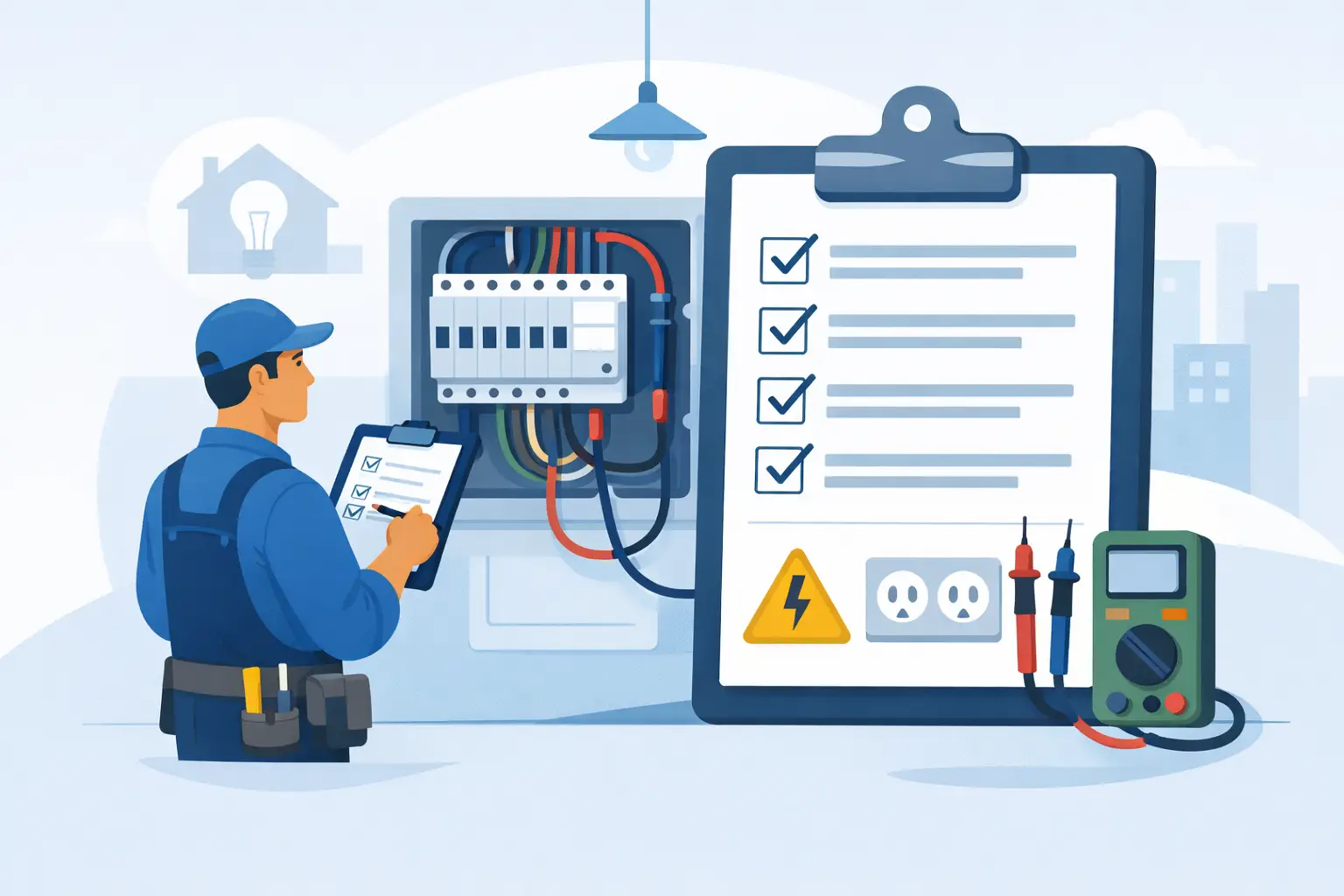
If you have been asked to arrange an electrical inspection for a rental property, office or home, one of the first questions is usually simple: what is included in EICR checks? It is a fair question, because an Electrical Installation Condition Report is not just a quick glance at a fuse board. It is a structured assessment of the fixed wiring and electrical installation, designed to identify danger, deterioration and non-compliance.
For landlords, property managers and business owners, that matters for more than paperwork. A proper EICR helps you understand whether an installation is safe to keep using, whether remedial work is needed, and whether there are issues that could become expensive or disruptive if left alone.
What is included in an EICR?
An EICR covers the condition of the fixed electrical installation within a property. That generally includes the consumer unit, circuit breakers, wiring, sockets, light fittings, switches, earthing and bonding, and the overall suitability of the installation for continued use.
It does not usually cover portable appliances such as kettles, computers or extension leads. Those fall under PAT testing rather than an EICR. It also does not normally assess the condition of appliances supplied by tenants or staff unless there is a separate instruction to do so.
The purpose of the inspection is to find signs of wear, damage, poor workmanship, overloading, inadequate protection, or anything else that could create risk. In practical terms, the electrician is looking for defects that could lead to electric shock, overheating or fire, as well as checking whether the installation meets the required safety standards closely enough for the property type and age.
The main parts inspected during an EICR
A proper EICR starts with a visual inspection. This helps identify obvious issues before any testing begins. The electrician will look at the consumer unit, check for visible damage, inspect sockets and switches, review accessible wiring, and check whether the installation shows signs of overheating, deterioration or unsafe alterations.
Earthing and bonding are a key part of this stage. These are often overlooked by property owners because they are not the most visible parts of the system, but they are essential for safety. If protective bonding to services such as gas and water is missing or inadequate, that can lead to serious risk in a fault condition.
The report also includes live and dead testing of circuits. Dead testing is carried out with the supply isolated and is used to confirm the integrity of conductors, continuity, insulation resistance and polarity. Live testing follows and helps confirm that the system is operating correctly, including fault loop impedance and the performance of protective devices.
Residual Current Devices, or RCDs, are checked as part of the process where fitted. These devices are there to disconnect the supply quickly if a fault is detected. If an RCD fails to trip within the required parameters, or if one should be present but is not, that will be noted in the report.
What the electrician is actually checking for
An EICR is not simply a box-ticking exercise. The inspection is focused on whether the installation is safe for continued service. That means the electrician is assessing both current condition and practical risk.
Common findings include ageing wiring, damaged accessories, circuits with poor insulation resistance, overloaded boards, incorrect breaker sizes, missing circuit identification, inadequate bonding and signs of amateur alterations. In older properties across London and Kent, it is also common to find outdated consumer units, lack of RCD protection on certain circuits, or wiring that has been extended over time without proper certification.
That does not automatically mean a full rewire is needed. Sometimes the remedial work is limited to a consumer unit upgrade, replacing damaged accessories, correcting bonding or sorting out a specific fault on one circuit. In other cases, especially in heavily altered rental properties or older commercial units, broader works may be the safer and more cost-effective route.
What is included in EICR reports and observations?
The written report is one of the most important parts of the process. It records the installation details, the extent of the inspection, the test results for each circuit, and any observations made during the assessment.
Each issue found is given a classification code. A C1 means danger is present and immediate action is required. A C2 means potentially dangerous and urgent remedial work is needed. A C3 means improvement is recommended, but it is not immediately unsafe. There may also be an FI code, which means further investigation is required because something could not be fully assessed or a concern needs more diagnosis.
This coding matters because it determines the overall outcome of the report. If the EICR includes a C1, C2 or FI, the result is typically unsatisfactory. If only C3 observations are recorded, the result can still be satisfactory, although improvements may still be strongly advisable.
For landlords in particular, that distinction is important. A satisfactory report gives confidence that the fixed installation is suitable for continued use. An unsatisfactory report means follow-up action is needed, usually within a defined timeframe.
What is not included in an EICR
It helps to know where the boundaries are. An EICR deals with fixed electrical installations, not every electrical item in the building. Portable appliances, loose leads and plug-in equipment are outside its normal scope. Fire alarm systems, emergency lighting and data cabling may also require their own dedicated inspection and testing regime depending on the property.
There are also practical access limits. If areas are inaccessible, heavily obstructed or sealed off, the electrician can only inspect what is reasonably available at the time. That is why clear access to the consumer unit, sockets, risers and distribution equipment makes a real difference on the day.
In some buildings, especially commercial premises or multi-let properties, the agreed scope may need to be clarified in advance. For example, are communal areas included, are outbuildings part of the report, and are landlord supplies separate from tenant circuits? Getting this right avoids confusion later.
How long the inspection takes
The time needed depends on the size, age and complexity of the installation. A one-bedroom flat is clearly different from a large house, office floor or light industrial unit. The number of circuits, condition of the wiring, ease of access and whether the property is occupied all affect how long the work takes.
As a general rule, a straightforward domestic EICR may take a few hours. Larger homes, HMOs and commercial properties often take longer, especially if there are multiple boards, outbuildings or previous alterations to review. A thorough inspection should not feel rushed. Good testing takes time, and so does recording the results properly.
Why EICRs often reveal issues in rental and commercial properties
Rental and commercial sites tend to experience more wear, more changes in occupancy and more piecemeal electrical alterations over time. New sockets get added, layouts change, kitchens are upgraded, office areas are reconfigured. Not all of that work is always documented as well as it should be.
That is why EICRs are particularly valuable in these settings. They bring the installation back under proper review and identify whether the system still matches the demands being placed on it. A circuit that was adequate years ago may no longer be appropriate if the use of the space has changed.
For landlords, the report also supports legal compliance and tenant safety. For businesses, it reduces the risk of disruption, insurance complications and avoidable faults.
What happens after the EICR
Once the inspection is complete, you receive the report with the outcome and any coded observations. If remedial work is required, the next sensible step is to get those items priced and scheduled promptly. In many cases, the most efficient approach is to have the same contractor who carried out the EICR complete the remedial works, because they already know the installation and the issues found.
After the remedial work is finished, additional certification or written confirmation may be needed to show the defects have been resolved. That is especially relevant for landlords and property managers who need a clear compliance record.
A good contractor will explain the findings in plain English, not just send over test figures and codes. That matters because the point of the report is not to overwhelm you with technical detail. It is to give you a clear view of safety, risk and what needs doing next.
If you are arranging an inspection, the best approach is to treat it as a practical safety check rather than a formality. A well-carried-out EICR tells you far more than whether a certificate can be issued - it gives you a reliable picture of the condition of the installation and the confidence to act on any problems before they become urgent.