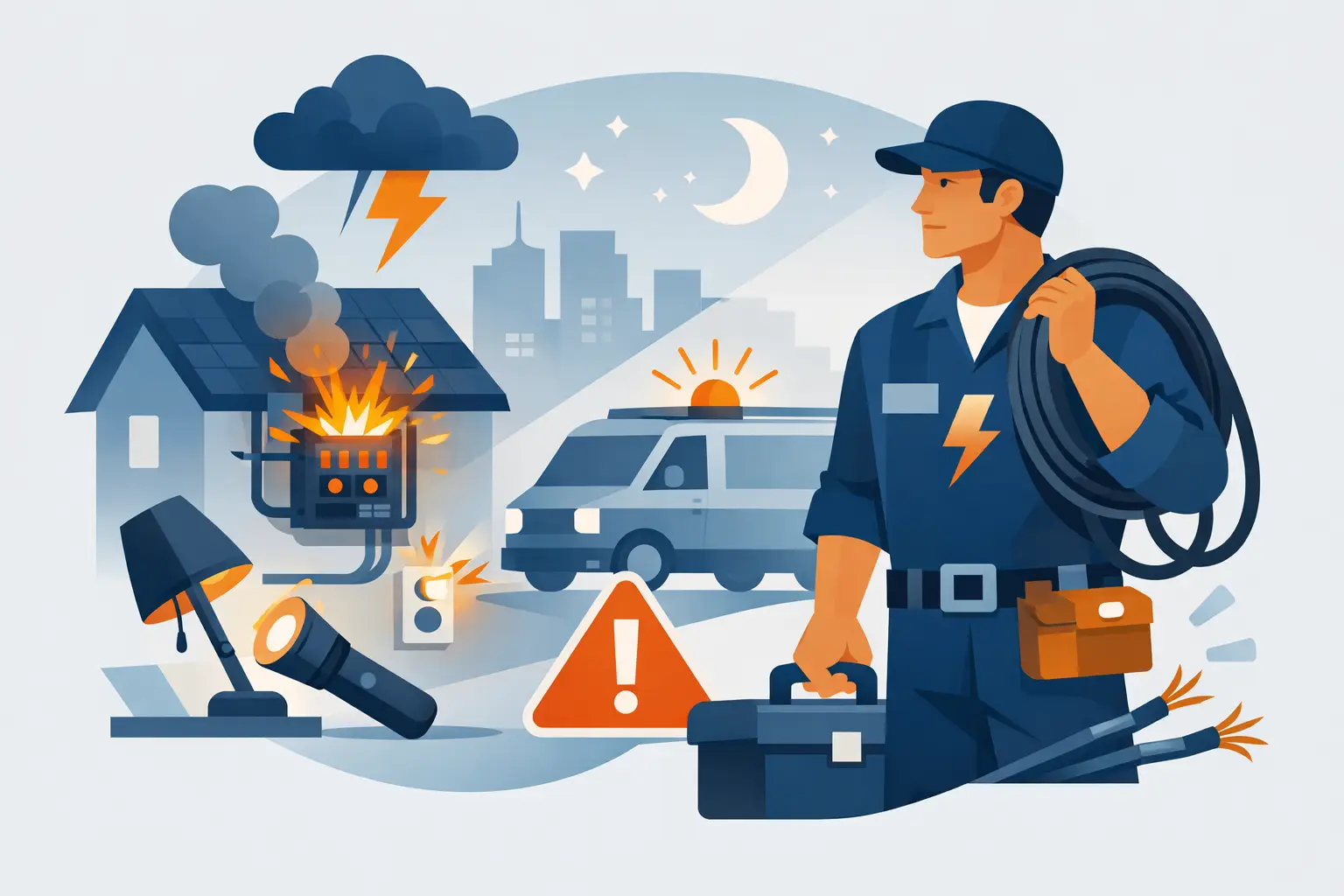
A burning smell near the consumer unit at 10pm is not a job for the morning. Neither is a socket that starts crackling, a circuit that will not stay on, or a power loss that affects only your property while critical equipment is running. In those moments, an emergency electrician is not a convenience. It is the right response to a potential safety risk.
Electrical faults rarely arrive at a convenient time, and they do not all look dramatic. Some are obvious, such as sparks, smoke, or partial power failure. Others build quietly through repeated tripping, flickering lights, overheating fittings, or water reaching electrical points after a leak. Knowing when to act quickly can reduce damage, protect occupants, and prevent a smaller fault turning into a serious incident.
What counts as an electrical emergency?
Not every fault needs a middle-of-the-night callout, but some situations should never be left to chance. If there is any sign of heat damage, burning, exposed live parts, or loss of power to essential systems, the issue needs urgent assessment. The same applies if water has entered electrics, if a consumer unit is making unusual noises, or if a business cannot safely operate because key circuits have failed.
For homeowners, that might mean a dangerous socket, a failed cooker circuit, or power loss affecting alarms, refrigeration, heating controls, or home working equipment. For landlords and property managers, urgency often centres on tenant safety, legal responsibilities, and the need to restore safe use of the property quickly. In commercial settings, an emergency can involve lighting failures, distribution board faults, failed fire alarm supplies, or electrical issues that stop trading or create risk for staff and visitors.
The key test is simple. If the fault presents a safety hazard, interrupts essential operations, or could worsen if left unattended, it is time to call.
Signs you need an emergency electrician now
Some warning signs are clear enough that there is little room for debate. A burning smell, visible charring, smoke, buzzing from the consumer unit, or sparks from a switch or socket all need immediate professional attention. These symptoms can point to overloaded circuits, loose connections, damaged accessories, or developing faults inside the installation.
Repeated tripping also deserves more than a reset-and-forget approach. An occasional trip can happen for a specific reason, especially after a faulty appliance is connected. But if an RCD or breaker keeps tripping, there is usually an underlying fault that needs proper testing. Continuing to reset it without investigation can make the situation worse.
Loss of power should also be looked at carefully. If the whole street is out, the issue may sit with the wider supply network. If only part of your property has lost power, or only your building is affected, the problem is more likely to be internal. That is especially urgent where security systems, emergency lighting, server equipment, refrigeration, or communal services are involved.
Then there is water. A leak through a ceiling light, flooding in a plant room, or rain ingress near external electrical equipment can create immediate danger. Electricity and moisture are a high-risk combination, and the safest next step is usually isolation followed by an urgent inspection.
What to do before the electrician arrives
The first priority is safety, not fault-finding. If it is safe to do so, switch off the affected circuit or isolate the main supply at the consumer unit. Do not touch damaged fittings, exposed wires, or wet electrical equipment. Keep others away from the area, particularly children, tenants, staff, or visitors who may not realise there is a risk.
If a single appliance appears to have caused the problem, unplug it only if the socket and plug are cool, dry, and undamaged. If there is any sign of heat, burning, or melting, leave it alone. If you suspect water ingress, avoid the area until the supply has been isolated and professionally checked.
It also helps to note what happened just before the fault. Did the power trip when the kettle was switched on? Did the issue start after a leak, recent building work, or new equipment installation? That context can help an electrician diagnose the problem faster when they arrive.
Why emergency electrical work needs proper diagnosis
Urgent response is important, but speed on its own is not enough. A good emergency electrician does not just restore power and leave. The real value is in identifying the cause, making the installation safe, and advising on whether a temporary repair is enough or whether further remedial work is needed.
That distinction matters. A circuit may be made safe overnight, but a fuller repair could still be required in daylight hours, especially if there is hidden cable damage, ageing accessories, overloaded boards, or faults affecting more than one area of the system. Honest advice is important here. Some issues can be resolved there and then. Others need a phased approach to keep the property safe and operational while a permanent solution is arranged.
For landlords and business owners, that practical judgement is particularly important. Restoring supply quickly helps, but compliance, documentation, and long-term reliability matter just as much. A rushed fix that leaves unresolved faults can create repeat callouts, tenant complaints, and avoidable risk.
Emergency electrician support for homes, landlords and businesses
The nature of an emergency changes from one property to another. In a family home, the priority is usually occupant safety and getting essential circuits back online. In a rental property, there is the added need to respond promptly, communicate clearly with tenants, and protect the landlord's legal position if the installation is unsafe.
For property managers, speed and coordination matter. Faults may affect communal lighting, door entry systems, smoke control interfaces, or multiple units at once. A contractor needs to assess the issue, isolate risk, and explain clearly what has failed and what happens next.
Commercial and light industrial sites bring another layer. Power faults can interrupt trading, affect security, stop equipment, or leave staff working in unsafe conditions. In those environments, emergency electrical support often needs to balance immediate restoration with a wider view of testing, load demands, and future resilience.
This is where using one contractor for both emergency response and planned remedial work makes practical sense. It shortens the handover, improves accountability, and gives you a clearer route from urgent fault attendance to a proper, compliant repair.
Choosing the right emergency electrician
When you are dealing with an urgent fault, reassurance comes from clear standards. You want prompt attendance, transparent pricing, professional fault-finding, and someone who treats the situation with the seriousness it deserves. You also want plain English. In an emergency, customers do not need jargon. They need to know what is wrong, whether it is safe, and what the next step will cost and involve.
It is also worth looking at capability, not just availability. An electrician who can handle domestic faults but also understands commercial boards, landlord obligations, testing requirements, emergency lighting, and wider remedial work is often better placed to solve the issue properly. That broader experience becomes valuable when an urgent fault turns out to be part of a bigger problem.
At PG Electrical, that is exactly how emergency callouts are approached - fast response, safe isolation where needed, accurate diagnosis, and a practical path to full repair.
The cost question - and why cheap can become expensive
Customers naturally ask what an emergency visit will cost. The honest answer is that it depends on the time of day, the nature of the fault, access, parts required, and whether the issue can be fixed immediately or needs follow-up work. Any trustworthy contractor should explain charges clearly before work begins wherever possible.
The bigger point is value. A very cheap callout can become expensive if the fault is misdiagnosed, temporarily masked, or left without proper testing. Electrical systems are interconnected. What looks like a failed socket could trace back to a damaged ring circuit, a loose termination, water ingress, or an overloaded board. Paying for clear diagnosis and competent repair is usually the more cost-effective choice.
Why acting early matters
Electrical faults have a habit of giving warning signs before they become dangerous, but those signs are often ignored because the system still mostly works. A breaker that trips once a week, a light fitting that gets unusually hot, or a socket that discolours over time may not stop daily life straight away. That does not make it safe.
Early intervention often means a simpler repair, less disruption, and lower overall cost. It can also prevent damage to appliances, stock, décor, or critical building systems. For landlords and businesses, it reduces the chance of emergency disruption affecting tenants, customers, or staff.
If something electrical feels wrong, sounds wrong, or smells wrong, trust that instinct and get it checked. The safest properties are not the ones that never develop faults. They are the ones where warning signs are taken seriously and dealt with properly, before they have the chance to become something far more disruptive.