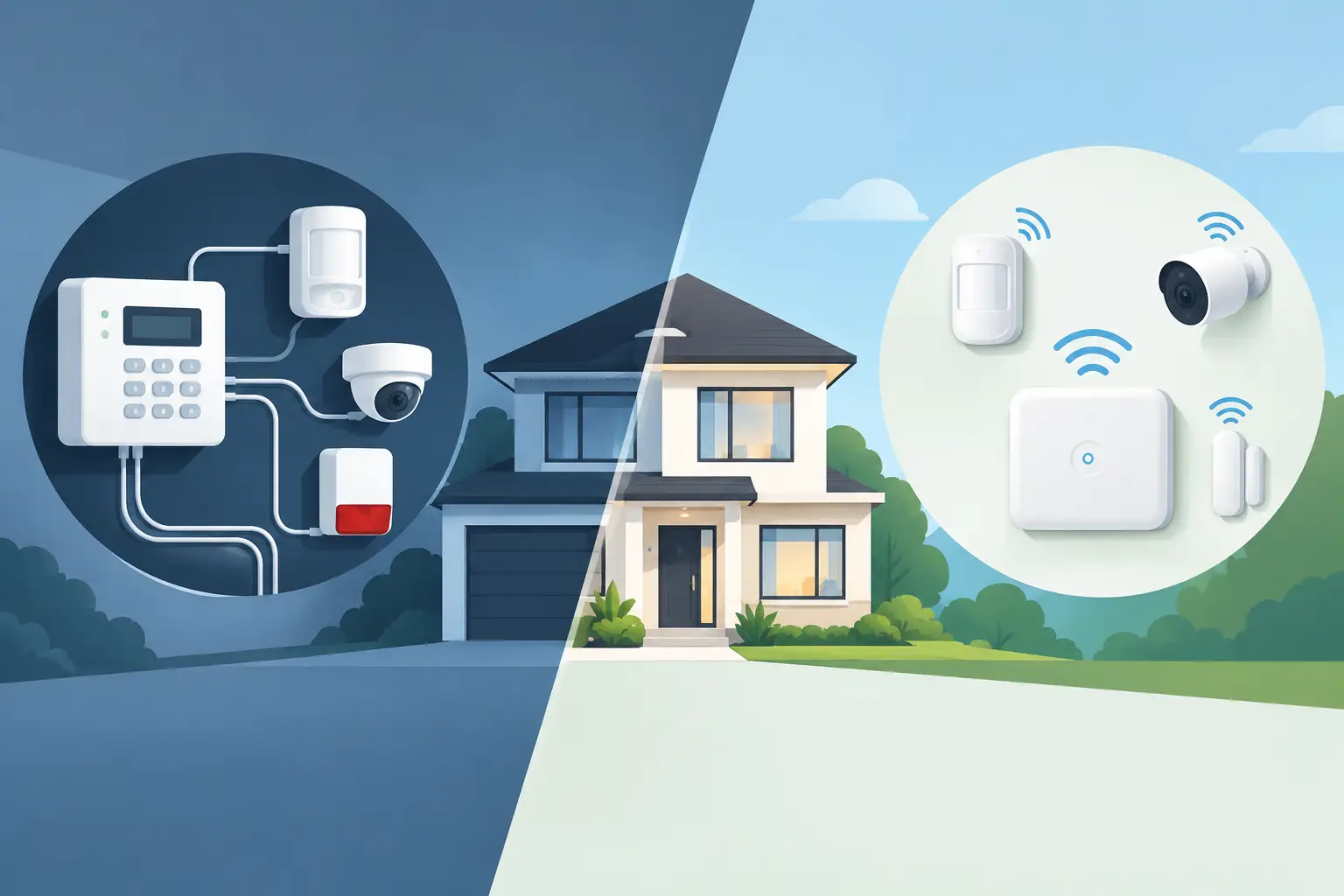
A fire alarm that is difficult to hear, poorly positioned or unreliable during a fault is not a minor inconvenience - it is a risk to people, property and business continuity. When comparing wired alarms vs wireless alarms, the right answer depends on the building, the level of protection required and whether you need a system that can expand over time.
For a family home, a single rental flat or a large commercial premises, the decision should be based on a proper assessment rather than choosing the option that looks quickest to fit. Both systems can provide dependable warning when specified, installed and maintained correctly. Their practical differences become clearer once you consider power, installation, testing and long-term use.
Wired alarms vs wireless alarms: the key difference
A wired fire alarm system connects detectors, call points, sounders and control equipment through fixed cabling. The system is normally supplied from the mains, with battery backup so it can continue operating if there is a power cut. In larger or more complex premises, wired systems may be addressable, allowing the control panel to identify the exact detector or device that has activated.
A wireless fire alarm system uses radio signals for communication between devices. Each component has its own battery or dedicated power arrangement, while the control panel receives and manages signals from the devices. This avoids the need to run cables through every part of the building.
Neither option is automatically safer in every setting. A professionally designed wired system is often the best long-term solution for a building undergoing renovation or a new installation. A quality wireless system can be an excellent choice where cables would cause excessive disruption, such as a finished office, listed property or occupied premises that must remain operational.
Reliability and power supply
Wired alarms are commonly chosen for their stable communication and centralised power supply. Once cabling is correctly installed, there are fewer individual device batteries to replace. The backup batteries at the panel still require routine inspection and replacement at the appropriate time, but maintenance is generally more straightforward across a larger system.
Wireless equipment has improved considerably and reputable systems are designed to monitor radio strength, battery condition and device status. However, every wireless detector depends on its battery and reliable radio communication. Thick walls, steelwork, basement areas, large metal racking and changes to the building layout can affect signal performance. A professional site survey identifies these issues before installation.
For a busy landlord, facilities manager or business owner, the key point is accountability. Wireless systems need a clear testing and battery replacement plan. If a low-battery warning is ignored, a detector may not deliver the protection expected when it is needed.
Installation disruption and project cost
The most obvious advantage of wireless alarms is speed of installation. In many existing buildings, devices can be fitted with little disturbance to walls, ceilings or decorative finishes. This can reduce downtime in offices, shops and rental properties, and may be particularly valuable where a building is occupied.
Wired installations take more planning. Cables must be routed safely and neatly, which can involve lifting flooring, accessing ceiling voids or making good after the work. This does not mean a wired system is impractical in an existing property, but it should be planned carefully. During a refurbishment, rewire or fit-out, installing fire alarm cabling while areas are already open is usually far more cost-effective than adding it later.
Upfront price should not be the only consideration. Wireless devices are often more expensive per unit, while wired systems can carry higher labour costs where cable routes are difficult. Over several years, ongoing battery replacement and servicing may narrow or reverse any initial saving from a wireless installation.
When wired alarms are usually the stronger option
A wired system often makes sense for new builds, major refurbishments and premises with a permanent layout. It is well suited to larger commercial sites, multi-storey buildings, warehouses and properties where a comprehensive fire strategy is required.
It can also be the practical choice for landlords improving an HMO or a block with shared areas, particularly where work is already planned to upgrade wiring or consumer units. Fixed cabling provides a durable foundation and makes future alterations easier to manage where routes have been properly documented.
When wireless alarms can be the better choice
Wireless systems are particularly useful where access is limited or disruption must be kept to a minimum. Examples include finished offices, heritage buildings, temporary workspaces, schools during term time and retail premises that cannot afford lengthy closures.
They are also useful where a property needs additional protection quickly, provided the system is designed for the risk and the radio survey confirms reliable coverage. Wireless should not mean improvised. Device locations, audibility, escape routes and ongoing maintenance still need the same level of attention as a wired installation.
Compliance is about more than the equipment
For landlords and commercial duty holders, fire alarm decisions must sit within wider legal and safety responsibilities. The required system will depend on the property type, occupancy, fire risk assessment and applicable standards. A domestic smoke alarm arrangement is not interchangeable with a commercial fire detection and alarm system.
For example, a small owner-occupied home may need a straightforward interlinked alarm arrangement, whereas an HMO, care setting, office or mixed-use building may require a more detailed design, manual call points, emergency lighting integration or monitoring arrangements. The risk assessment should guide the specification.
Testing is equally important. Fire alarm systems should be inspected, tested and maintained at suitable intervals by competent people, with records kept where required. This includes checking detectors, sounders, control panels, batteries and any fault indications. In a commercial setting, a system that has been installed correctly but left untested can create a serious compliance gap.
Choosing the right system for your building
Start with the building rather than the product. Consider whether the property is occupied during installation, whether refurbishment works are planned, how many rooms or zones need protection, and whether the layout may change in the future. Think about vulnerable occupants, sleeping accommodation, public access and the impact of a false alarm or system failure on your operations.
It is also worth considering how the alarm system will work alongside other electrical services. Emergency lighting, access control, security measures and any evacuation procedures should not be treated as separate afterthoughts. A coordinated approach can make a premises safer and simpler to manage.
A competent electrical and fire alarm contractor can assess cable routes, radio signal conditions, likely disruption and future servicing needs before recommending a solution. At PG Electrical, this practical assessment helps ensure the proposed system suits the property rather than simply being the fastest option to install.
Questions property owners often ask
Are wireless fire alarms safe?
Yes, when they are quality products, correctly designed for the building and routinely maintained. Their safety depends on reliable radio communication, battery management, correct positioning and regular testing. They should be selected following a proper survey, not simply fitted where wiring looks inconvenient.
Do wired alarms still need batteries?
Most wired fire alarm systems include backup batteries, usually at the control panel, to maintain operation during a mains failure. Some domestic hard-wired alarms may also contain replaceable or sealed backup batteries. These batteries must be checked as part of routine maintenance.
Can a wired and wireless system be combined?
In some cases, yes. Hybrid systems can allow an existing wired installation to be extended into areas where new cabling would be difficult or disruptive. Compatibility, design and maintenance arrangements need to be confirmed before mixing technologies.
The best alarm system is the one that has been designed around the people and premises it protects, then tested and maintained properly. Whether that leads to wired, wireless or a hybrid arrangement, a clear survey and honest recommendation will give you far greater confidence than choosing on installation speed alone.