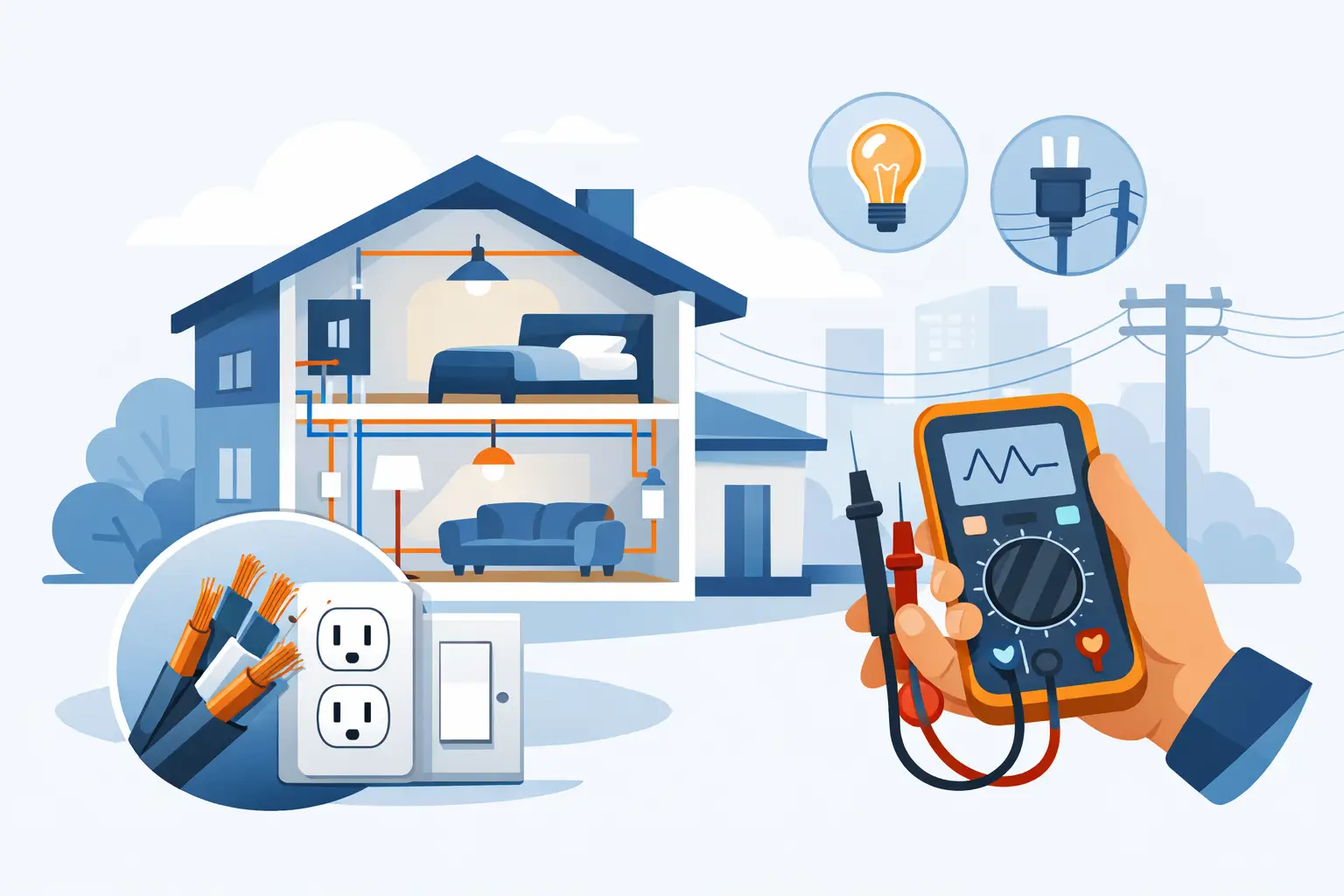
A flickering light, a tripping circuit breaker, or a kitchen extension that needs new sockets usually leads to the same question: what is residential wiring system, and how does it actually work in a home? For most property owners, the wiring stays out of sight until something goes wrong or an upgrade becomes necessary. Yet it is one of the most important systems in any house or flat because it affects safety, reliability, and how well the property supports modern living.
In simple terms, a residential wiring system is the network of cables, protective devices, accessories, and connection points that carries electricity around a home. It brings power in from the supply, distributes it to different circuits, and allows lighting, sockets, appliances, heating controls, alarms, and other electrical equipment to operate safely. A well-designed system does more than switch things on. It manages electrical load, reduces the risk of electric shock and fire, and makes the property practical for everyday use.
What is a residential wiring system in practical terms?
If you strip away the technical language, a residential wiring system is the electrical framework of a home. It usually starts at the incoming supply and meter, then runs through the consumer unit, where circuits are controlled and protected. From there, cables feed different parts of the property, including lighting points, socket outlets, cookers, showers, extractors, smoke alarms and outdoor supplies.
Each part has a job. The consumer unit contains protective devices designed to disconnect power if a fault is detected. The wiring itself carries current to where it is needed. Switches, sockets and fused connection units provide safe points of use. Earthing and bonding help reduce danger if something goes wrong.
The exact layout depends on the age of the property, the number of rooms, the expected electrical demand, and whether the building has been extended or altered over time. A one-bedroom flat and a large family house will not be wired in the same way. Nor should they be.
The main parts of a residential wiring system
Most homeowners never see the majority of the system, but understanding the key elements helps when planning work or discussing faults.
Consumer unit
Often referred to as the fuse box, the consumer unit is the control centre of the installation. It divides the home into separate circuits and contains protective devices such as circuit breakers and RCDs. Modern consumer units are designed to improve fault protection and make the installation safer than older fuse-based setups.
Circuits
A circuit is a section of wiring that supplies a specific area or type of load. In many homes, lighting and sockets are split into separate circuits. Higher-demand equipment such as ovens, electric showers or EV chargers will often have their own dedicated circuits because they require a greater and more controlled supply.
Cables and wiring routes
The cables run behind walls, under floors, through ceilings and within safe zones. Their size and type must match the job they are doing. Undersized or poorly installed cable can overheat, while ageing insulation can deteriorate and become unsafe.
Accessories and outlets
These are the visible parts most people interact with every day, including switches, sockets, cooker points, lighting fittings and connection units. Good installation here is not just about appearance. It is about secure connections, correct loading and safe use.
Earthing and bonding
These are critical safety measures. Earthing provides a route for fault current, while bonding helps keep conductive parts at the same electrical potential. If these are missing, damaged or inadequate, the risk level increases significantly.
How electricity is distributed around the home
The easiest way to picture a residential wiring system is to think of it as a controlled distribution network. Electricity enters the property, passes through the meter, and reaches the consumer unit. The consumer unit then allocates power to individual circuits.
That separation matters. If a fault occurs on one circuit, such as a damaged appliance on the kitchen ring or a short on the upstairs lighting, the protective device should isolate that part of the system rather than shutting down the entire property. This makes the home safer and more manageable.
Modern homes also place heavier demands on wiring than older homes were designed for. Years ago, a property may have had fewer sockets, no electric vehicle charger, no garden office, and less kitchen equipment. Today, electrical usage is far higher. That is why older installations often need review when properties are refurbished or repurposed.
Why the quality of the wiring system matters
A residential wiring system is not just about whether the lights come on. It affects daily convenience, legal compliance in some settings, and long-term property safety.
Poorly planned or ageing wiring can lead to overloaded circuits, nuisance tripping, hot accessories, inconsistent performance and hidden faults. In more serious cases, it can create fire risks or expose occupants to electric shock. This is especially relevant in older properties, rental homes, and buildings that have had multiple alterations over the years.
There is also a practical side. If the wiring system does not suit the way a property is used, homeowners end up relying on extension leads, adaptors and workarounds. That usually signals a system that needs upgrading, not patching around.
Common signs of wiring problems
Not every issue means a full rewire is required, but some warning signs should never be ignored. Repeated tripping, buzzing sockets, scorch marks, flickering lights and outdated consumer units all deserve professional inspection. So do broken accessories, loose switches and circuits that appear to lose power without obvious cause.
In older homes, rubber or fabric-insulated wiring, a lack of RCD protection, or signs of DIY alterations can also point to wider problems. Landlords and property managers should be particularly careful here, as electrical safety obligations are not optional.
Sometimes the issue is localised and straightforward to resolve. Sometimes it reflects a more fundamental problem with the installation. That is why proper testing matters more than guesswork.
When a home may need rewiring or upgrading
A full rewire is not always necessary, but there are cases where it is the right solution. If a property has very old wiring, insufficient circuit capacity, poor earthing, or repeated signs of deterioration, upgrading isolated parts may only delay the real problem.
Rewiring is also common during major refurbishments, extensions, loft conversions and layout changes. It makes sense to address the electrical infrastructure while walls and floors are already open. For landlords, developers and homeowners renovating older stock in London and Kent, this often saves time, avoids repeat disruption and brings the property closer to modern standards.
That said, there is always an it depends element. A newer property may only need additional circuits or a consumer unit replacement. An older property may need a full assessment before any decision is made. The right approach comes from inspection, testing and an honest appraisal of the installation.
What makes a safe modern residential wiring system?
A safe system is correctly designed, properly installed, adequately protected and suitable for the property’s actual use. That includes the right circuit arrangements, modern fault protection, sound earthing and bonding, and accessories fitted to a professional standard.
It should also allow for realistic demand. A modern family home may need separate supplies for kitchen appliances, outdoor power, electric heating controls, data cabling, security systems or EV charging. Good electrical work plans for how a property is used now, not how it was used twenty years ago.
Equally important is testing. Electrical installations should not be judged by appearance alone. A socket can look fine and still fail under test. A circuit may function but remain unsafe. Inspection and certification provide confidence that the system is performing as it should.
Why professional assessment matters
Residential wiring is one of those areas where surface-level symptoms can be misleading. A tripping breaker might be caused by a faulty appliance, damaged cable, moisture ingress, overloaded circuits or defects in the protective arrangement. Without proper fault-finding, it is easy to replace the wrong part and leave the real issue in place.
That is where an experienced contractor adds value. A qualified electrician can assess the condition of the installation, identify safety concerns, explain what is urgent and what can be planned, and carry out work to the required standard. For customers who want clear pricing, compliance and dependable workmanship, that professional process matters just as much as the repair itself.
At PG Electrical, this is the approach behind residential rewiring, consumer unit upgrades, testing and fault finding. The goal is not to complicate the job. It is to make the property safe, practical and ready for the way you actually use it.
If you are asking what is residential wiring system, the useful answer is this: it is the hidden electrical backbone of your home, and when it is installed and maintained properly, everything else works as it should. If something feels outdated, unreliable or unsafe, it is worth having it checked before a minor issue turns into a bigger one.