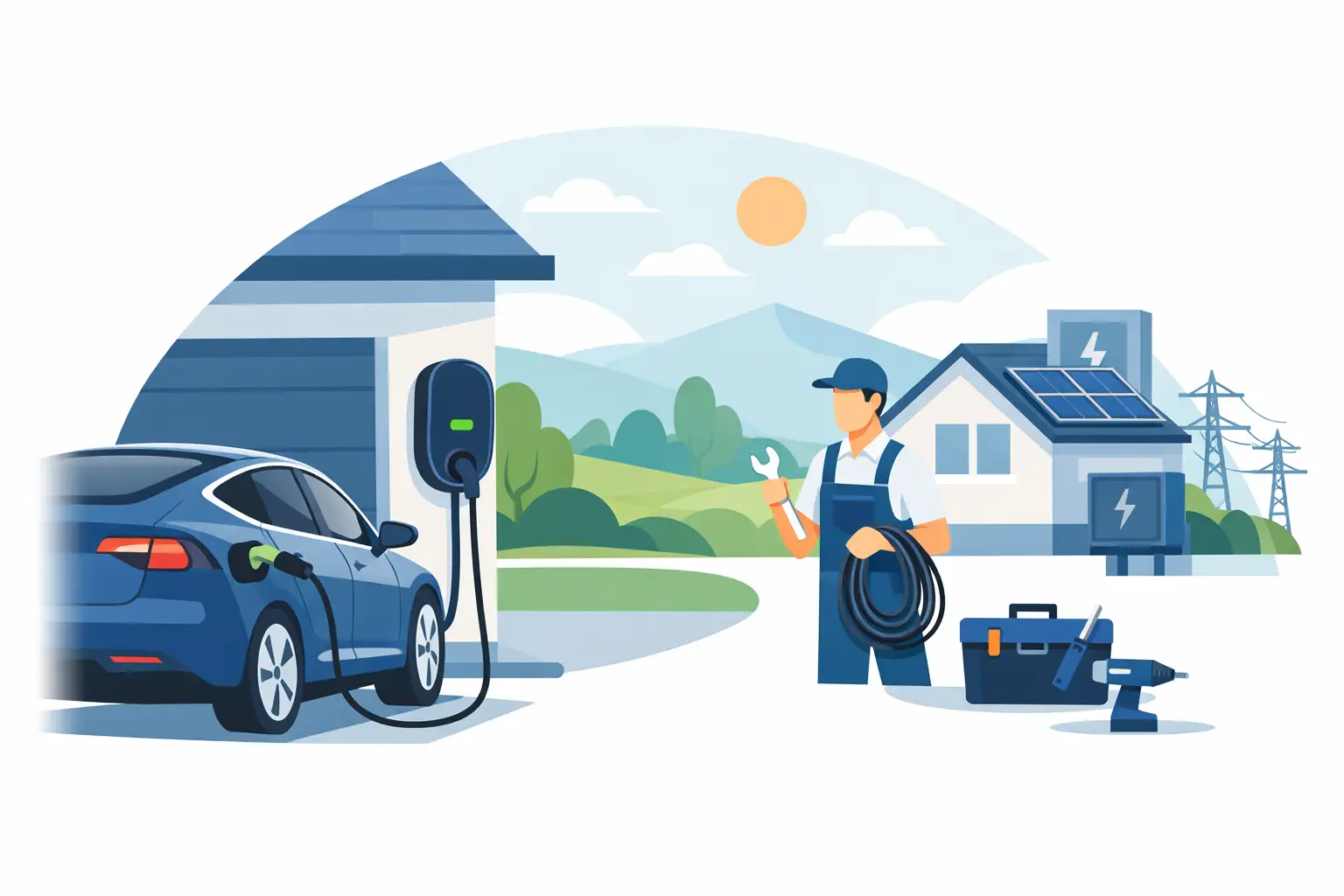
Pulling onto the drive and charging your car overnight sounds simple. In practice, EV charger installation at home needs the right checks before any cable is run or unit is fixed to the wall. Get that part right and charging becomes easy, safe and cost-effective. Get it wrong and you can end up with nuisance tripping, slow charging or an installation that does not suit your property.
For most homeowners, landlords and property managers, the main question is not whether home charging is useful. It is whether the property can support it properly, what the installation will involve, and how to avoid paying for work twice. A good installer will look at the whole electrical picture first, not just the charger itself.
What EV charger installation at home actually involves
A home EV charger is not just a plug point with a smarter cover. It is a dedicated charging unit connected to your electrical system through its own circuit, with protective devices selected to suit the charger, the vehicle and the property. The installation may also include load management, earthing assessment, cable routing, testing and certification.
That is why the first visit matters. Before recommending a charger, a qualified electrician should assess your consumer unit, available capacity, earthing arrangement, cable route, parking position and how you use the vehicle day to day. A house with off-street parking and a modern consumer unit is usually straightforward. A flat, an older property or a site with a long cable run can be more involved.
The aim is not simply to fit a charger. It is to fit the right charger, in the right place, with the right protection.
Is your property suitable for EV charger installation at home?
In many cases, yes. But the detail matters.
A typical house with a driveway is often the easiest setup because the charger can be installed close to where the car is parked. Shorter cable runs usually reduce labour time and materials, and they often make for a neater finish. If your parking space is some distance from the intake position or consumer unit, installation is still possible, but the route needs careful planning.
Older properties can still accommodate a charger, though they may need additional electrical work first. If the consumer unit is outdated, if there is no spare way, or if the earthing arrangement needs improvement, those issues should be dealt with before or as part of the installation. This is especially relevant for homes that have already had extensions, electric showers or other high-demand additions over the years.
Flats and leasehold properties can be less straightforward. The challenge is often access, ownership of the parking area and the route for cabling through communal spaces. In those cases, the electrical side is only one part of the job. Permissions and practical building constraints may decide what is possible.
For landlords and managing agents, there is another layer to consider. The charger may need to be suitable for different users over time, and the installation should be durable, compliant and easy to manage.
Charging speed and why it depends on more than the charger
One of the most common misunderstandings is that buying a higher-rated charger automatically means much faster charging. In reality, charging speed depends on a combination of factors: the charger rating, the vehicle’s onboard charging capability, and the available supply at the property.
For many homes, a 7kW charger is the standard choice because it offers a practical overnight charge without placing unnecessary demand on the installation. It suits a wide range of vehicles and properties. Faster options exist, but they are not always appropriate for domestic settings.
This is where a proper assessment earns its keep. If the electrical supply to the property is limited, or if the house already has several high-load appliances running at similar times, load management may be needed to prevent overloading. That does not mean home charging is not viable. It simply means the charger should be integrated intelligently with the rest of the property.
What affects the cost?
There is no single price for EV charger installation at home because no two properties are exactly alike. The charger itself is only one part of the overall cost.
The biggest cost factors are usually the cable run, the condition of the existing electrical installation and whether any upgrades are needed. A straightforward installation near the consumer unit is naturally more economical than a job requiring long external runs, groundworks, surface containment or remedial work to bring the installation up to standard.
The type of charger also affects cost. Some customers want app control, scheduled charging, usage tracking or integration with solar and battery systems. Those features can be worthwhile, especially if you want better control over charging times and electricity costs, but they should match how you actually use the car.
For landlords or multi-vehicle households, future planning can also influence the specification. Spending slightly more now on the right infrastructure may avoid more disruptive work later.
Clear pricing matters here. A proper quote should explain what is included, what assumptions have been made and whether any upgrades are likely once the site has been fully assessed.
The safety side is not optional
An EV charger is a high-load electrical installation used regularly, often outdoors and often unattended for long periods. That makes safety fundamental.
A compliant installation should include appropriate circuit protection, correct cable sizing, proper isolation and full testing on completion. The earthing arrangement must also be suitable. This is an area where shortcuts can create real risk, not just inconvenience.
There is also the issue of existing electrics. If the property has signs of ageing wiring, previous poor-quality alterations or an overloaded consumer unit, fitting a charger without addressing those problems is not a sensible approach. A dependable electrician will flag those concerns early and explain what needs to happen before installation goes ahead.
That may feel like an extra step, but it is usually the point where costly faults are prevented.
Choosing the right location
The best charger position is rarely chosen on convenience alone. It needs to work safely, suit your parking habits and protect the charger from unnecessary damage.
Wall mounting near the usual parking space is common, but the exact position should account for cable reach, trip risks, weather exposure and daily use. If the charging lead has to stretch awkwardly across a path or be pulled tight every evening, the setup is not doing its job properly. Likewise, placing the charger in the cheapest possible location can be a false economy if it makes regular use frustrating.
For some properties, neatness is also a factor. External cable runs can often be installed discreetly, but good planning is what keeps the finish professional.
Why professional installation matters
There is a clear difference between fitting a product and delivering a complete electrical solution. A proper installer will assess the supply, advise on charger suitability, identify any limitations, carry out the installation to current standards, test the work and provide the relevant certification.
That matters even more in properties with older electrics, recent extensions, rental use or mixed domestic and commercial demands. It is not unusual for an EV charger project to uncover other issues that deserve attention, such as consumer unit upgrades or defects picked up during inspection. Dealing with those as part of one coordinated process is usually more efficient than patching things together later.
For customers across London and Kent, practical experience counts. Parking layouts vary, property ages vary, and not every installation is a clean modern garage wall with the consumer unit on the other side. PG Electrical approaches these jobs with that reality in mind, keeping the process clear from assessment through to installation and final testing.
Questions worth asking before you book
Before going ahead, it helps to ask a few direct questions. Is your current consumer unit suitable? Will the charger location work with how you actually park? Is load management needed? Will the installation allow for a future vehicle change? And if your property is rented, leasehold or managed, are there any permissions to sort out first?
Those questions do not slow the job down. They usually prevent delays, extra cost and avoidable disruption.
Home charging works best when it becomes part of the property rather than an add-on forced into place. If the installation is properly planned, the result is simple: reliable overnight charging, clear running costs and one less thing to think about when you leave the house in the morning.
If you are considering a charger, the sensible first step is not choosing the smartest-looking unit. It is making sure your property is ready for it and that the installation is designed around how you live.