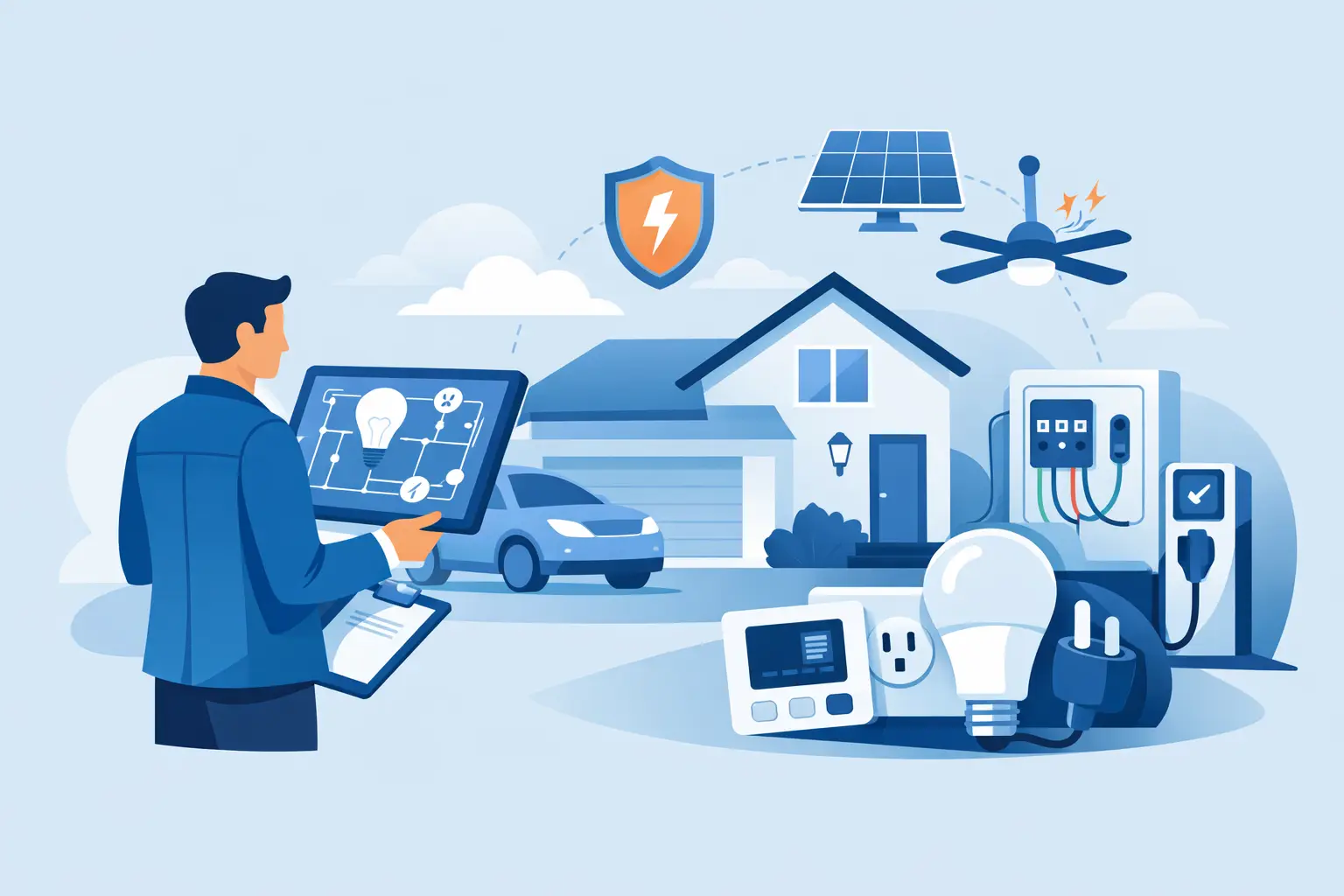
A tenant calling about a tripping circuit at 9pm is rarely just an inconvenience. It can mean a lost evening, an urgent electrician visit, uncertainty around safety and a property that is suddenly harder to let. The best electrical improvements for landlords reduce those risks before they become costly problems, while making rental homes safer, more practical and more attractive to good tenants.
The right work depends on the age and condition of the installation, the type of property and whether it is a single let, flat conversion or HMO. A modernised electrical system is not about fitting every available gadget. It is about making informed improvements that support compliance, minimise faults and give tenants the facilities they reasonably expect.
Start with an EICR and a clear plan
Before commissioning upgrades, establish the condition of the existing installation with an Electrical Installation Condition Report, commonly known as an EICR. In England, private landlords must ensure fixed electrical installations are inspected and tested at the required intervals, generally at least every five years, with remedial work completed where the report identifies it as necessary.
An EICR does more than provide a certificate. It shows whether the wiring, consumer unit, earthing and protective devices remain suitable for continued use. It can also identify deterioration, overloading, poor previous alterations and circuits that no longer meet the standard expected for a rental property.
This provides a sensible order of work. Urgent observations should be addressed first, followed by improvements that prevent recurring maintenance issues or improve the property’s appeal. Replacing fittings before resolving an overloaded circuit or ageing consumer unit often creates avoidable extra cost later.
Keep the report, remedial certificates and any installation paperwork with the tenancy records. Clear documentation makes handovers, inspections and future property sales much easier to manage.
Best electrical improvements for landlords to prioritise
Upgrade an outdated consumer unit
A modern consumer unit with appropriate RCD or RCBO protection is one of the most valuable safety upgrades in an older rental property. These devices are designed to disconnect the supply quickly where they detect a fault, helping to reduce the risk of electric shock and fire.
Older fuse boards, rewireable fuses and poorly labelled consumer units can make fault-finding slower and leave tenants unsure what to do when a circuit trips. A properly installed, clearly labelled replacement unit makes the installation easier to maintain and gives an electrician a safer, more orderly starting point during a callout.
A consumer unit should not be replaced simply because it looks old. If an EICR confirms that replacement is justified, the work should be planned alongside checks to the earthing arrangement, bonding and the condition of the circuits it protects. A new board cannot correct damaged or unsuitable wiring elsewhere in the property.
Rewire where the installation has reached its limit
A full or partial rewire is a larger investment, but it is often the right decision for properties with ageing cables, insufficient socket outlets, repeated faults or extensive historic alterations. This is particularly relevant in period homes and conversions across London and Kent, where electrical systems may have been extended over decades without a consistent plan.
Signs that rewiring may be worth considering include fabric-covered or deteriorated cable insulation, frequent tripping, scorch marks, loose accessories, limited circuits and a shortage of sockets that encourages tenants to rely on extension leads. An EICR will help establish whether remedial work is enough or whether a more substantial upgrade offers better long-term value.
Where possible, coordinate rewiring with planned refurbishment or a void period. Chasing walls, lifting floors and decorating afterwards are disruptive, so combining electrical work with kitchen, bathroom or redecoration projects usually controls both cost and tenant disruption.
Improve lighting in the rooms tenants use most
Good lighting is a practical upgrade tenants notice every day. Replace worn, inefficient fittings with quality LED lighting in kitchens, bathrooms, hallways and living spaces. LEDs use less electricity, last longer than many older lamps and reduce the number of routine lamp replacements between tenancies.
Focus on useful light, not just bright light. Kitchens benefit from even task lighting over worktops, while bathrooms need fittings suitable for the relevant zones. Hallways and staircases should be well lit to reduce trips and make the property feel safer when tenants arrive home after dark.
In communal areas, occupancy sensors or timed controls can prevent lights being left on unnecessarily. They are especially useful in HMOs, shared entrances and common corridors. Choose reliable controls and set them sensibly. Systems that switch off too quickly can frustrate tenants rather than save money.
Add suitable fire and emergency lighting measures
Electrical safety and fire safety overlap, but they are not identical. Smoke alarms, heat alarms, carbon monoxide alarms, fire alarm systems and emergency lighting must be selected for the building and its fire-risk arrangements, rather than treated as standard add-ons.
For HMOs, converted buildings and properties with shared escape routes, a professionally designed and maintained fire alarm or emergency lighting system may be required. Emergency lighting can help occupants find a route out if normal lighting fails, particularly in internal corridors, stairwells and communal areas.
Hard-wired, interlinked alarms can offer a dependable solution in many settings, but the required arrangement depends on the property type and local requirements. Landlords should also have a clear testing and maintenance routine. Installing safety equipment is only part of the job - it must remain functional throughout the tenancy.
Increase socket capacity and modernise accessories
Tenants now run more devices than many properties were originally designed for: laptops, routers, televisions, kitchen appliances, chargers and home-working equipment. Too few sockets lead to overloaded extension leads, trailing cables and damaged adaptors.
Additional sockets in living rooms and bedrooms can make a modest property far easier to use. In kitchens, consider whether the existing circuit capacity and outlet positions suit modern appliances. USB charging sockets can be convenient, but they should complement rather than replace properly positioned standard sockets.
This work needs a proper assessment. Adding outlets to an already overloaded circuit is not an improvement. A qualified electrician should confirm the circuit is suitable and install any new work in line with the relevant requirements.
Prepare for EV charging where parking allows
An EV charge point can set a rental property apart, particularly where there is off-street parking and demand from professional tenants. It may also support a stronger long-term rental proposition as more drivers move to electric vehicles.
It is not suitable for every property. Flats without dedicated parking, leasehold restrictions, limited supply capacity and difficult cable routes can all affect feasibility and cost. The existing electrical supply may need assessment, and some installations require coordination with the Distribution Network Operator.
For landlords with the right property, however, a dedicated smart charge point is safer and more convenient than relying on a domestic socket and extension lead. Metering and access controls can also help where charging costs need to be managed separately.
Consider smart controls, but keep them simple
Smart thermostats, lighting controls and heating timers can improve convenience and reduce wasted energy, especially in higher-value lets and furnished properties. A landlord can also use smart controls to protect a vacant property from cold weather or identify unusually high energy use where appropriate.
The trade-off is usability. Tenants should not need an instruction manual to turn on a light or set the heating. Choose well-supported equipment, provide clear handover information and make sure essential functions still work manually if an app, Wi-Fi connection or account changes.
Plan upgrades around tenancy and maintenance
The most effective projects are planned between tenancies, during renovations or alongside other essential works. Give tenants appropriate notice when work must take place during an occupation, agree access clearly and keep disruption to a minimum. Reliable communication matters as much as the installation itself.
Use competent, qualified electricians for inspection, testing and installation work, and ask for a detailed quotation that separates urgent remedials from recommended improvements. This makes budgeting easier and prevents a necessary safety repair being delayed because it is bundled into a wider wish list.
For landlords managing several properties, consistency helps. Similar consumer units, emergency lighting arrangements and quality fittings can make maintenance faster, simplify records and help caretakers or managing agents respond confidently when an issue is reported.
A rental property does not need the most expensive electrical specification to be safe and competitive. It needs an installation that is properly assessed, compliant, straightforward to use and capable of supporting modern living. A planned inspection with an experienced contractor such as PG Electrical can turn that goal into a practical, prioritised programme of work.