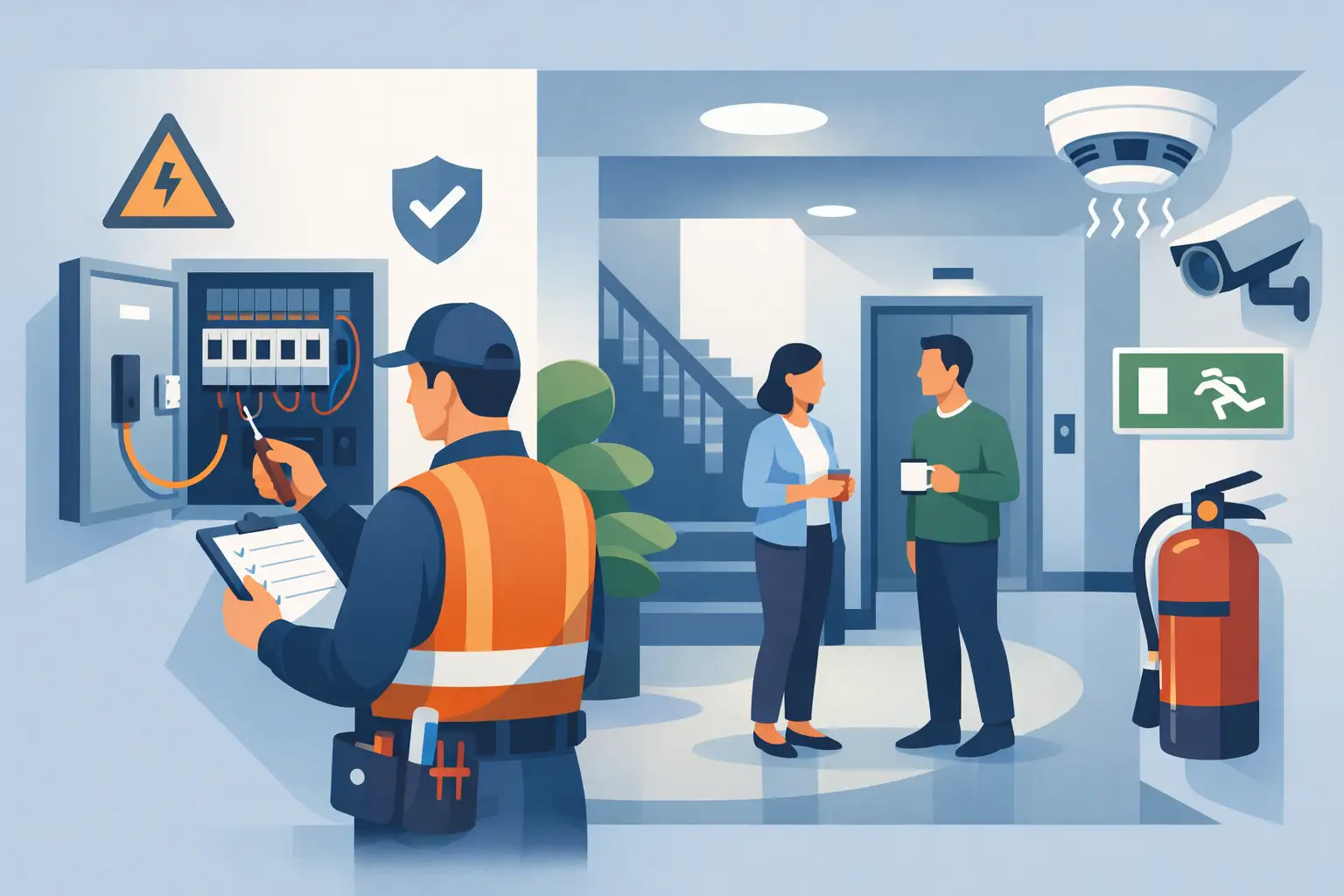
A failed emergency light in a stairwell, a damaged socket in a communal corridor or an ageing consumer unit can quickly become more than a maintenance issue. For managing agents, freeholders and resident management companies, a block management EICR provides a clear picture of the condition of fixed electrical installations in shared parts of a building - before faults create risk, disruption or avoidable cost.
The right inspection is not simply about obtaining a certificate. It is about defining the correct areas, identifying defects accurately and having a practical plan for any remedial work. That matters whether you manage a converted Victorian property with a small shared hallway or a large multi-block development with gates, car parks, plant rooms and emergency systems.
What is a block management EICR?
An Electrical Installation Condition Report, usually called an EICR, is a formal inspection and test of an electrical installation. It assesses whether the fixed wiring and associated equipment are in a satisfactory condition for continued use.
For block management, the scope commonly includes communal electrical systems rather than the installations within individual leasehold flats. This may cover communal distribution boards, lighting circuits, sockets in shared areas, external lighting, door entry supplies, electric gates, plant rooms, bin stores, car parks and supplies serving lifts or other building equipment.
The exact scope depends on the building and who is responsible for each installation. A clear survey at the start avoids a common problem: an EICR that covers only part of the communal system while leaving important circuits or equipment untested.
Why communal electrical testing needs careful planning
Blocks of flats rarely have one simple electrical arrangement. Older buildings may have wiring altered over several decades, while newer developments can include several intake positions, submains, external supplies and specialist controls. Documentation is not always complete, particularly where previous works were carried out by different contractors.
A professional inspection brings those details into view. The electrician will assess the installation against the requirements of BS 7671, identify deterioration or non-compliance that could affect safety, and record the findings in a report suitable for the responsible party's records.
For property managers, the value is operational as well as technical. A well-scoped report helps with maintenance budgets, contractor instructions and communication with directors, landlords and residents. It also provides evidence that communal electrical safety has been actively managed rather than left until something fails.
The right frequency depends on the building
There is no single inspection interval that suits every communal installation. A five-yearly EICR is commonly appropriate for many shared areas, but the recommended next inspection date should reflect the type, age, condition and use of the installation. Areas exposed to weather, heavy use, moisture or vandalism may need closer attention.
An inspection should also be considered following significant alterations, water damage, fire, a serious electrical fault or a change in how part of the building is used. If a block has undergone phased refurbishment, testing the affected works and reviewing the wider system can prevent new and old installations being treated as if they are one consistent standard.
Individual rented flats have separate electrical safety obligations. A block manager should not assume that a communal EICR automatically covers the landlord EICR required for each privately rented dwelling. Equally, reports for individual flats do not replace inspection of the shared electrical infrastructure.
What a proper EICR should cover
Before testing begins, the electrician should agree the extent of the inspection with the client. This includes identifying electrical intake and metering arrangements, distribution boards, communal circuits, external areas and any equipment that requires planned isolation.
Visual checks are followed by appropriate testing of the fixed installation. The work may include checking earthing and bonding, protective devices, circuit condition, polarity, insulation resistance, earth fault loop impedance and the operation of RCD protection where fitted. Labels, circuit schedules and access to electrical equipment are also reviewed.
Testing may require short, controlled interruptions to supplies. In a managed block, this needs sensible coordination. Residents may need notice where communal access equipment, lighting or gates are affected, and lift or fire safety contractors may need to be involved if their systems are connected to the circuits under inspection. Good planning keeps disruption proportionate and ensures the testing can be completed properly.
Understanding EICR observations and codes
An EICR does not automatically mean that every item must be brought up to the very latest edition of the Wiring Regulations. The key question is whether the installation is safe for continued use. The report records observed issues using recognised classification codes, allowing the responsible party to prioritise action.
- C1 means danger is present and immediate action is required.
- C2 means a potentially dangerous condition requires urgent remedial work.
- FI means further investigation is needed before the condition can be fully assessed.
- C3 identifies an improvement that is recommended but does not, on its own, make the report unsatisfactory.
A report containing C1, C2 or FI observations will normally be unsatisfactory until the relevant issues have been addressed or investigated. The best response is not to approve work blindly, nor to delay it while seeking the lowest price. Ask for a clear remedial quotation that links each recommendation to the report reference, explains the work required and separates urgent safety items from sensible improvements.
Common issues found in communal areas
The condition of each building differs, but several faults appear regularly in block management inspections. Damaged accessories and exposed live parts can arise in high-traffic areas. Missing or inadequate RCD protection may be identified on older boards. Poor labelling can make safe isolation difficult, while overloaded circuits or unsuitable alterations can develop as door entry, CCTV, lighting and other services are added over time.
External equipment deserves particular attention. Car park lighting, gate supplies, bin-store fittings and garden circuits face rain, impact and gradual deterioration. Electrical equipment installed in damp plant rooms or cupboards can also require more frequent checks.
Some findings can be resolved quickly, such as replacing damaged fittings or updating circuit identification. Others may require wider work, including consumer unit replacement, submain repairs or the reorganisation of poorly altered circuits. A dependable contractor should explain the reason for each recommendation in plain language and provide a realistic programme for completing the work.
Choosing an electrician for managed buildings
Block work benefits from an electrician who can manage more than the inspection itself. Access arrangements, resident notices, isolations, remedial works and final certification all need to be handled with care. Experience with communal systems is particularly valuable where there are multiple supplies, shared plant or safety-critical services.
Look for clear scope, transparent pricing and a report that is easy for non-technical stakeholders to understand. The contractor should be able to distinguish between immediate risks, required remedial work and longer-term improvements, rather than presenting every recommendation as equally urgent.
PG Electrical supports property managers and landlords across Greater London and Kent with planned testing, remedial works and responsive electrical support. The aim is straightforward: identify what needs attention, explain the options clearly and complete the work to professional standards.
Keeping records useful after the inspection
Once the EICR and any remedial certification have been issued, keep them with the building's electrical records rather than treating them as a one-off compliance document. Record the inspection date, recommended retest date, report references, completed works and any areas not included in the scope.
It is also sensible to retain current circuit schedules and details of later alterations. When a new gate, CCTV system, EV charging point or lighting upgrade is added, the installer should provide the appropriate electrical certification. This creates a clearer history of the installation and makes the next inspection more efficient.
A block management EICR is most effective when it feeds into a planned maintenance approach. Regular testing, prompt action on genuine safety issues and accurate records give managing agents and responsible persons greater control over the building, while helping residents feel confident that the shared spaces they use every day are being looked after properly.