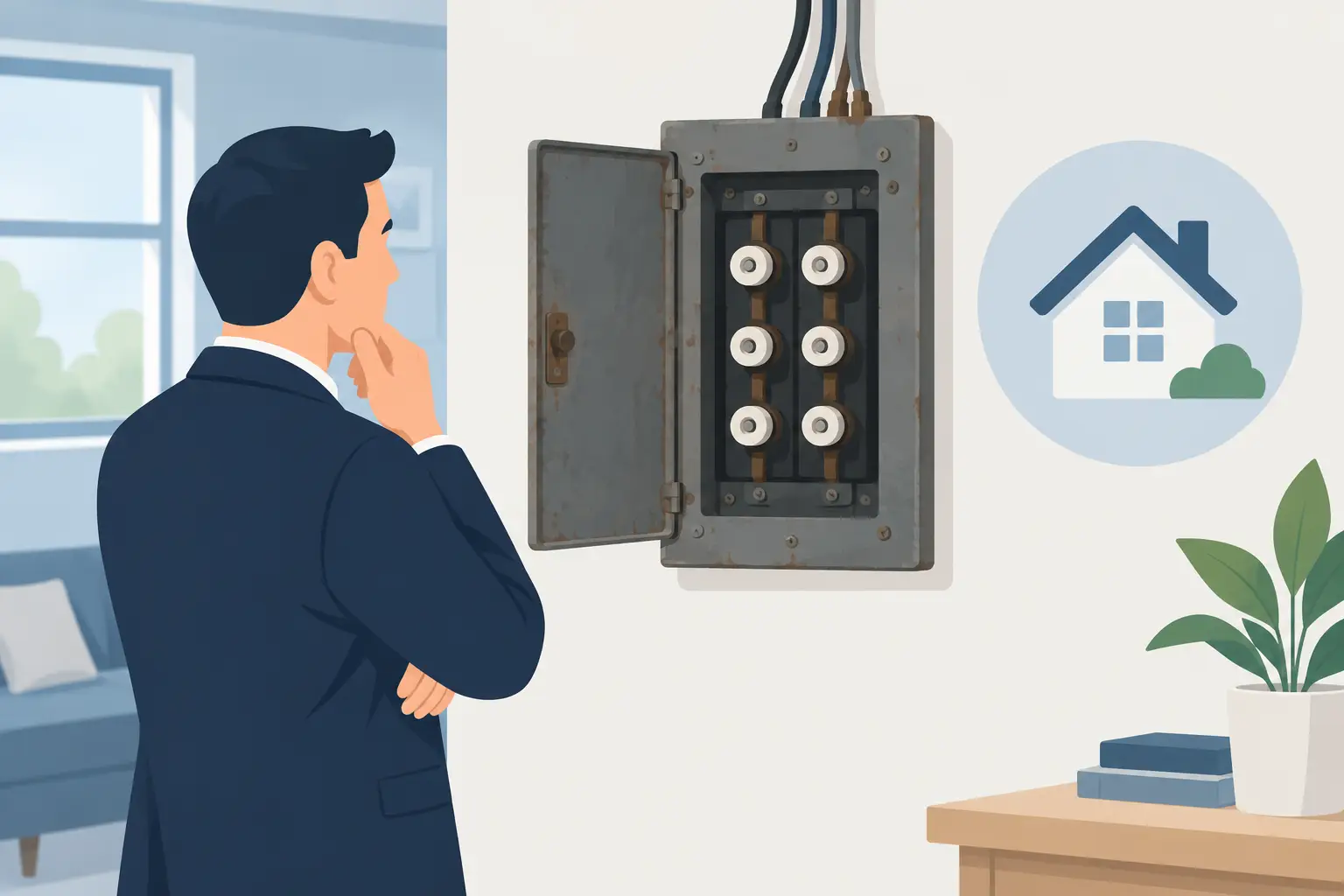
A rental property can have perfectly sound circuits and still be fitted with a consumer unit that belongs to another era. For landlords, the practical question is not simply whether an old fusebox looks dated. Can landlords use old fuseboxes while meeting their electrical safety duties and giving tenants reasonable protection? Sometimes, yes. Often, an inspection will show that an upgrade is the more sensible and defensible choice.
A qualified electrician should assess the installation as a whole. The consumer unit, wiring, earthing, bonding, circuit protection and condition of accessories all matter. Replacing a fusebox without understanding the condition of the circuits behind it can create false confidence, while ignoring an ageing unit can leave genuine risks unaddressed.
Can landlords use old fuseboxes legally?
In England, there is no simple rule stating that every old-style fusebox must be replaced solely because of its age. A landlord can retain an older consumer unit if the electrical installation is safe and the property meets the required standards following inspection and testing.
For most private rented homes, the Electrical Safety Standards in the Private Rented Sector (England) Regulations 2020 require landlords to have the electrical installation inspected and tested at least every five years by a qualified and competent person. A report must be provided to existing tenants within 28 days, to new tenants before they move in, and to the local authority if requested.
The report is commonly called an Electrical Installation Condition Report, or EICR. It does not judge a property on appearance alone. It identifies whether defects, deterioration or design limitations could create danger. If remedial work is required, landlords generally need to arrange it within 28 days, or sooner where the report specifies a shorter period.
That said, an old fusebox can make it harder to achieve a satisfactory EICR. Units with rewireable fuses, wooden backboards, damaged covers or no residual current device protection can raise concerns that need more than a minor repair. The right answer depends on the findings, not a rule of thumb based only on the unit's age.
Why old fuseboxes deserve closer attention
Older fuseboxes were designed for a different type of household demand. Modern tenants use more appliances, chargers, kitchen equipment, home-working devices and electric heating than many installations were originally intended to supply. A unit that has coped for years may still have limited protection compared with a modern consumer unit.
Traditional rewireable fuses are a common example. They can operate safely when correctly rated and maintained, but they are less convenient and less precise than modern circuit breakers. There is also a risk that someone replaces fuse wire with the wrong rating after a fault, reducing protection for the cable on that circuit.
The absence of RCD protection is another frequent issue. An RCD is designed to disconnect the supply quickly where it detects current flowing to earth, helping to reduce the risk of serious electric shock and some fire risks. Whether a lack of RCD protection results in an observation on an EICR depends on the circuits, the installation's condition, the property use and the electrician's assessment. In a rented property, particularly one with outdoor sockets, a bathroom, a modern kitchen or accessible cables, it is a point that should be considered carefully.
There are practical concerns too. Old fuseboxes may have poor labelling, brittle plastic covers, loose fuse carriers or evidence of overheating. Some older units were altered several times as extensions, showers, boilers and kitchen circuits were added. Those alterations can be more significant than the age of the original board.
An EICR decides whether the installation is safe
An EICR involves more than opening the consumer unit and looking for obvious faults. The electrician visually checks accessible parts of the installation and carries out appropriate testing to assess the condition of circuits and protective measures.
This may include checks on earthing and bonding, circuit continuity, insulation resistance, polarity, fault protection and the operation of protective devices. The electrician will also look for signs of overheating, damaged accessories, unsuitable DIY alterations, overloaded circuits and unsafe work carried out previously.
The final report records observations using classification codes. C1 means danger is present and immediate action is required. C2 identifies a potentially dangerous condition requiring urgent remedial work. FI means further investigation is needed without delay. Any of these outcomes means the report cannot be satisfactory until the issue is properly resolved or investigated.
A C3 observation is an improvement recommendation. It does not, by itself, make the report unsatisfactory. This distinction matters for landlords with old fuseboxes. An installation is not automatically unsafe because it does not match every feature of a brand-new installation. However, current standards and modern protection should be considered wherever work is being planned, where safety can be materially improved, or where the existing unit is no longer reliable.
When replacement is usually the sensible option
A consumer unit replacement is commonly recommended where the old board cannot provide suitable protection, is damaged, shows heat stress, contains obsolete components or has been poorly altered. It is also sensible when remedial work would involve extensive changes and a new unit provides a safer, clearer long-term solution.
Replacement is particularly worth discussing when the property has repeated tripping, fuses that regularly blow, a planned extension or rewire, a new electric shower, induction hob, EV charger or other high-load addition. Landlords should also take a cautious approach in HMOs and multi-occupancy properties, where occupancy, fire risk and additional management duties can make electrical reliability even more critical.
A modern consumer unit normally uses circuit breakers and RCD or RCBO protection, with clearer circuit identification and improved containment. RCBOs provide individual protection for each circuit, which can reduce the chance that one fault cuts power to large parts of the property. This is not just a convenience issue. A tenant without lighting, refrigeration or heating after a nuisance trip is likely to need urgent support.
However, replacement is not a one-size-fits-all fix. Before fitting a new board, the electrician should verify that the existing wiring is suitable for connection and testing. If insulation resistance results are poor or circuits show deterioration, further electrical work may be needed. A clear quotation should explain what is included, what remedial work is recommended, and whether making good or certification is required.
Avoiding common landlord mistakes
The biggest mistake is waiting for a tenancy change, a failed inspection or an emergency callout before addressing known electrical concerns. An old fusebox that seems to be working is not evidence that it has been assessed or is suitable for a rental property.
Landlords should also avoid asking a tenant, handyman or unqualified person to replace fuse wire, investigate a burning smell or reset repeatedly tripping circuits. A tripping device may be doing exactly what it is designed to do. Repeated resetting without finding the cause can expose occupants to risk and can make a developing fault worse.
It is equally unwise to treat an EICR as a paperwork exercise. A low-cost report that does not involve proper testing or gives vague recommendations is of limited value when a tenant's safety and a landlord's compliance are at stake. Keep the report, any remedial certificates and clear records of the work carried out. These documents provide a useful electrical history for future inspections, maintenance and property sales.
A practical approach for rental properties
If a property has an older fusebox, arrange an EICR with a qualified electrician rather than making assumptions based on its appearance. Explain whether there have been tripping issues, tenant concerns, recent alterations or plans for new electrical equipment. This helps the inspection focus on the issues that matter.
If the report is satisfactory, retain it and plan ahead for future upgrades rather than replacing equipment unnecessarily. If the report identifies C1, C2 or FI observations, act promptly and ensure the remedial work is documented. Where a consumer unit replacement is recommended, ask for a detailed scope that covers testing, certification, labelling and any additional work needed to bring connected circuits into a safe condition.
For landlords across Greater London and Kent, PG Electrical can assess older installations, carry out EICRs and provide straightforward advice on whether repair, remedial work or a consumer unit replacement is the right next step. Before the next tenancy begins, a professional inspection gives you a clearer answer than the age of the fusebox ever can.