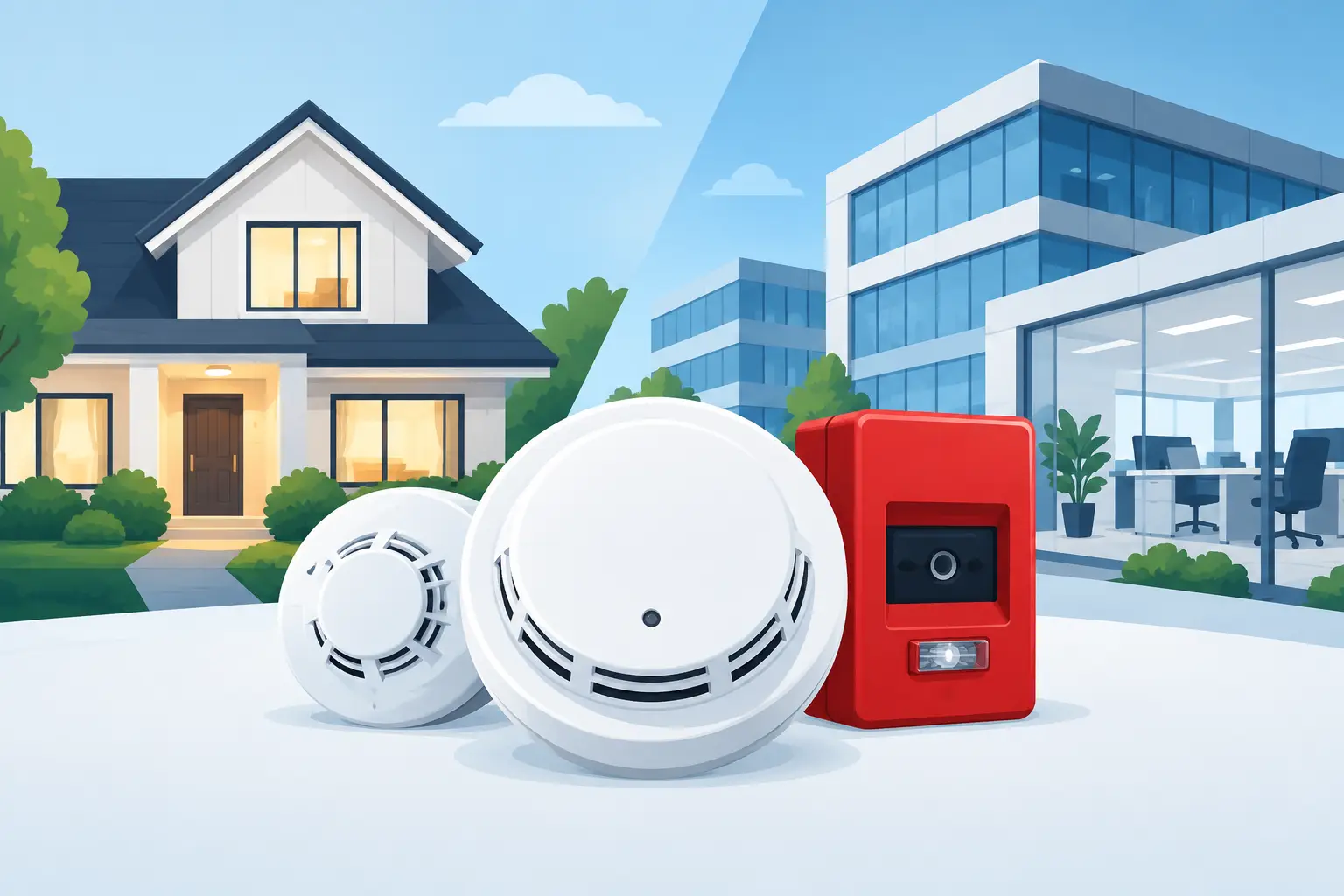
A fire alarm only has one job, but it has to do it at the right moment: provide a clear warning early enough for people to get out safely. That is why fire alarms should never be treated as a simple box-ticking exercise. The right system depends on the property, who uses it, its layout, the level of risk and the legal duties that apply.
For a family home, this may mean a small network of interlinked smoke and heat alarms. For a rental property, office, shop or HMO, the requirements can be more involved. A properly designed system protects people first, helps meet compliance responsibilities and gives owners, landlords and managers confidence that the building is being looked after properly.
What Makes a Fire Alarm System Suitable?
The most suitable system is not necessarily the most complex or expensive one. It is the system that detects a developing fire promptly, gives occupants an alarm they can hear and is appropriate for the way the building is used.
A good assessment considers the number of storeys, escape routes, bedrooms, kitchens, utility rooms, open-plan areas and any higher-risk activities. A ground-floor flat with one occupant has very different needs from a three-storey house in multiple occupation, a restaurant kitchen or a warehouse with machinery and stock.
Detector type matters too. Smoke alarms are commonly used in circulation spaces, bedrooms and living areas, while heat alarms are normally the better choice for kitchens, garages and utility rooms where cooking fumes, steam or dust could otherwise cause unwanted alarms. Carbon monoxide alarms are separate safety devices and may also be required where fixed fuel-burning appliances are present.
The key is not to fit detectors everywhere without a plan. Poor positioning can create false alarms, encourage people to disable equipment and leave the real risks unaddressed.
Fire Alarms for Homes: Simple, Reliable Protection
Most homeowners need an alarm system that is easy to live with and dependable in an emergency. Interlinked alarms are often the practical choice. If one detector identifies smoke or heat, the other alarms sound too. This is particularly valuable in larger homes, properties with loft conversions, and houses where bedrooms are located away from the kitchen or main living areas.
Mains-powered alarms with battery back-up offer a high level of reliability because they remain operational during a power cut. They can be hardwired during a rewire, extension or refurbishment, with wireless interlinking options available where running new cables would be disruptive. The best route depends on the property and the scope of work already planned.
Positioning is just as important as the equipment itself. Alarms should be located where they can give warning along escape routes, rather than being hidden in corners or placed too close to bathrooms, extract fans or cooking appliances. A heat alarm in the kitchen and smoke alarms in halls, landings and suitable rooms will usually provide more useful protection than identical devices installed throughout the home.
If your alarms are old, regularly chirp, activate without clear cause or are not interlinked, it is worth having them reviewed. Most detectors have a limited service life, commonly around ten years, after which replacement is sensible even if they still appear to work.
Fire Alarms for Landlords and HMOs
Landlords have clear safety responsibilities, and fire detection is an area where a basic approach can quickly become inadequate. In England, rented homes must have at least one smoke alarm on every storey used as living accommodation. Carbon monoxide alarm duties also apply in rooms containing a fixed combustion appliance, with certain exceptions. Alarms must be tested and working at the start of a new tenancy.
That is the legal baseline, not always the full answer. The property layout, tenant profile and licensing conditions may require more comprehensive protection. HMOs often need a considered fire alarm design, particularly where tenants occupy separate rooms and share kitchens, corridors or stairways. Local authority licensing conditions and the findings of a fire risk assessment can affect the standard required.
For landlords and managing agents, the practical priority is consistency. Alarm provision should be considered alongside electrical safety checks, emergency lighting where applicable, fire doors, means of escape and ongoing property maintenance. Keep a clear record of installation, testing, faults and replacements. It supports good management and makes it easier to act quickly if an issue is reported.
Tenants should also know how to test an alarm, what a low-battery warning sounds like and who to contact if a device is damaged or faulty. A system only works when it is maintained and residents take an alarm seriously.
Fire Alarms in Commercial Premises
Businesses have a duty to provide suitable warning arrangements for occupants. Under the Regulatory Reform (Fire Safety) Order 2005, the responsible person must take appropriate general fire precautions based on the risks within the premises. In many workplaces, this means a fire alarm system designed, installed and maintained in line with the relevant British Standards.
A small, low-risk office may need a relatively straightforward conventional arrangement. A larger office, retail premises, school, block of flats or light industrial unit may require a more advanced addressable system. Addressable fire alarms identify the precise detector, call point or device that has activated, helping staff and contractors find the source faster. They can be particularly useful in larger or more complex buildings.
Manual call points, sounders, visual alarm devices, control panels, emergency lighting and remote monitoring may all form part of the overall solution. Whether they are needed depends on the fire risk assessment, occupancy levels, ambient noise, building layout and how quickly people can evacuate.
False alarms deserve attention because they disrupt operations and can lead to complacency. Common causes include unsuitable detector selection, poor detector location, dust from building works, steam, aerosols and inadequate maintenance. Reducing false activations should never mean reducing protection. It means selecting the right equipment and managing the environment around it properly.
Installation Should Follow Assessment, Not Assumption
There is no one-size-fits-all answer to fire detection. Before installation, a competent electrician or fire alarm specialist should inspect the property, discuss how it is used and identify the most appropriate system category and detector locations.
The work should cover more than fixing alarms to ceilings. It includes choosing suitable devices, routing cables safely where required, providing battery back-up, labelling controls, commissioning the system and explaining how it operates. In commercial settings, clear documentation is essential. Responsible persons need to understand what has been installed, how to test it, what maintenance is needed and what to do if a fault appears.
At PG Electrical, this practical approach is central to every fire alarm installation. The aim is clear advice, professional workmanship and a system that suits the building rather than an off-the-shelf recommendation.
Testing and Maintenance Keep Fire Alarms Effective
Even the best installation can fail if it is ignored. Homeowners should test alarms regularly using the test button and replace units when they reach the end of their stated lifespan. Never remove a battery to stop a nuisance alarm without dealing with the cause. If an alarm sounds repeatedly, it may need cleaning, repositioning, replacement or investigation.
For commercial systems, routine user testing and professional inspection are both necessary. The exact maintenance programme will depend on the system type, risk assessment and applicable standards, but it should be planned rather than left until a fault occurs. A control panel showing a fault, a damaged manual call point, a missing detector cover or an intermittent sounder all need prompt attention.
Building work is another common point of failure. Dust, painting, ceiling alterations and changes to room use can affect detector performance and coverage. Fire alarm protection should be reviewed whenever a property is significantly altered, extended, converted or repurposed.
When Is It Time to Upgrade?
An upgrade may be needed if alarms are more than ten years old, are not interlinked, rely solely on removable batteries, activate frequently without reason or no longer match the layout of the property. A change in occupancy is equally important. Turning a house into a rental, converting a loft, splitting a building into units or fitting out a new commercial space can all alter the level of protection required.
Fire safety works best when it is planned early, particularly during rewiring, renovations and commercial fit-outs. It is usually easier, neater and more cost-effective to install suitable cabling and devices before walls and ceilings are finished.
A well-designed alarm system should be quiet when there is no danger and impossible to ignore when there is. If you are unsure whether your current fire alarms meet the needs of your home, rental property or business, a professional assessment can provide a clear starting point and a safer way forward.