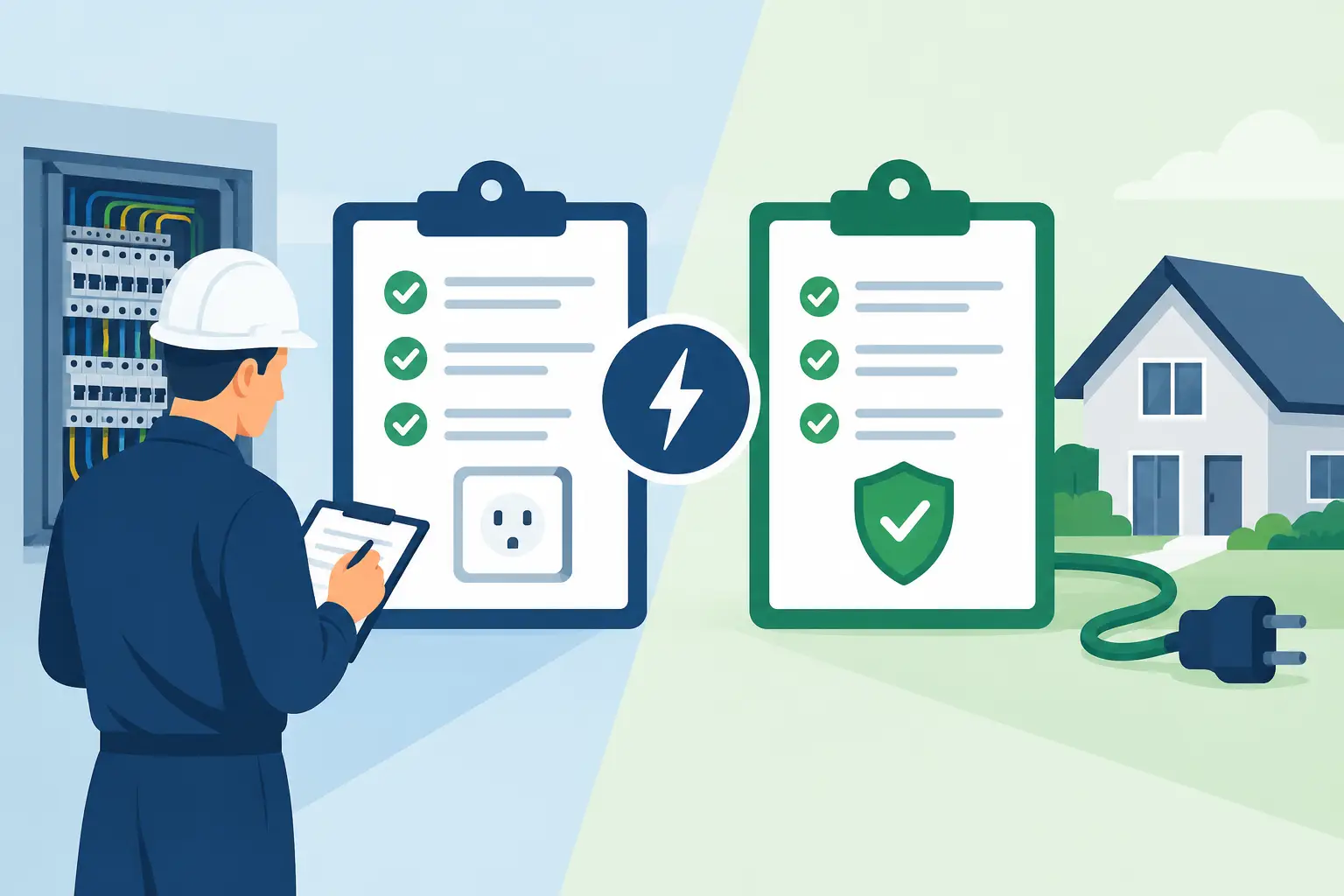
An EICR vs electrical installation certificate is not a choice between two versions of the same document. They serve different purposes, are issued at different stages of electrical work, and prove different things about a property’s installation. Getting the right one matters whether you are letting a flat, completing a rewire, fitting out an office or upgrading a consumer unit.
Put simply, an Electrical Installation Certificate confirms that new electrical work was installed and tested correctly when it was completed. An Electrical Installation Condition Report, or EICR, assesses the condition and safety of an existing installation over time.
EICR vs electrical installation certificate: the key difference
An Electrical Installation Certificate, usually shortened to EIC, is produced after new electrical installation work. It records that the work has been designed, installed, inspected and tested in line with the relevant requirements at the time of completion. It is commonly issued for significant work such as a full or partial rewire, a new consumer unit, new circuits, a commercial fit-out or a submain installation.
An EICR is a periodic inspection report. It does not certify new work. Instead, a qualified electrician examines an existing installation to identify wear, deterioration, damage, defects, overloaded circuits or signs that the installation no longer meets an acceptable safety standard.
The distinction is practical. If you have just had a new circuit installed for an EV charger, you should expect certification for that installation. If you are a landlord checking whether the wiring throughout a rental property remains safe, you need an EICR.
Neither document replaces the other. A recently completed EIC can provide useful evidence of work carried out, but it does not remove the need for periodic inspection. Equally, a satisfactory EICR does not act as a completion certificate for major new installation work.
What an Electrical Installation Certificate proves
An EIC is part of the handover process for substantial electrical work. The electrician carries out inspection and testing as the work progresses and once it is complete. This may include checking protective devices, earthing arrangements, circuit continuity, insulation resistance, polarity and the operation of RCD protection.
The certificate should identify the work covered, the circuits involved, the extent and limitations of the inspection, and the results of testing. It also confirms who was responsible for the design, construction and inspection and testing. On larger projects, those roles may be completed by different competent people.
For homeowners, the document is valuable evidence that a rewire or consumer unit replacement was properly tested. Keep it with other property records, especially if you plan to sell, let or extend the property later. It gives future electricians a clear record of the work and can make fault-finding or further alterations more straightforward.
For developers, business owners and property managers, an EIC forms part of a proper project close-out. It supports compliance records and demonstrates that the installation was tested before being put into service. For commercial premises, this is particularly relevant where new distribution equipment, emergency lighting supplies, fire alarm circuits or data infrastructure have been added.
What about small electrical jobs?
Not every task requires a full Electrical Installation Certificate. Minor additions or alterations to an existing circuit may be recorded on a Minor Electrical Installation Works Certificate instead. Examples can include adding a socket outlet or lighting point where the existing circuit is suitable and no new circuit is installed.
The correct paperwork depends on the scope of work, the condition of the existing installation and whether the work falls within building regulations notification requirements. A competent electrician should explain what certification will be issued before work begins, rather than leaving you to chase paperwork after the job.
What an EICR checks in an existing property
An EICR is an assessment of the installation at the date of inspection. The electrician will inspect the consumer unit, circuits, accessories, earthing and bonding, and accessible parts of the wiring system. Testing is used alongside visual checks to assess whether protective measures are working as intended.
Because it concerns an existing installation, an EICR may reveal issues that have developed years after the original work was completed. Common examples include damaged accessories, inadequate earthing, ageing consumer units, poor previous alterations, circuit overloading and missing or unsuitable RCD protection.
The report records observations using classification codes. C1 indicates danger that requires immediate action. C2 identifies a potentially dangerous condition requiring urgent remedial work. FI means further investigation is needed without delay. C3 is an improvement recommendation and does not, by itself, make a report unsatisfactory.
A report containing C1, C2 or FI observations is normally unsatisfactory until the relevant issues have been addressed or investigated. This does not always mean a full rewire is needed. The right solution depends on the fault, the age and layout of the installation, and whether targeted remedial work can restore safety.
When landlords need an EICR
In England, private landlords must ensure that the electrical installation in rented homes is inspected and tested at least every five years by a qualified and competent person. They must also act on remedial work identified as necessary and provide the required documentation to tenants and, where applicable, the local authority.
This applies to landlords of houses, flats and HMOs. It is not enough to rely on an old installation certificate from when the property was built or refurbished. That certificate confirms work was satisfactory at the point of completion. It cannot show whether tenant use, alterations, moisture, accidental damage or normal ageing have affected the installation since then.
For managing agents and portfolio landlords, arranging testing before the deadline is the sensible approach. It leaves time to review the report, obtain a clear quotation for any remedial work and complete repairs without creating unnecessary pressure around a tenancy.
When homeowners and businesses should arrange an EICR
Homeowners are not generally subject to the same five-year legal duty as private landlords, but an EICR remains a sensible safety measure. It is especially worthwhile when buying an older property, before a major renovation, after flood or fire damage, when persistent tripping occurs, or where the electrics have not been checked for many years.
Business owners have separate duties to maintain electrical systems in a safe condition. The appropriate inspection interval depends on the type of premises, how the installation is used, the environment and the risk level. A quiet office and a light industrial unit are not exposed to the same demands, so a one-size-fits-all testing schedule is rarely appropriate.
A professional electrician can advise on a suitable interval after reviewing the property and its electrical use. High-use areas, communal systems, rental accommodation and premises with machinery or public access often require closer attention than a low-risk domestic setting.
Do you need both documents after electrical work?
Often, yes. If new work has been completed, the electrician should issue the appropriate installation certificate for that work. The wider property may still need an EICR at its usual interval, particularly if it is rented or commercially occupied.
There are occasions when an EICR is useful before installation work as well. For example, before fitting an EV charger, extending a commercial unit or adding high-load equipment, an assessment of the existing supply capacity, earthing and consumer unit can prevent unsuitable work from being specified. An EICR is not always required for this purpose, but the existing installation must be assessed adequately before new demands are added.
Avoid treating certificates as paperwork exercises. Their real value is the information behind them: whether circuits are protected correctly, whether the installation can support planned changes and whether people using the property are protected from avoidable electrical risk.
Choosing the right electrical service
If you are unsure which document you need, start with the question: is this about new work or the condition of existing electrics? New circuits, rewires and major alterations call for installation certification. Safety checks, landlord compliance and concerns about ageing or damaged wiring call for an EICR.
At PG Electrical, the focus is on making that decision clear from the outset. A proper assessment, a transparent explanation of the work required and accurate certification help homeowners, landlords and businesses keep their electrical systems safe, compliant and ready for what the property needs next.