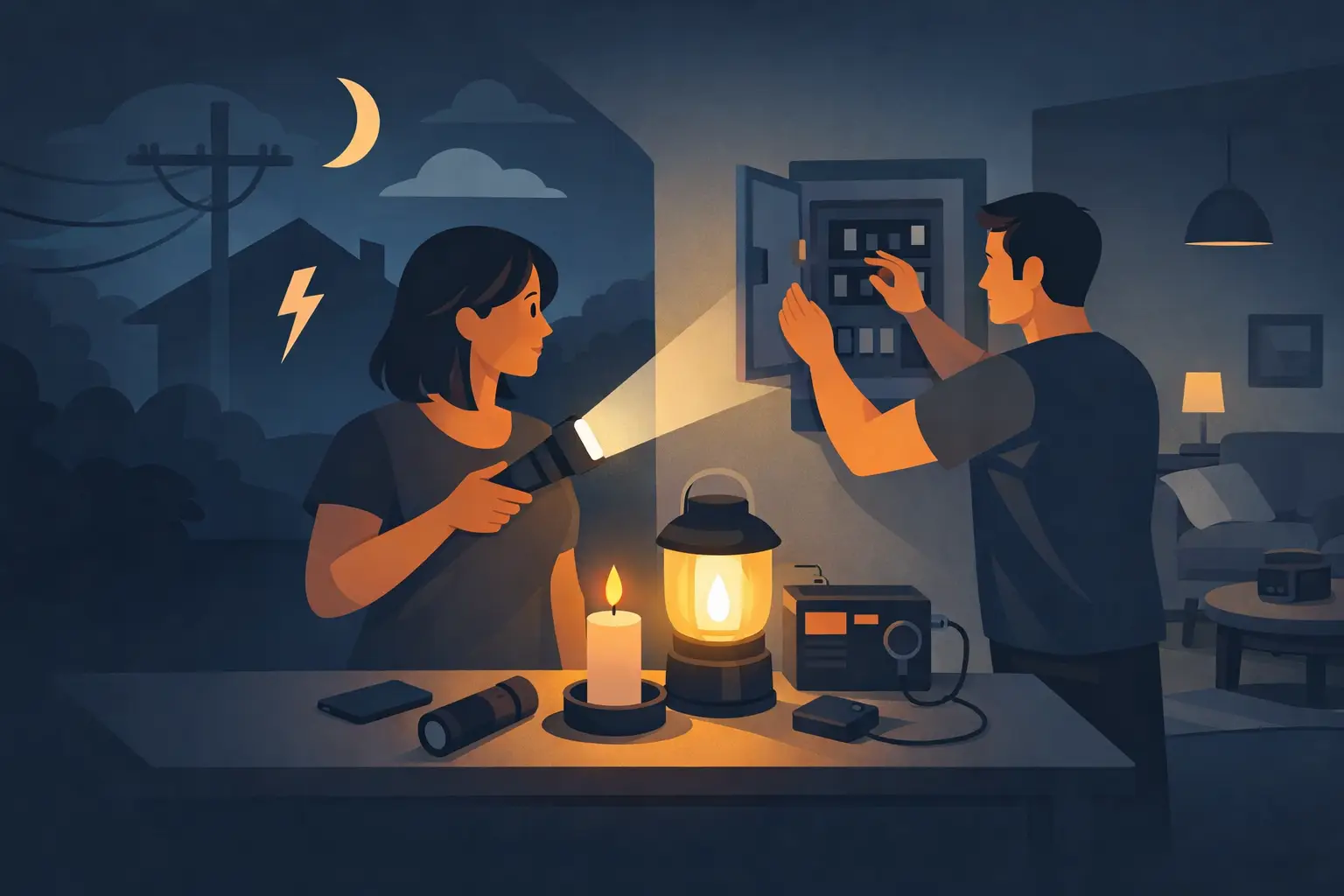
A power cut can turn an ordinary evening into a safety concern within seconds. Lights go out, appliances stop, alarms may sound and it is not always clear whether the fault is inside your property or affecting the wider area. Knowing how to handle a power cut safely helps you protect people, prevent further electrical damage and get the right help without taking unnecessary risks.
For homes, rental properties and workplaces across London and Kent, the first priority is simple: stay calm, use safe lighting and avoid interfering with electrical equipment until you understand what has happened.
Start by making the property safe
Use a torch, rather than candles, to move around the property. Candles create an avoidable fire risk, especially near curtains, bedding, children or pets. Keep a torch and spare batteries somewhere easy to reach, rather than relying on your phone battery as your only source of light.
Switch off or unplug sensitive electrical items where practical. TVs, computers, games consoles, chargers and kitchen appliances can be affected by a surge when power returns. Leave one light switched on so you can tell when electricity has been restored, but avoid turning everything back on at once.
If the power cut occurs after dark, take extra care on stairs and in communal areas. In a block of flats, do not use lifts until the supply is fully restored and the building operator has confirmed they are safe to use. If emergency lighting is not operating in a commercial building or shared hallway, restrict access to poorly lit areas where possible.
Never touch damaged cables, electrical fittings, a smoking consumer unit or anything that has become wet. If you can smell burning, see sparks or smoke, or suspect an electrical fire, move everyone away from the affected area and call 999. Do not attempt to put out an electrical fire with water.
Check whether the problem is inside or outside
Before touching your consumer unit, look outside or contact a neighbour to see whether nearby properties and street lighting are also affected. If the wider area has lost power, the issue is likely with the local electricity network rather than your installation.
In the UK, you can call 105 free of charge to report or check a power cut. This connects you with your local electricity network operator. Your electricity supplier deals with billing and tariffs, while the network operator is responsible for the cables and infrastructure that deliver electricity to your property.
If your neighbours have power but your property does not, the fault may be within your installation. This is when a careful check of the consumer unit can be useful. Do not remove its cover or touch any wiring. The only controls a homeowner, landlord or trained responsible person should operate are the normal switches on the front of the unit.
Check the consumer unit carefully
A tripped circuit breaker or RCD is designed to cut the supply when it detects a possible fault. It is a protective action, not something to ignore. Start by checking whether the main switch is on and whether any breakers or RCD switches are in the off or middle position.
Before resetting a tripped circuit, switch off and unplug appliances on that circuit where you can identify them. Common causes include a faulty kettle, toaster, washing machine, immersion heater, outdoor equipment or a damaged charger. Reset the relevant switch once only.
If it stays on, reconnect appliances one at a time. Should the circuit trip again after a particular item is plugged in, leave that item disconnected. It may be faulty and should be checked, repaired or replaced before further use.
If the switch immediately trips again with appliances disconnected, do not keep resetting it. Repeated resetting can create a risk of overheating or conceal a fault in fixed wiring, a socket, lighting circuit or an appliance that is not easy to isolate. Contact a qualified electrician for a professional inspection.
When not to reset anything
Leave the consumer unit alone and arrange urgent electrical support if there is visible damage, heat, a burning smell, buzzing, water ingress or signs that a cable has been damaged. The same applies if the fault followed drilling, building work, flooding or a blown fuse in older equipment.
In rented accommodation, tenants should report the issue promptly to the landlord or managing agent, particularly where the fault affects fixed wiring, heating controls, smoke alarms or communal systems. Landlords have a responsibility to keep the electrical installation safe, and an unexplained recurring trip should be treated as a maintenance issue rather than a temporary inconvenience.
Protect food, heating and essential equipment
Keep fridge and freezer doors closed as much as possible. A closed fridge will usually keep food cold for around four hours, while a full freezer can hold its temperature for up to 48 hours if left unopened. The actual time depends on how full the appliance is, room temperature and how often the door is opened, so use caution with chilled food once power returns.
Do not use a gas hob, barbecue or portable camping stove indoors to heat a room or cook without suitable ventilation. These appliances can produce carbon monoxide, which cannot be seen or smelt. Portable generators must also remain outdoors, well away from doors, windows and vents. They should never be connected directly to a property’s wiring without a correctly designed changeover arrangement installed by a qualified electrician.
If someone in the household relies on electrically powered medical equipment, act early. Contact the equipment provider or healthcare team if there is any concern about battery backup, and notify the network operator where appropriate. Keep emergency contact numbers, charged power banks and any prescribed equipment instructions available in a known place.
For businesses, a loss of power can affect more than lighting. Till systems, data networks, refrigeration, fire alarm panels, access control and emergency lighting may all require checks after the supply returns. Do not assume backup systems are working simply because an indicator light is on. A responsible person should follow the site’s power-loss procedure and record any faults that need attention.
Take extra care during storms and flooding
Power cuts during storms often involve damaged overhead lines, fallen trees or water. Stay well clear of any fallen cable, even if it appears inactive. Treat it as live, keep others away and report it immediately through 105 or 999 where there is immediate danger.
Floodwater and electricity are a particularly dangerous combination. Do not enter a flooded cellar, utility room or area containing sockets, electrical appliances or a consumer unit. If it is safe to do so without entering water, switch off the electricity supply at the main switch. Otherwise, wait for emergency services or a qualified electrician to advise.
Once water has affected an electrical installation, it should be inspected before it is put back into normal service. Drying out a socket or appliance does not confirm that it is safe. Corrosion and hidden damage can lead to faults later.
What to do when the power comes back
When electricity is restored, give the property a few minutes before switching on high-demand appliances. Bring essential items back first, such as heating controls, refrigeration and lighting. Avoid running several heavy loads at the same time, particularly in older properties with limited circuits.
Check your smoke alarms, carbon monoxide alarms, boiler controls and any timed appliances. Reset clocks where needed, but do not overlook security alarms, electric gates, internet equipment and freezer temperatures. In commercial premises, check emergency lighting indicators, fire alarm panels and equipment that may have shut down unexpectedly.
A one-off area outage may not need further action. But if your own supply keeps tripping, lights flicker, sockets feel warm or you have lost power to part of the property, arrange an electrical assessment. These can be warning signs of a fault that needs proper diagnosis rather than another reset.
Prepare before the next outage
A small amount of preparation makes a real difference. Keep torches, batteries, a charged power bank, basic first-aid supplies and essential contact numbers in an accessible place. For landlords and business owners, make sure occupants know who to contact, where the consumer unit is located and what they should never attempt themselves.
If your property has an outdated fuse board, recurring trips, poor lighting in escape routes or uncertainty around the condition of its wiring, a professional inspection can give you a clear answer. PG Electrical provides practical fault-finding and emergency electrical support, with safety-led advice that helps you make the right decision when the lights go out.
The safest response to a power cut is rarely complicated: use safe light, check the cause without exposing yourself to risk, and call for professional help when the fault is not clearly resolved.