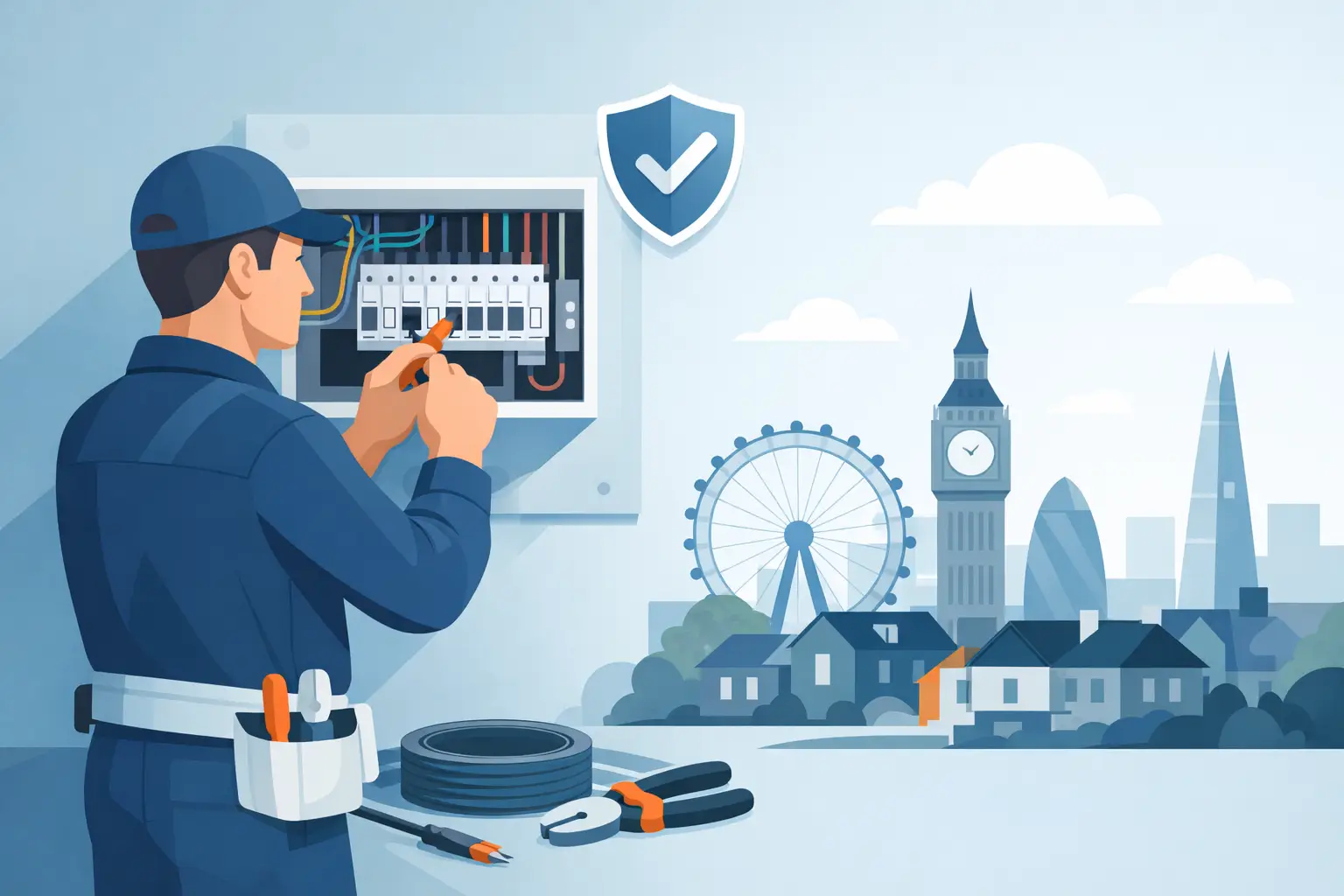
An old fuse box can appear to work perfectly right up to the point it does not. Rewireable fuses, frequent tripping, signs of heat, limited circuit capacity and a lack of modern protection are all reasons to act before a fault becomes an emergency. If you are searching for “how to upgrade consumer unit”, the most useful answer is this: the job starts with a proper assessment of the installation, not with choosing a new board.
A consumer unit replacement affects the safety of every circuit in the property. It must be designed, installed, tested and certified by a competent electrician in line with current wiring regulations. For homeowners, landlords and business owners, a professionally managed upgrade provides clearer fault protection, better capacity for modern living and confidence that the installation has been checked properly.
When should you upgrade a consumer unit?
Consumer units do not have a fixed replacement date. The right time depends on their condition, the age of the wiring and what the property needs now. A well-maintained modern board may not need replacing simply because it is several years old. Conversely, an older board can require urgent attention if the installation is showing signs of deterioration or does not offer suitable protection.
A replacement is commonly recommended where a property still has a fuse box with rewireable fuses, an old consumer unit without RCD protection, damaged components, overheating marks or repeated unexplained tripping. It can also make sense during a rewire, major renovation, extension or loft conversion, when adding an EV charger, or when new circuits are needed for a kitchen, electric heating, home office or commercial equipment.
For rental properties, an unsatisfactory Electrical Installation Condition Report, or EICR, may identify observations that need remedial work. A new consumer unit is not automatically required after every EICR, but it may be the safest and most cost-effective route where the existing board is outdated or unsuitable.
How to upgrade a consumer unit safely
Upgrading a consumer unit is not a DIY project. The work involves isolating the electrical supply, checking the condition and suitability of existing circuits, selecting protective devices correctly, carrying out live and dead testing, and issuing certification. An error can leave circuits unprotected, create a fire risk or result in electric shock.
In England, replacing a consumer unit is generally notifiable work under Part P of the Building Regulations. A registered electrician can complete the work, test it and arrange the appropriate notification and certification. This is particularly important when selling a property, managing a rental home or demonstrating compliance for a commercial premises.
1. Start with an electrical assessment
Before a quotation is prepared, an electrician should assess the existing installation. This is more than a quick look at the fuse box. They will consider the incoming supply, earthing and bonding arrangements, condition of cables, circuit identification, previous alterations and the type of loads used in the building.
This stage matters because a new consumer unit cannot correct unsafe wiring hidden elsewhere. If cable insulation is deteriorated, circuits have been altered poorly or testing reveals faults, those issues need to be addressed as part of the project. A dependable electrician will explain what is essential for safety, what is advisable and what can be planned for later.
2. Choose a consumer unit that suits the property
The correct consumer unit depends on the number of circuits, the electrical demand and the type of building. A small flat with a modest number of circuits has different requirements from a family house with an induction hob, electric shower and EV charger. Offices, shops, HMOs and light industrial premises may need additional capacity, separate protection for critical systems or a distribution arrangement designed for future expansion.
Modern units typically use RCBOs, which provide individual protection for each circuit, or a split-load arrangement using RCDs. RCBO protection often offers a practical advantage: if one circuit develops a fault, it is less likely to shut down multiple areas of the property. It can cost more initially, but it can reduce disruption and make fault finding more straightforward.
Surge protection may also be appropriate, particularly where the property has sensitive electronics, smart controls, alarm systems, networking equipment or valuable appliances. The decision should be based on the installation and risk assessment rather than added as an unnecessary extra.
3. Plan for a controlled power shutdown
A consumer unit change requires the power to be isolated while the old board is removed, the new unit is installed and the circuits are tested. The duration varies depending on the size and condition of the installation, as well as any remedial work identified during testing.
Good preparation makes a real difference. Homeowners should plan around refrigeration, alarm systems, Wi-Fi equipment, medical devices and working-from-home requirements. Landlords should give tenants clear notice. For commercial premises, the work may need to be scheduled outside operating hours to avoid interrupting tills, servers, security systems or production equipment.
The electricity supplier's cut-out and meter equipment are not part of a standard consumer unit replacement. Where there are concerns about the incoming supply, meter tails or main fuse capacity, the electrician may need to advise on coordination with the network operator or energy supplier.
4. Install, label and test every circuit
Once the new unit is fitted, the job is not complete when the lights come back on. Each circuit needs to be tested to confirm that protective devices operate correctly and that the installation meets the required standards. This can include continuity testing, insulation resistance testing, polarity checks, earth fault loop impedance testing and RCD or RCBO operation tests.
Clear labelling is also essential. The circuit schedule should accurately identify what each protective device controls, helping occupants isolate a circuit safely and helping future electricians work efficiently. In a commercial setting, accurate labels are especially valuable where multiple supplies, emergency systems or specialist equipment are present.
5. Receive the right paperwork
After satisfactory completion, you should receive an Electrical Installation Certificate. For notifiable domestic work in England, you should also receive confirmation that the work has been notified in accordance with Building Regulations requirements.
Keep these documents with other property records. They provide evidence that the installation was tested at the time of the upgrade and can be useful for landlords, insurers, buyers, managing agents and future electrical work. If an electrician cannot provide appropriate certification, that is a serious reason to pause before work begins.
What can affect the cost of a consumer unit upgrade?
The cost is shaped by more than the board itself. The number of circuits, type of protective devices, access to the existing unit, condition of cables, required earthing improvements and any faults found during testing can all affect the final scope.
A transparent quote should state what is included, such as the consumer unit, protective devices, testing, certification, labelling and Building Regulations notification where applicable. It should also make clear how unforeseen remedial work will be handled. Fixed pricing is useful where the condition of the installation is already known, but older properties sometimes reveal issues only once detailed testing begins.
Be cautious of a price that seems unusually low. A consumer unit change carried out without adequate inspection and testing can create a false sense of security. The value is in the complete service: competent assessment, correct installation, full testing and clear documentation.
Common mistakes to avoid
The most common mistake is treating the consumer unit as an isolated component. Installing a modern board on an installation with unsafe or damaged circuits does not make those circuits safe. Another is adding too little capacity for planned improvements, then needing further alterations soon after.
It is also worth avoiding assumptions about tripping. A circuit that trips repeatedly may be protecting you from a genuine fault. Resetting it again and again, or fitting a larger protective device, can make the problem more dangerous. A qualified electrician should investigate the cause.
For properties in Greater London and Kent, PG Electrical can assess the existing installation, provide a clear quotation and manage the replacement from testing through to certification. The aim is not simply to fit a new board, but to leave you with an electrical installation that is safer, clearly documented and ready for the way you use your property.
A consumer unit upgrade is a practical investment in safety and reliability. Arrange it before signs of age become an urgent fault, and give the electrician a full picture of any planned extension, EV charger, new appliances or business equipment so the installation can be designed for what comes next.