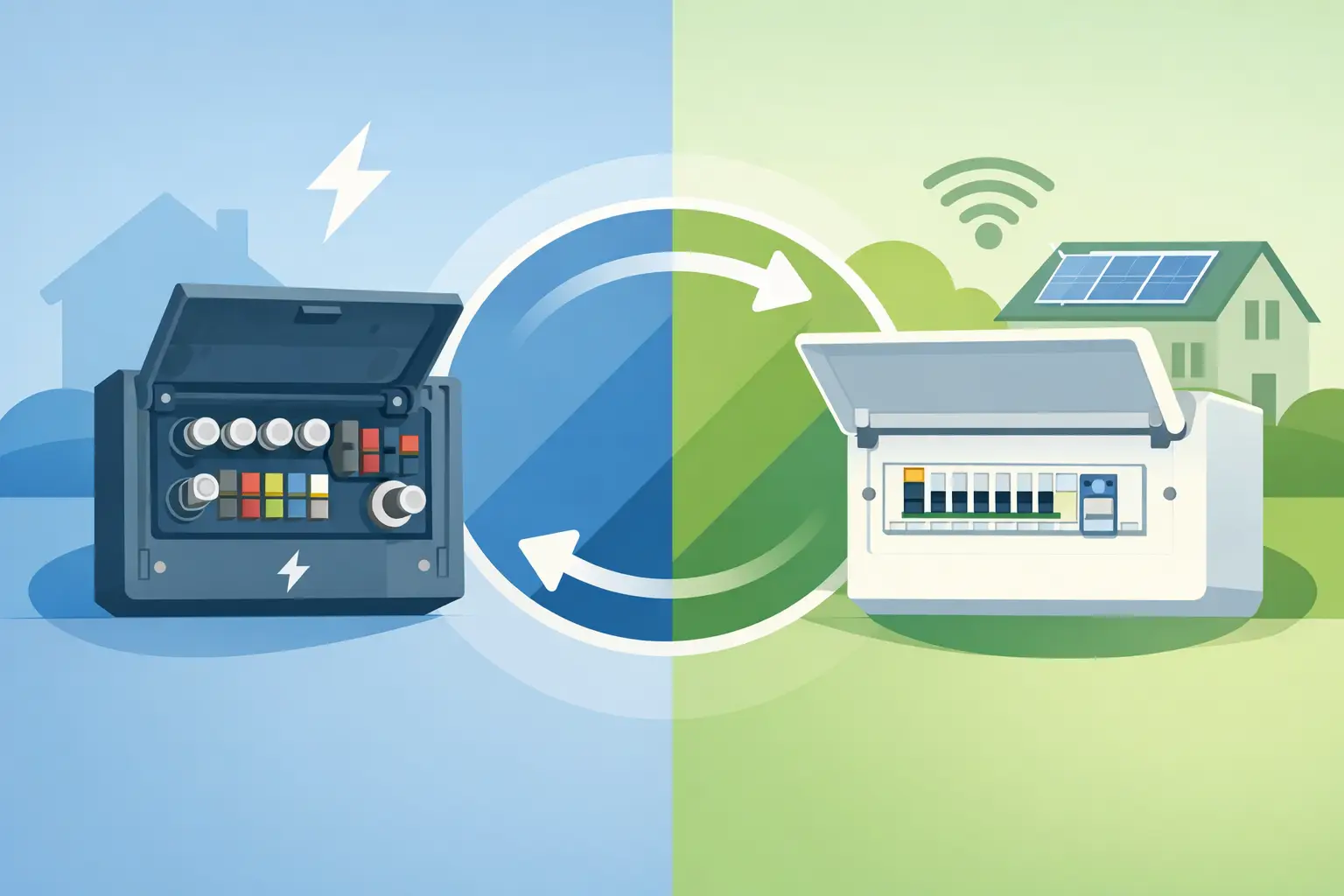
If your electrician says your property still has an old fuse box, they are usually pointing to more than dated terminology. In the consumer unit vs fuse box discussion, the real issue is safety, reliability and whether your electrical installation is keeping up with modern demand. A board that was acceptable decades ago may now be under strain from showers, ovens, EV chargers, home offices and the everyday load of a busy property.
For homeowners, landlords and business owners, that difference matters. It affects fault protection, ease of maintenance, compliance expectations and, in some cases, insurance or tenancy standards. So while many people still say fuse box out of habit, a modern consumer unit is a more advanced piece of equipment with important built-in protections.
Consumer unit vs fuse box: the simple answer
A traditional fuse box usually refers to an older distribution board fitted with rewirable fuses or cartridge fuses. When a fault occurs or a circuit is overloaded, the fuse wire melts and cuts the power. It does the job, but it is basic by current standards and slower, less precise and less convenient than modern alternatives.
A consumer unit is the modern replacement. It distributes electricity around the property in the same way, but it typically includes circuit breakers and additional protective devices such as RCDs and, in many cases, surge protection. Instead of replacing fuse wire after a fault, a tripped breaker can usually be reset once the issue has been identified and put right.
That is the core difference. Both control and protect your circuits, but a modern consumer unit offers a higher level of protection and a better fit for present-day electrical use.
Why the old fuse box is no longer ideal
Older fuse boxes were designed for a different era. Properties had fewer circuits, fewer appliances and far less demand overall. Many now serve homes and buildings that have been extended, altered or upgraded over time, often without the distribution board being brought up to the same standard.
The problem is not simply age. It is that older fuse boxes often lack the protective features now expected in modern installations. They may not provide RCD protection, which is designed to disconnect power quickly in certain fault conditions and reduce the risk of electric shock. They may also be less effective at separating circuits, which can make fault finding more awkward and lead to wider power loss when one issue occurs.
There is also the practical side. Rewirable fuses are less convenient and more prone to the wrong rating being fitted by someone trying to get the power back on. That creates risk. In rented properties, HMOs and commercial settings, this becomes even more significant because safety duties are harder to ignore when multiple occupants or staff are involved.
What a modern consumer unit does better
A current consumer unit is built around faster, more reliable protective devices. Miniature circuit breakers, or MCBs, protect against overloads and short circuits. RCDs add another layer of safety by detecting leakage current. Some boards also use RCBOs, which give individual circuit protection and can reduce the disruption caused by one fault taking out several circuits.
This matters in everyday use. If a fault develops on one circuit, a well-designed consumer unit can isolate the issue more neatly. That can mean your lights stay on while a socket circuit is investigated, or one area of a commercial premises remains operational while another is made safe.
Modern boards can also incorporate surge protection devices. These help protect sensitive electronics from transient overvoltage, something increasingly relevant in properties full of televisions, routers, alarm systems, controls and office equipment. In the right setting, that extra protection is not a luxury. It is a sensible part of protecting the wider installation.
Consumer unit vs fuse box in safety terms
From a safety point of view, this is where the gap becomes most obvious. A fuse box can still function, but functioning and meeting current expectations are not the same thing. Electrical safety standards have evolved because the industry has learned more about how to reduce shock risk, fire risk and nuisance faults.
A modern consumer unit is not just easier to use. It is designed to respond more effectively to real-world fault conditions. That does not mean every old fuse box is automatically dangerous on the day you look at it. It does mean that if your property still has one, it is worth having the wider installation assessed properly rather than assuming it is fine because the lights still come on.
This is particularly relevant if you have recently bought an older property, are planning a renovation, are adding high-load equipment such as an EV charger, or are responsible for rental accommodation. In those situations, the condition and suitability of the board should be considered early, not left until it causes delays or fails an inspection.
Does an old fuse box always need replacing?
Not always immediately, and this is where a proper inspection matters. There are old installations that remain operational and may not present an urgent danger, but that does not mean replacement should be ruled out or postponed indefinitely. The decision depends on age, condition, signs of damage, the presence or absence of RCD protection, the type of circuits connected and what the property now needs from the system.
If the board is damaged, overloaded, poorly labelled, unsuitable for the installation or showing signs of overheating, replacement is often the practical route. If other major electrical works are planned, a consumer unit upgrade often makes sense as part of the same project. It is more efficient to bring the distribution board up to standard while rewiring, altering circuits or adding new equipment than to patch around old limitations.
Landlords should take this especially seriously. An EICR may identify a dated or inadequate board as a concern depending on the installation and level of protection present. Even where immediate replacement is not mandatory, an upgrade can make compliance and ongoing maintenance far more straightforward.
When replacement becomes the sensible option
There are some situations where replacing a fuse box with a modern consumer unit is usually the right call. One is during a rewire or substantial renovation. Another is when repeated tripping, overheating or unreliable circuits suggest the existing board is no longer coping well. A third is when you are adding new circuits for kitchen works, outbuildings, air conditioning, fire alarms or EV charging.
Commercial and multi-occupancy properties often benefit from a more strategic view. In those settings, the board is part of a bigger compliance and continuity picture. Better circuit separation, clearer labelling and more dependable fault protection all help reduce disruption and support safer operation.
There is also a cost angle that people sometimes overlook. While a replacement is an upfront expense, it can save time during fault finding, reduce the likelihood of nuisance issues and support future electrical additions without constant compromise. The cheapest short-term option is not always the best value over the life of the installation.
What to expect from a consumer unit upgrade
Replacing a fuse box is not just a case of swapping one box for another. The electrician needs to assess the existing installation, test circuits and confirm whether the wiring itself is suitable to be connected to a new board. If the property has underlying issues, those may need to be addressed as part of the work.
That is why proper testing and clear quotation matter. A professional contractor will explain what is included, what the existing installation condition means for the job and whether any remedial work is required. In some cases the upgrade is straightforward. In others, the board replacement reveals older wiring defects that have been hidden behind a basic setup for years.
For customers across London and Kent, PG Electrical approaches this work in a practical way - assess the installation properly, advise clearly, carry out the upgrade to current standards and make sure certification is in place at the end.
The term matters less than the condition
People still ask for a fuse box change when they really mean a consumer unit replacement, and that is perfectly normal. The wording matters less than understanding what is actually installed and whether it is fit for purpose.
If your property still has an older fuse box, the right next step is not guesswork. It is to have the board and the wider installation checked by a qualified electrician who can tell you whether it remains serviceable, whether it falls short of current expectations, and whether an upgrade would improve safety, compliance or reliability.
If you are unsure where your property sits in the consumer unit vs fuse box question, treat it as a prompt to get clarity rather than wait for a fault. A well-timed inspection often gives you options, while a failure usually gives you urgency.