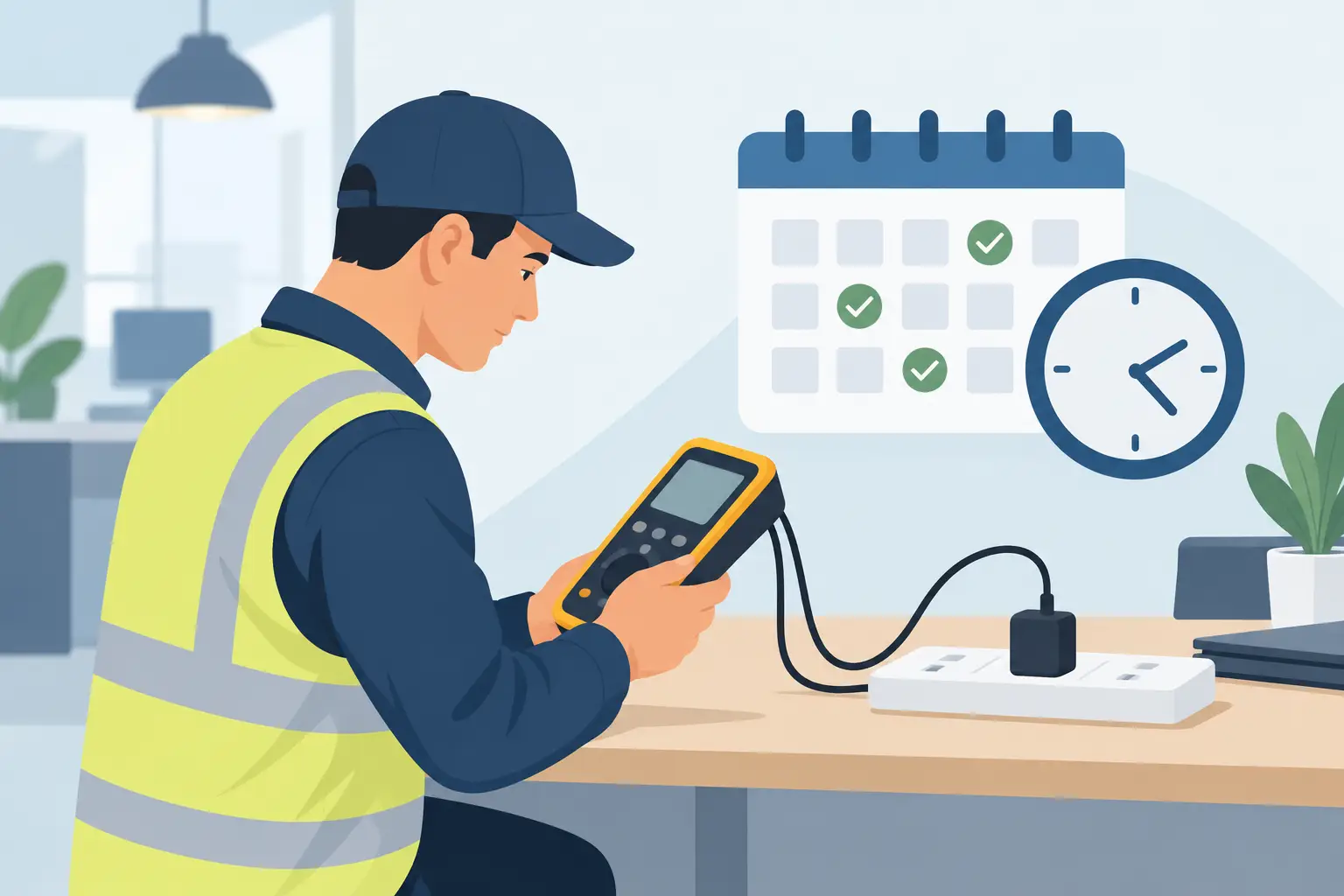
A kettle in a quiet office kitchen and a drill used every day on a building site should not be treated the same way. Both are portable appliances, but their risk profile is very different. That is why PAT testing frequency should be based on how, where and by whom equipment is used - not on a one-size-fits-all annual date in the diary.
For landlords, business owners and property managers across London and Kent, the aim is straightforward: keep electrical equipment safe, identify damage before it becomes dangerous, and maintain sensible records that demonstrate proper control of your premises.
What PAT testing actually covers
PAT stands for Portable Appliance Testing, although the service is more than plugging an appliance into a tester. A competent inspection normally begins with a visual check of the plug, fuse, cable, casing and signs of overheating, damage or poor repair. Where appropriate, electrical tests are then carried out to check features such as earth continuity and insulation resistance.
Many faults are visible before a test instrument is used. Cracked plugs, loose cable grips, taped flexes, damaged extension leads and scorch marks all need attention. In busy properties, regular user checks can spot these issues between formal inspections.
PAT testing applies to appliances that are connected to the mains by a plug and lead, as well as some items with fixed leads. Typical examples include kettles, microwaves, desktop computers, monitors, printers, vacuum cleaners, hand tools, extension leads and chargers. It does not replace fixed-wire inspection and testing, such as an EICR. Both are valuable, but they assess different parts of the electrical installation.
Is there a legal PAT testing frequency?
There is no universal legal rule stating that every appliance must be PAT tested every 12 months. The law requires duty holders to maintain electrical systems so they are safe, and the right inspection interval depends on risk.
For workplaces, this means employers and those responsible for premises should take reasonable steps to prevent danger from electrical equipment. For rented homes, landlords must ensure any electrical equipment they supply is safe. An EICR is required at prescribed intervals for most private rented tenancies in England, but it does not remove the separate responsibility to maintain supplied appliances.
A yearly PAT test can be a sensible arrangement in some settings, particularly where equipment changes hands or receives regular use. It can also be unnecessarily frequent for a low-use, double-insulated appliance in a well-managed office. Conversely, waiting a year may be too long for extension leads and power tools used in a dusty, demanding or public-facing environment.
The practical question is not, “When was this appliance last tested?” It is, “What could happen if this appliance, cable or plug becomes damaged before the next check?”
PAT testing frequency by environment
A risk-based programme considers the appliance type, its construction, how often it is moved, the people using it and the conditions around it. Equipment used by trained staff in a clean office is exposed to less wear than equipment carried between jobs, used outdoors or handled by the public.
Offices, shops and managed commercial premises
In a low-risk office, desktop computers, monitors and other IT equipment are often suitable for less frequent formal testing, provided they are not frequently moved and staff report visible damage promptly. Portable items such as kettles, fans, extension leads and mobile phone chargers usually merit closer attention because they are handled more often.
Shops, salons, cafés and similar customer-facing spaces may need shorter intervals for appliances that are used throughout the day or are accessible to the public. Trailing leads, multiway extension blocks and appliances near sinks or drinks stations deserve particular care.
Rental properties, HMOs and serviced accommodation
Landlords should inspect and test appliances they provide, including white goods, portable heaters, lamps, vacuum cleaners and extension leads. The appropriate interval depends on tenant turnover, appliance condition and use. High-turnover accommodation creates more opportunity for damage to go unnoticed, so checks between occupancies are often a sensible part of property management.
Avoid relying on an old pass label alone. A label records the result on the day of testing, not the condition of an appliance after a move, leak, impact or unsuitable repair. Tenants should also be encouraged to report damaged plugs, flexes and sockets immediately.
Construction, workshops and light industrial sites
Construction tools, workshop equipment and leads are generally exposed to the highest level of wear. Dust, vibration, moisture, site movement and repeated transport all increase the likelihood of damage. This usually calls for more frequent formal inspection and testing, backed up by regular visual checks by users and supervisors.
Hand-held tools, extension leads, cable reels and equipment used outdoors should be treated as priority items. A damaged lead can create a serious hazard long before a routine annual visit is due.
Schools, community venues and public areas
Where appliances are used by many different people, or are left accessible in shared spaces, the chance of misuse and unnoticed damage rises. Equipment in halls, reception areas, meeting rooms and community kitchens should be included in a clear register and checked at intervals that reflect how heavily it is used.
Building a sensible testing schedule
The best programme begins with an equipment register. Record what each item is, where it is located, who is responsible for it, its risk level and the date of its last inspection. This prevents appliances being missed when rooms are refurbished, tenants change or equipment is moved between sites.
Then separate routine user checks from formal inspections. Staff, caretakers and property managers do not need to perform electrical tests, but they can be instructed to remove visibly damaged appliances from service and report them. This simple step is often the fastest way to reduce risk.
For formal testing, set intervals by category rather than applying the same date to every item. A useful programme may include frequent checks for site tools and leads, periodic testing for shared portable equipment, and longer intervals for fixed-position IT equipment in low-risk areas. Review the schedule after incidents, flooding, refurbishment, a change in occupancy or repeated failures.
It is also worth considering whether an appliance is worth retaining. A low-cost kettle or extension lead with recurring faults may be better replaced than repeatedly repaired. Safety decisions should account for the condition of the item, not just the cost of the next test.
Common mistakes that create avoidable risk
One common mistake is treating PAT testing as a certificate exercise. A pass label is useful, but it is not a guarantee that equipment will remain safe until the next visit. Damage can happen at any time, especially to leads and plugs.
Another is confusing PAT testing with an EICR. PAT testing checks portable appliances; an EICR assesses the fixed installation, including consumer units, circuits, socket outlets and protective devices. A commercial property, HMO or rental flat may need both services for a complete electrical safety approach.
Finally, do not overlook privately owned equipment brought into work. Personal mobile phone chargers, heaters, fans and coffee machines can introduce risk if they are used on company premises. A clear policy helps managers decide whether these items are permitted and, if so, how they will be inspected.
When to arrange PAT testing sooner
Bring testing forward if an appliance has been dropped, exposed to water, damaged during a move, involved in a tripping incident or repaired. The same applies when a plug becomes hot, a cable is crushed, an extension lead is overloaded or there are signs of burning.
If equipment fails a visual inspection, take it out of use immediately. Do not rely on tape, improvised repairs or a replacement fuse to solve an underlying fault. A qualified electrician can assess whether repair is safe and economical, or whether replacement is the better option.
A practical approach for safer premises
PAT testing frequency should reflect real conditions in your property, not a blanket rule. A documented, risk-based plan gives landlords and businesses a clearer view of their appliances, reduces disruption and focuses attention where it is most needed.
PG Electrical can assess your equipment, carry out professional testing and help you establish a practical schedule that fits your premises. The right interval is the one that keeps people safe while making proper allowance for how your equipment is actually used.