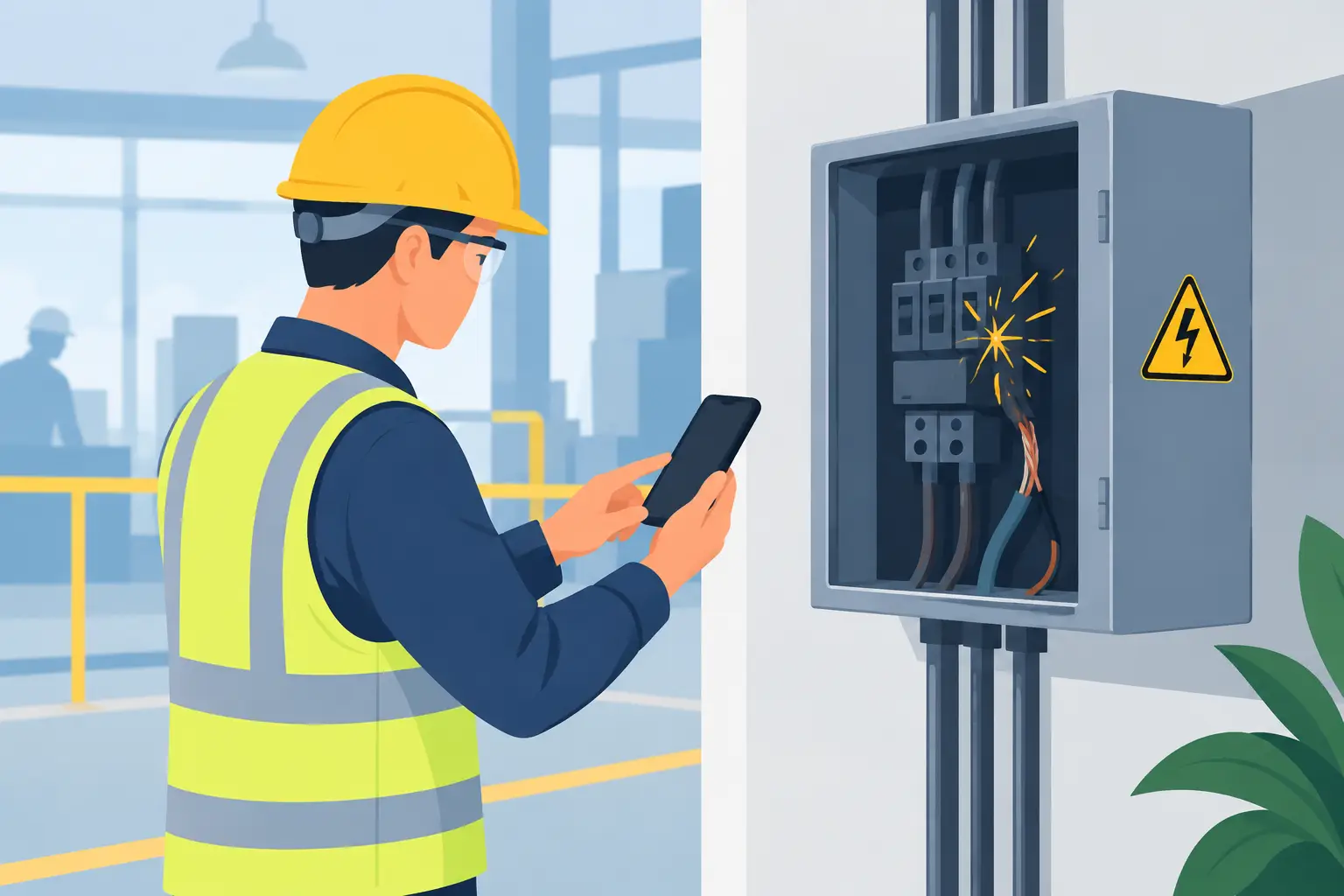
A burning smell from a socket, a flickering light above a workstation, or a cable damaged during building work should never be left for someone else to notice. Knowing how to report electrical hazards safely helps protect occupants, staff, visitors and property while giving the right person enough information to act quickly.
Electrical faults do not always look dramatic. A warm plug, recurring tripped circuit breaker or loose socket can be an early warning of overheating, damaged wiring or an overloaded circuit. The right response is calm, practical and safety-led: keep clear of the hazard, prevent others from using it and report it through the appropriate channel without attempting a repair.
Recognise the signs that need reporting
Some electrical hazards require immediate action, while others need a prompt inspection before they develop into an emergency. In either case, do not assume a fault has resolved simply because power returns or a breaker can be reset.
Common warning signs include burning smells, scorch marks, buzzing or crackling from accessories, shocks or tingling from appliances, exposed cables, water near electrical equipment, damaged consumer units, loose sockets and repeated loss of power. Lights that dim when equipment starts, or circuits that trip repeatedly, can also point to an issue that needs professional investigation.
In a commercial property, pay particular attention to extension leads across walkways, overloaded adaptors, damaged portable equipment and altered office layouts. In homes and rental properties, look for aging accessories, DIY additions, damp areas and signs that an appliance is overheating. The cause may be minor, but only testing can confirm whether the installation remains safe.
How to report electrical hazards safely
Your first responsibility is to avoid making the situation worse. Do not touch exposed conductors, remove socket covers, open electrical panels or try to repair a damaged cable with tape. If there is a safe and clearly identified way to isolate the affected circuit without approaching danger, such as switching off a labelled breaker from a dry, accessible consumer unit, do so. If there is any doubt, leave it alone.
Keep people away from the area. A simple warning, barrier or temporary closure can prevent someone from plugging in an appliance or touching damaged equipment before help arrives. Where a portable appliance is suspected, label it clearly as unsafe and remove it from use only if this can be done without risk.
Then report the issue to the person responsible for the property or site. At home, this may be the homeowner, landlord, managing agent or electrician. At work, follow the company reporting process and notify the facilities manager, supervisor or health and safety lead. In a shared block, report faults in communal areas to the building manager as well as the appropriate contractor.
A useful report should state what has happened, where it is happening and whether anyone is at immediate risk. Avoid technical guesses. “The socket beside the kitchen sink is hot and smells burnt” is more useful than “the wiring has failed”. Clear observations allow the responsible person to prioritise the response and send an electrician with the right expectations.
Include the following details where possible:
- The exact location, such as the room, floor, unit number or nearby equipment.
- What you saw, heard or smelt, including sparks, heat, smoke, damage or repeated tripping.
- When the problem began and whether it is getting worse or returning.
- What equipment was in use at the time, without reconnecting it to check.
- Any immediate control already in place, such as a circuit isolated or area closed off.
Photographs can be helpful for a loose accessory, damaged plug or broken cable, but only take them from a safe distance. Never move closer to obtain evidence, particularly where water, smoke, exposed wiring or damaged outdoor cables are involved.
Know when an electrical fault is an emergency
If there is smoke, fire, arcing, a serious electric shock, a fallen overhead cable or an immediate threat to life, call 999. Do not use water on an electrical fire and do not touch a person who may still be in contact with live electricity. If it is safe to isolate the supply from a distance, do so, but emergency services should take priority where danger is present.
For damaged external cables, unsafe electrical equipment in the street or a suspected network fault, contact the local electricity network operator. In Great Britain, calling 105 connects you to the relevant network operator. Keep well clear of any fallen cable, even if it appears inactive, and prevent others from approaching it.
Not every urgent issue requires emergency services, but it may still need a 24/7 electrician. A burning consumer unit, loss of essential lighting, a fault affecting a business operation or water entering electrical equipment should be assessed quickly. Do not wait until normal working hours if the risk cannot be controlled safely.
Give landlords and property managers a report they can act on
For landlords, letting agents and property managers, a verbal report should be followed by a written record. This creates a clear timeline, helps demonstrate that the concern was taken seriously and supports effective maintenance planning. Record the date and time, the person reporting the issue, the location, the observed hazard and the action taken.
An Electrical Installation Condition Report, or EICR, is valuable for identifying deterioration and non-compliance across an installation. However, it is not a substitute for responding to a newly reported hazard. A current certificate does not make a hot socket or damaged cable safe to continue using. Report the issue, isolate the affected item where appropriate and arrange a competent inspection.
In HMOs, offices and multi-unit buildings, communication matters as much as the technical repair. Residents or staff should be told about temporary restrictions, such as an out-of-use socket, closed corridor or isolated circuit. This reduces the chance of someone restoring power or using equipment before the fault has been resolved.
Avoid the common mistakes that increase risk
The most frequent mistake is repeated resetting. Circuit breakers trip to protect people and equipment. Resetting one once after a known, temporary overload may be reasonable, but repeated tripping is a warning that requires investigation. Continuing to reset the circuit can conceal a developing fault and increase the risk of heat damage.
Another mistake is relying on extension leads as a permanent solution. If a room regularly depends on multi-way adaptors and long leads, the electrical layout may no longer suit how the space is being used. This is especially common after office reconfigurations, home renovations and the addition of high-demand appliances. The practical answer may be additional sockets, a new circuit or an upgrade to the consumer unit, rather than another adaptor.
Finally, do not delay a report because the fault seems intermittent. Electrical issues often appear only under load, during wet weather or when a particular appliance is running. Note the circumstances, stop using the suspect equipment and pass those details on. An intermittent fault can be harder to trace, but accurate information gives an electrician a much better starting point.
What happens after you report an electrical hazard?
A qualified electrician will assess the immediate risk first. This may involve isolating a circuit, testing the affected accessory or appliance, inspecting the consumer unit and checking for signs of overheating, loose connections, damaged insulation or water ingress. The correct repair depends on the cause, not simply the visible symptom.
For a homeowner, the work may be as straightforward as replacing a damaged socket or correcting a loose connection. For a landlord or business, the investigation may identify a wider need for remedial work, circuit improvements, emergency lighting checks, fire alarm support or a full condition report. A professional contractor should explain what has been found, what must be made safe now and what longer-term work is recommended, with clear pricing before planned work begins.
PG Electrical supports homeowners, landlords and businesses across Greater London and Kent with urgent fault response, testing and remedial electrical work. The aim is always the same: make the immediate situation safe, identify the cause and provide a practical route to a compliant, reliable installation.
A prompt report is not overreacting. It is the sensible step that gives a small warning sign the attention it deserves before it becomes an avoidable disruption, injury or fire risk.