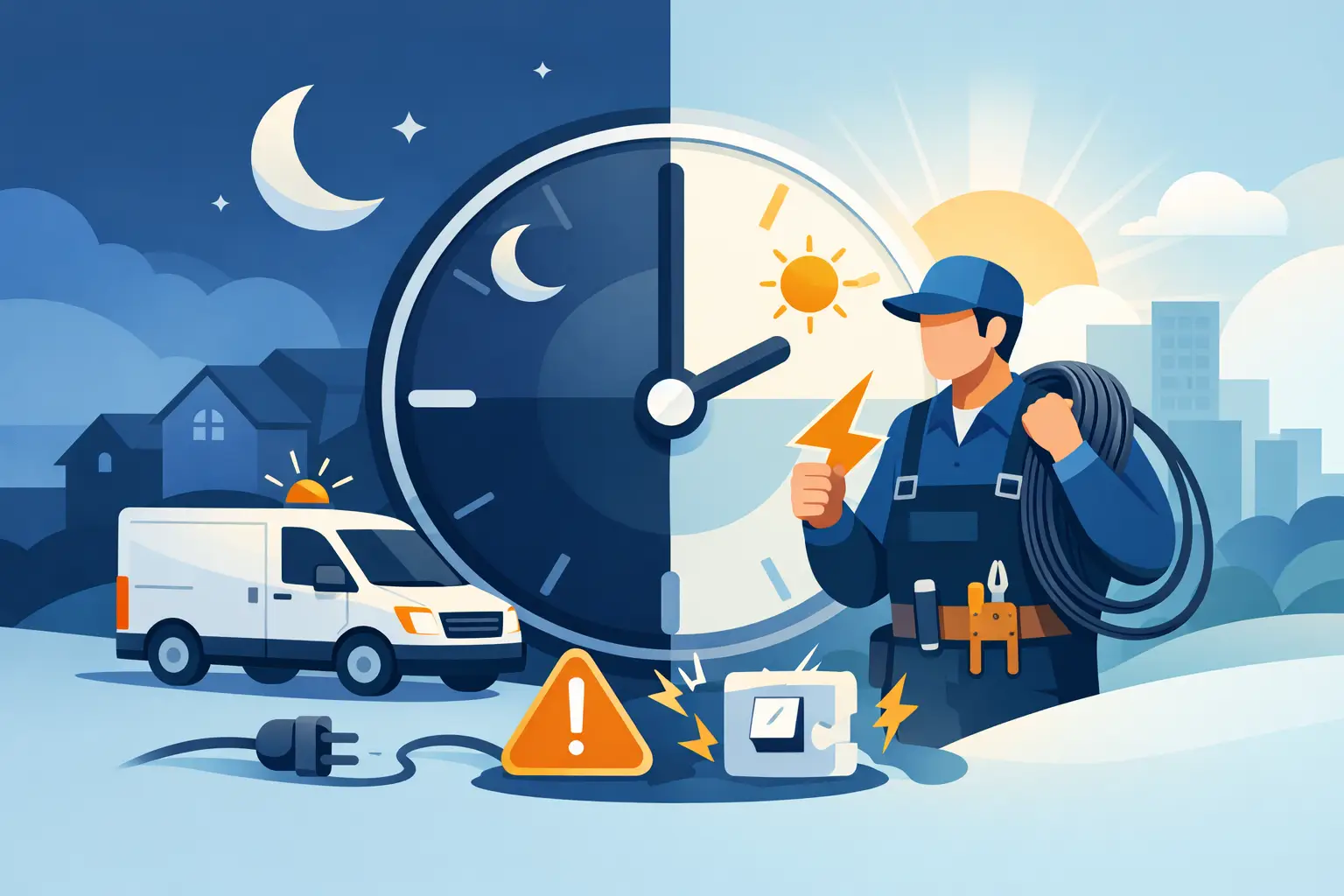
A burning smell from a socket at 11pm is not the time to wonder whether the problem can wait until morning. When power fails, circuits trip repeatedly, or signs of overheating appear, a 24-hour electrical callout is about making the property safe first and fixing the fault properly as soon as possible.
For homeowners, landlords, property managers and business owners, electrical faults rarely arrive at a convenient hour. Some are disruptive but manageable. Others carry a genuine safety risk, especially in older properties, busy commercial units and rented buildings where systems may already be under strain. Knowing the difference matters.
When a 24-hour electrical callout is the right move
Not every electrical issue is an emergency, but some should never be left overnight. If a consumer unit keeps tripping and will not reset, there may be an active fault on the circuit. If a socket is sparking, a switch plate feels hot, or there is a smell of burning plastic, the safest step is to stop using that part of the installation and call an electrician straight away.
A complete loss of power can also justify an urgent response, although it depends on the cause. If the whole street is off, the issue may be with the supply network rather than your installation. If neighbouring properties still have power and only your building is affected, the fault is more likely internal and needs investigation.
For commercial premises, HMOs and managed properties, the threshold for urgency is often lower. Emergency lighting faults, failed distribution boards, exposed live parts, water ingress near electrics, or power loss affecting critical equipment all need prompt attention. In those settings, delays can create safety, compliance and operational problems at the same time.
What counts as an electrical emergency
A genuine emergency is usually one of three things - immediate danger, loss of essential function, or a fault that is likely to worsen quickly.
Immediate danger includes electric shocks, visible arcing, smoke, burning odours, melted accessories, exposed wiring, or any sign that a circuit is overheating. These situations should be treated seriously, even if the problem seems to stop after switching something off.
Loss of essential function covers faults that leave a property without lighting, power to key systems, or safe operation of alarms and emergency equipment. In a family home, that may mean complete power loss or dangerous faults affecting heating controls or kitchen circuits. In a business or rental property, it can involve communal lighting, fire alarm interfaces, security systems, shutters, server points, or emergency escape lighting.
The third category is the fault that keeps returning. A circuit breaker that trips once may be a one-off caused by a faulty appliance. A breaker that trips repeatedly after isolation and testing attempts points to something more serious. Repeated tripping is a warning sign, not an inconvenience to ignore.
What to do before the electrician arrives
The first priority is safety. If you can do so without risk, switch off the affected circuit or isolate power at the consumer unit. Do not touch damaged cables, burnt accessories or wet electrical equipment. If water is leaking near light fittings, sockets or electrical panels, keep clear of the area and avoid trial-and-error resets.
It helps to note what happened just before the fault. Did a particular appliance switch on? Did the lights flicker first? Was there recent work carried out in the property? Small details can speed up fault finding and reduce wasted time on site.
If you manage a tenanted property or commercial building, make sure access is clear and key areas can be reached quickly. A fast response only works if the electrician can inspect the consumer unit, affected circuits and any equipment linked to the fault.
What happens during a 24-hour electrical callout
A proper emergency visit is not guesswork. The first step is to assess immediate risk, make the installation safe and identify whether the fault can be resolved there and then or whether temporary isolation is the safest option until further work is carried out.
In many cases, the issue is traced through systematic testing. That may involve checking protective devices, testing circuits for continuity and insulation resistance where appropriate, inspecting accessories, and isolating connected equipment that may be causing the problem. The aim is not simply to get the power back on. It is to restore service without leaving an unsafe condition behind.
Sometimes the repair is straightforward. A failed accessory, damaged fitting or faulty connection may be replaced during the callout if suitable parts are available. At other times, the emergency appointment is about stabilising the situation. If a board has suffered heat damage, if wiring has deteriorated, or if a fault points to wider issues in the installation, a follow-up visit may be needed for permanent remedial work.
That is not a sign of poor service. It is often the correct professional decision. Electrical safety comes before rushing through a repair in the middle of the night.
Why transparent pricing matters on emergency callouts
Urgent work can make customers feel boxed in, which is exactly why pricing should be clear. A dependable contractor will explain callout charges, likely next steps and whether additional works fall outside the emergency attendance.
There is a practical balance here. Emergency response costs more than a booked daytime appointment because it involves availability, travel and rapid mobilisation. That said, urgency should not mean vague costs or open-ended charges. Customers need to know what they are authorising and whether the visit covers diagnosis, temporary make-safe work, minor repairs, or all three.
For landlords and business owners, that clarity is especially important. One issue may affect several occupants, trigger compliance concerns or lead to follow-on works such as EICRs, remedial upgrades or replacement of damaged equipment. Honest pricing allows decisions to be made quickly without losing control of the budget.
24-hour electrical callout for homes, rentals and commercial sites
The same fault can carry very different consequences depending on the property type. In a home, a failed lighting circuit is disruptive and potentially unsafe. In a restaurant, office, retail unit or HMO, it may also affect staff safety, customer access, alarms, refrigeration, or legal responsibilities.
That is why experience across domestic and commercial installations matters. A contractor responding to an urgent issue in a flat conversion, managed block or business premises needs to understand more than sockets and lights. Distribution layouts, emergency systems, shared supplies, landlord obligations and occupancy risk all change the way a fault should be handled.
For example, a tripping circuit in a single-family home may be isolated with minimal wider impact. The same problem in a multi-unit property could affect communal systems or indicate overloading tied to older wiring arrangements. A fast response is useful, but a competent diagnosis is what protects the property properly.
When an emergency points to a bigger problem
Some callouts are caused by sudden equipment failure. Others expose issues that have been building for years. Ageing consumer units, poor previous workmanship, overloaded circuits, worn accessories and insulation breakdown often show themselves at the worst possible moment.
If an emergency visit reveals those underlying problems, it is worth treating the callout as a warning rather than a one-off repair. Rewiring sections of the installation, replacing a consumer unit, upgrading protective devices or carrying out a full inspection may be the sensible next step.
This is particularly relevant for landlords, older commercial premises and properties that have changed use over time. What was once adequate may no longer be safe or compliant for current demand. A night-time fault can be the first visible sign that the installation needs more than a quick fix.
Choosing the right electrician for urgent work
When you need help quickly, it is tempting to focus only on response time. Speed matters, but qualifications, communication and practical experience matter just as much. The right electrician should be able to make the situation safe, explain the issue clearly and advise on the best permanent solution without overstating the problem.
Look for a contractor that handles both emergency response and planned remedial work. That continuity makes a difference. It means the person who attends the fault understands how to take the job from first diagnosis through to repair, testing and compliance documentation if required.
For customers across London and Kent, that joined-up approach is often what turns an urgent problem into a controlled one. PG Electrical works that way - rapid response where needed, followed by clear advice and professional remedial work that solves the issue properly.
Electrical faults do not wait for business hours, and neither should safety decisions. If something feels wrong, smells wrong or keeps tripping for no clear reason, trust that instinct and get it checked before a small fault becomes a more serious one.