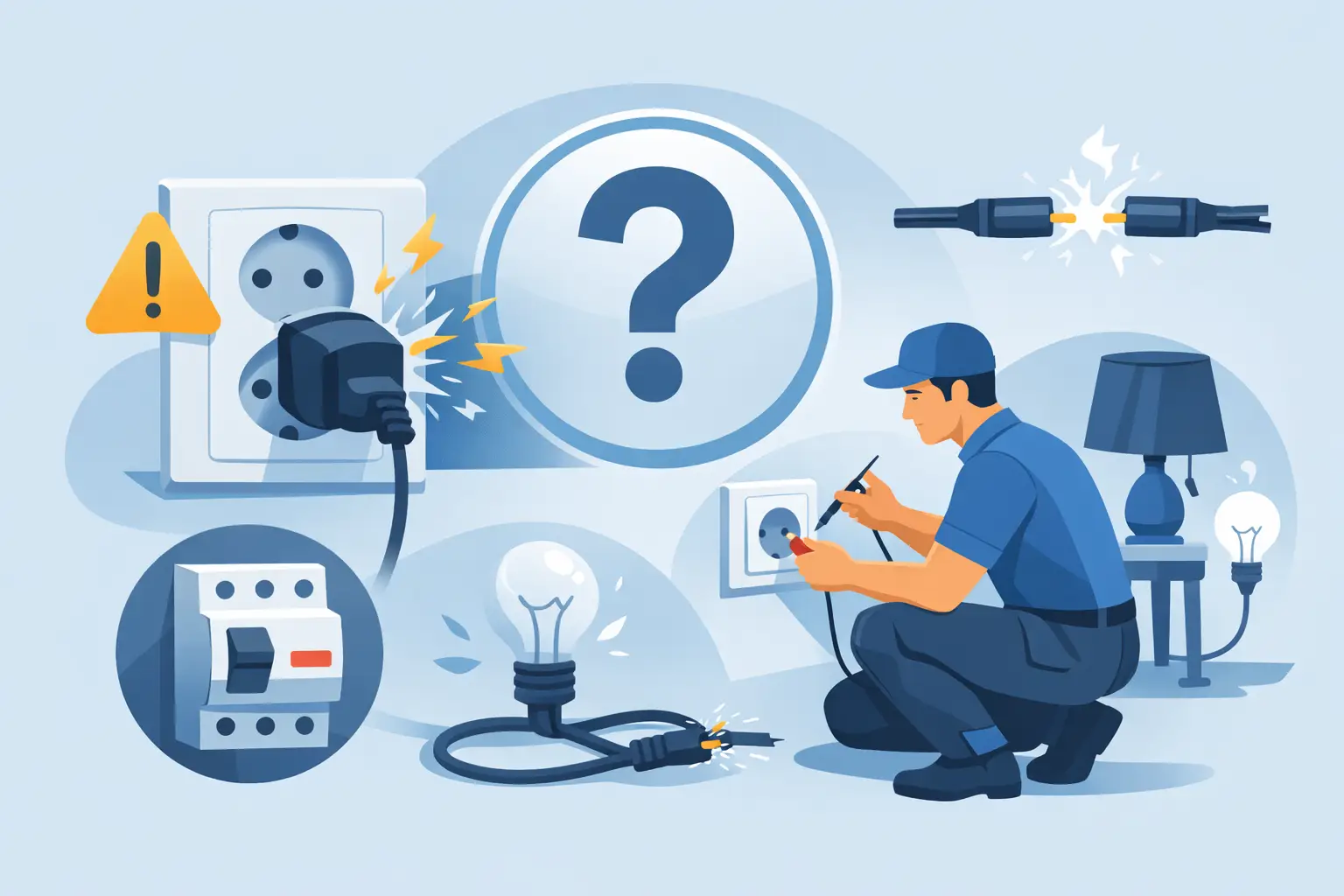
A socket that suddenly stops powering a kettle, charger or computer can disrupt a home or business quickly. If you are asking, “why are sockets not working?”, the answer may be as simple as a tripped circuit breaker, but it can also point to a loose connection, a faulty appliance or an issue within the fixed wiring. The key is to make safe checks first and avoid turning a minor fault into a serious electrical risk.
Why Are Sockets Not Working in Your Property?
The pattern of the fault gives an electrician useful information. One dead socket is often a local issue with that outlet, its connections or a spur serving it. Several sockets in one room may be on the same circuit, while sockets that have failed throughout the property are more likely to relate to the consumer unit, incoming supply or a major circuit fault.
Do not assume that a socket is safe simply because there is no power. A damaged socket, loose cable or failed connection may still present a shock or fire risk. If you notice burning smells, heat, crackling, scorch marks, smoke or repeated tripping, switch off the affected circuit if it is safe to do so and arrange urgent help from a qualified electrician.
A tripped breaker or RCD
Modern consumer units use circuit breakers and residual current devices, commonly called RCDs, to disconnect power when they detect an overload, short circuit or possible earth leakage. This is a protective response, not an inconvenience to ignore.
Check whether a breaker or RCD has moved to the off position. If it has, unplug appliances connected to the affected sockets before resetting it once. If the device stays on, reconnect appliances one at a time. Should the breaker trip again, leave it off. The problem may be an appliance, but it could also be the socket circuit itself.
An RCD may protect more than one circuit, so its operation can affect sockets in several rooms. In some properties, an outside socket, garage supply, kitchen appliance or damp area can be connected to the same protective device. This is why the source is not always beside the socket that has stopped working.
A faulty appliance or damaged plug
A faulty appliance is one of the most common reasons a socket circuit trips. Cables can become crushed behind furniture, plugs can suffer damage, and appliances exposed to moisture or heavy use can develop internal faults. Older extension leads and multi-way adaptors are also frequent causes.
Try a known working appliance in the affected socket, provided there are no signs of damage or overheating. Then test the original appliance in a socket that is known to work. This simple comparison can help identify whether the problem follows the appliance or remains with the outlet.
Do not continue using an appliance that causes a circuit to trip. Avoid removing covers, changing fuses repeatedly or using an extension lead to bypass the issue. For landlords, offices and managed premises, regular PAT testing provides a practical way to identify damaged portable equipment before it causes disruption or danger.
A loose or failed socket connection
Sockets endure regular use. Plugs are inserted and removed, furniture catches leads, and repeated loading can place strain on terminals behind the faceplate. Over time, connections can loosen or components can wear.
A socket that works intermittently, feels warm, makes a buzzing sound or has a loose faceplate needs professional attention. These are not faults to monitor casually. Loose electrical connections can create resistance and heat, increasing the risk of damage to the socket and surrounding wiring.
The same applies where a socket has been painted over, cracked, water-damaged or physically pulled from the wall. Leave it unused until it has been inspected and repaired correctly.
Common Reasons Sockets Stop Working Together
When multiple outlets fail at once, the issue is usually further back on the circuit. Ring final circuits, radial circuits and spurs are arranged differently, particularly in older homes, extensions and commercial premises. A qualified electrician can test the circuit and trace the fault without guesswork or unnecessary disruption.
Overloaded circuits
High-demand equipment can overload a circuit, especially where several appliances are used from the same area. Kitchens, home offices, workshops and retail back rooms are common pressure points. Kettles, heaters, microwaves, tumble dryers, printers and power tools can draw significant current.
Extension leads may make a lack of sockets feel like a minor inconvenience, but they can mask an overloaded circuit or encourage too many appliances to be used from one outlet. A properly planned installation may require additional sockets, a dedicated circuit or a consumer unit upgrade, depending on the load and the condition of the existing installation.
Faults on an outdoor or damp-area circuit
Water and electricity are a poor combination. External sockets, garages, sheds, bathrooms, basements and kitchens require suitable equipment and careful installation. Condensation, rain ingress, damaged seals and water entering an accessory can cause an RCD to trip.
If sockets stop working after heavy rain, plumbing work or a leak, do not reset the circuit repeatedly. Keep the area clear, isolate the supply where safe, and have the installation checked. The underlying moisture issue must be resolved as well as the electrical fault.
Ageing wiring or previous alterations
Properties across London and Kent range from period homes to modern developments, and the quality of past electrical work can vary considerably. Old wiring, worn accessories, incorrectly installed spurs or undocumented alterations can all lead to unreliable sockets.
Renovations can also expose weaknesses in an existing installation. New kitchens, loft conversions, garden offices and additional heating loads may place demands on circuits that were never designed for them. An Electrical Installation Condition Report, or EICR, can identify deterioration, damage, overloaded circuits and departures from current safety standards. It is especially valuable for landlords, property managers and buyers assessing an older property.
Safe Checks You Can Make Before Calling an Electrician
There are a few sensible observations you can make without opening a socket or touching fixed wiring. First, confirm whether the issue affects one socket, one room or the whole property. Next, check the consumer unit for a tripped breaker or RCD, and unplug connected appliances before attempting one reset.
Look for obvious signs of damage at plugs, leads and outlets. A working socket tester can be useful for basic indication, but it does not replace proper electrical testing and cannot identify every fault. If you are unsure what you are looking at, stop there. Do not remove socket faceplates, work on live equipment or attempt repairs based on online instructions.
For a commercial property, record which areas and equipment are affected. This helps minimise downtime and gives the attending electrician a clearer starting point. In a rental property, tenants should report the fault promptly and avoid tampering with the consumer unit or fixed accessories.
When a Socket Fault Needs Urgent Attention
Some socket problems can wait for a planned appointment, particularly if one unused outlet has failed and there are no warning signs. Others need immediate action. Arrange an emergency electrician if there is a burning smell, visible scorching, smoke, sparks, electric shocks, water near electrical equipment, a hot socket, exposed wiring or a circuit that will not remain reset.
Loss of power to essential equipment may also require a faster response. This includes refrigeration in a business, safety systems, critical IT equipment, medical equipment or power supplies in communal areas. In these situations, the priority is to make the installation safe, diagnose the cause accurately and restore service without compromising compliance.
Professional Fault Finding Provides the Right Repair
Electrical fault finding is more than replacing a socket faceplate. A qualified electrician will assess the symptoms, inspect the relevant circuit, carry out appropriate testing and identify whether the fault lies with an appliance, accessory, cable, protective device or wider installation.
The right repair depends on the result. It may be a straightforward socket replacement, correction of a loose connection, replacement of a damaged cable section or a more substantial upgrade to address an ageing or overloaded installation. Clear findings and a transparent quote allow you to make an informed decision before work begins.
PG Electrical provides practical fault finding and emergency support for homes, rental properties and commercial premises across Greater London and Kent. If a socket fault is affecting your safety, routine or business operations, acting early is the most reliable way to prevent further damage and restore power with confidence.