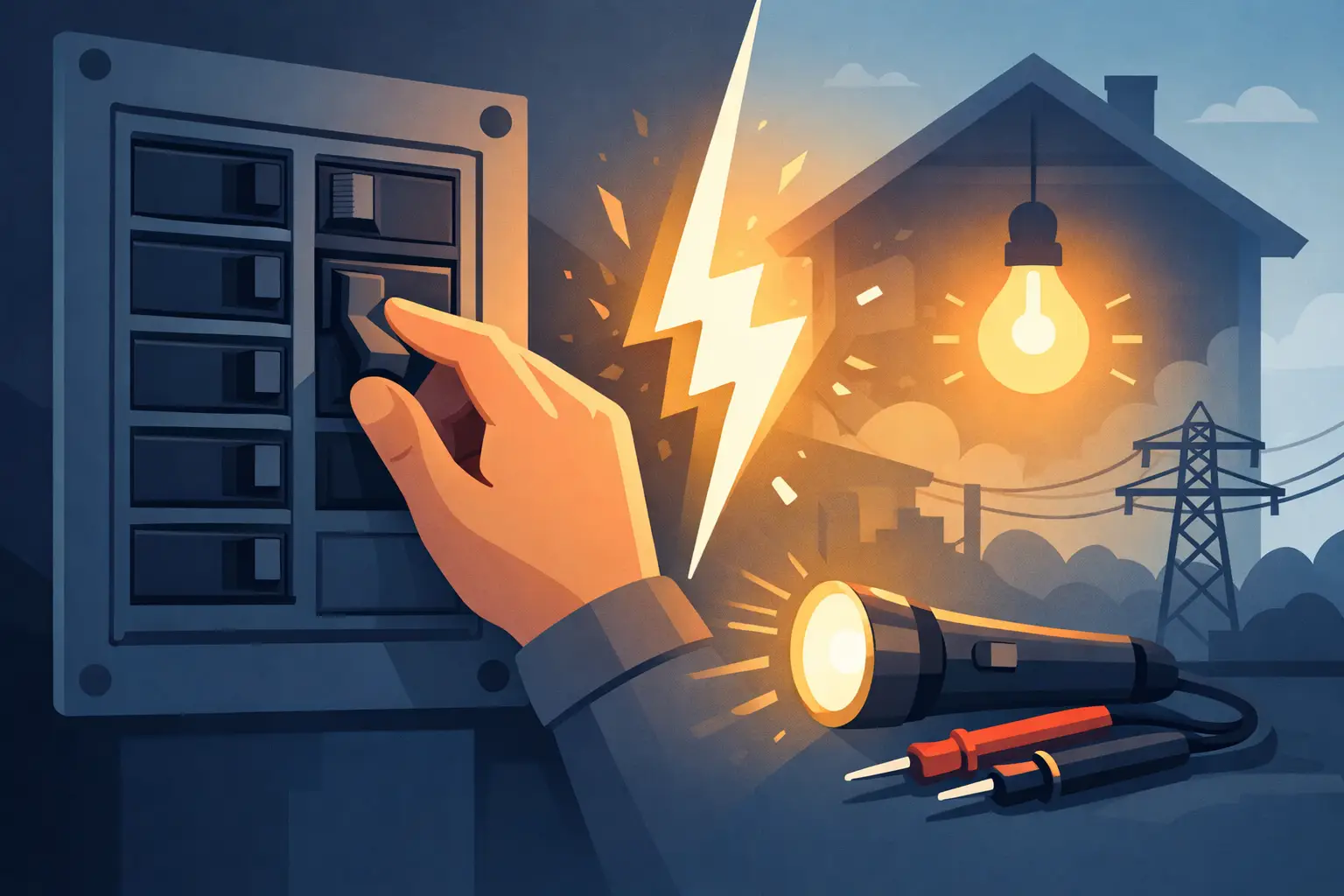
A circuit trip at 7am can stop far more than the lights. The kettle will not boil, the Wi-Fi may be off, and a boiler or freezer could be affected. Knowing how to restore power after a circuit trip can get your property running again, but only if you deal with it safely and recognise when a reset is not the answer.
Modern consumer units are designed to disconnect power when they detect a fault. That protection is doing its job. The priority is not simply to get electricity back on, but to identify whether the trip was caused by a temporary overload, a faulty appliance, damaged wiring, or a more serious electrical issue.
Why a circuit trips in the first place
A circuit breaker or RCD trips to reduce the risk of electric shock, overheating and fire. In many homes and business premises, the consumer unit has individual switches for different circuits, such as sockets, lighting, kitchen appliances or an electric shower. It may also have an RCD that protects several circuits at once.
An overload is one of the more straightforward causes. For example, a portable heater, tumble dryer, kettle and microwave running on the same socket circuit can draw more current than the circuit is intended to carry. The breaker switches off to prevent cables overheating.
A tripped RCD can point to a different issue. RCDs monitor electrical current and react where power may be leaking to earth, which can happen with a damaged appliance, moisture in an outside fitting, worn cable insulation or a fault in fixed wiring. A single trip does not always mean there is a major problem. Repeated tripping, however, should never be ignored.
How to restore power after a circuit trip safely
Start by checking whether the loss of power is limited to your property. If street lighting is out or neighbouring properties have no supply, the issue may be with the local electricity network rather than your consumer unit. Do not touch the electricity meter, supplier equipment or service fuse. Contact your network operator if a wider outage appears likely.
If the issue is inside your property, locate the consumer unit. In a house this may be near the entrance, under the stairs, in a utility room or garage. In a flat, it may be in a cupboard or communal service area. Good lighting matters, so use a torch rather than a candle if the area is dark.
Look for a breaker or RCD that is in the down or middle position. Before resetting it, turn off or unplug appliances on the affected circuit. If a socket circuit has tripped, this may include items in several rooms. Pay particular attention to recently used appliances, chargers, extension leads, outdoor equipment and anything that has been exposed to water.
Move the tripped switch fully to the off position first, then back to on. If it stays on, reconnect appliances one at a time. This gives you the best chance of finding the item that caused the trip. If the circuit trips again when a particular appliance is connected, leave that item unplugged and arrange for it to be checked or replaced.
Do not repeatedly force a switch back on. One careful reset after disconnecting appliances is reasonable. If it will not stay on, or trips immediately, there is likely to be an active fault that needs professional investigation.
If the whole consumer unit has gone off
Where the main RCD has tripped, several circuits may be without power. Turn off all the individual circuit breakers first, then reset the RCD. If it holds, switch the individual breakers back on one at a time. The circuit that causes the RCD to trip again is the likely source of the fault.
Leave that circuit off and avoid using it until the cause is known. This may mean a room, kitchen sockets, outside lighting or another part of the property remains without power temporarily. It is safer to work around one isolated circuit than to keep resetting a protective device that is detecting a fault.
When not to reset a tripped circuit
There are clear situations where you should stop and call a qualified electrician. A burning smell, smoke, buzzing from the consumer unit, scorch marks, melted plugs or a warm socket are all urgent warning signs. Switch off power at the main switch only if it is safe to do so, keep clear of the affected area and do not use the installation.
Water and electricity are another serious combination. If a trip follows flooding, a leaking pipe, heavy rain affecting outside electrics or water entering a socket, do not attempt to reset the circuit. The system must be inspected once the area is safe and dry.
Older fuse boards also need a more cautious approach. If your property has rewireable fuses rather than modern circuit breakers, do not replace fuse wire without knowing why it operated and what rating is required. Fitting the wrong fuse wire can remove vital protection from the circuit.
For landlords and commercial property managers, repeated trips should be recorded and investigated promptly. Tenants may reset a breaker and carry on without reporting the problem, but recurring faults can indicate deterioration in wiring, overloaded shared circuits or defective equipment. Early action protects occupants and helps maintain electrical compliance.
Common causes that need professional attention
A faulty appliance is often the cause, particularly where a trip occurs as soon as a washing machine, dishwasher, oven, heater or outdoor tool is switched on. That does not automatically mean the fixed wiring is sound, though. A qualified electrician can test the appliance and circuit rather than relying on guesswork.
Trips that occur during wet weather are common with external sockets, garden lighting, garage supplies and damaged cables. Condensation can also affect poorly protected outdoor fittings. The fault may disappear when conditions improve, but that does not make the installation safe. Water ingress needs to be found and rectified.
In older London and Kent properties, ageing wiring and previous alterations can create problems that are not visible at the consumer unit. Loose connections, overloaded extensions, poor-quality additions and circuits that no longer suit the demands of modern living all deserve a proper assessment. A consumer unit replacement may improve protection, but it is not a substitute for correcting faults in the wiring it serves.
Commercial premises bring further considerations. Equipment with high start-up loads, kitchen appliances, IT systems, emergency lighting and three-phase supplies may require a more detailed fault-finding process. Resetting a breaker may restore operations briefly, but it can also conceal a developing issue that leads to downtime later.
Preventing further circuit trips
Avoid overloading extension leads and multi-way adaptors, especially with high-demand appliances such as heaters, kettles, microwaves and tumble dryers. Extension leads are for temporary use, not a permanent solution to a lack of sockets. If a room consistently relies on adaptors, additional sockets or a circuit upgrade may be the safer long-term option.
Check plugs, leads and sockets regularly for damage. Replace cracked plugs, frayed leads and loose accessories promptly. Outside equipment should be suitable for its location and protected from weather. In rental properties and workplaces, routine inspection and testing can identify faults before they become an emergency.
An Electrical Installation Condition Report, often called an EICR, is particularly valuable where circuits trip repeatedly or the installation is older, altered or heavily used. It provides a clear picture of the condition of fixed wiring and highlights remedial work needed to maintain safety.
Get a fault checked before it becomes an emergency
A circuit breaker that trips once after an obvious overload may be resolved by reducing demand and removing the appliance involved. Anything less clear deserves attention. Electrical protective devices are not an inconvenience to work around - they are an early warning system.
PG Electrical provides practical fault-finding, testing and emergency electrical support across Greater London and Kent. If a circuit will not reset, keeps tripping or shows any sign of overheating or damage, leave it switched off and arrange a professional inspection. A measured response now can prevent a small fault becoming a loss of power, damaged equipment or a serious safety risk later.