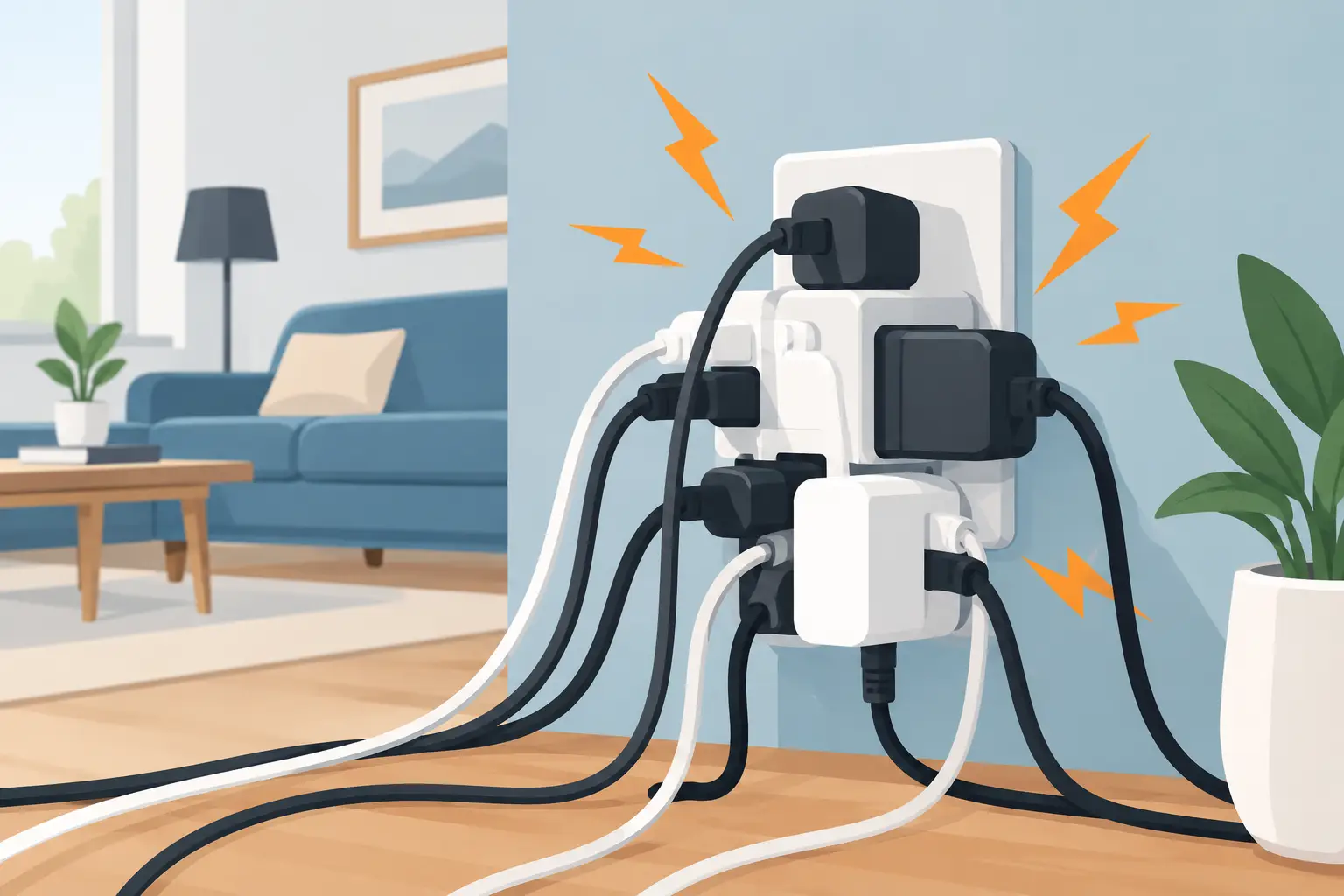
A consumer unit that trips once after a clear fault may not be a major concern. One that repeatedly cuts power when the kettle, microwave or portable heater is used is telling you something different. Recognising the top signs of overloaded circuits early can prevent damaged wiring, disrupted business operations and, more seriously, an increased risk of electrical fire.
An overloaded circuit occurs when the electrical demand placed on one circuit exceeds what its cable, protective device or connections can safely handle. Modern consumer units are designed to disconnect power when this happens. That protection is doing its job, but repeated tripping should never be treated as an inconvenience to work around.
What an overloaded circuit looks like in practice
Overloading is not always obvious. It often develops when a property gains more appliances, extension leads and high-demand equipment than the original wiring layout was designed to support. Older homes, converted flats, offices with growing workstation numbers and rental properties with frequent changes of occupancy are especially likely to face this issue.
The warning signs below deserve attention, particularly when more than one occurs at the same time.
Circuit breakers or fuses trip repeatedly
A circuit breaker that trips occasionally can be responding to a one-off appliance fault. If it trips repeatedly when several appliances run together, the circuit may be overloaded. Typical examples include a kitchen circuit powering a kettle, toaster, microwave and washing machine, or a living room circuit carrying televisions, games consoles, chargers and an electric heater.
Do not keep resetting the breaker without reducing the load. Switch off and unplug non-essential appliances first. If the circuit still trips, leave it off and arrange an inspection. A qualified electrician can establish whether the issue is overload, a faulty appliance, damaged wiring or another fault on the circuit.
Sockets, plugs or switches feel warm
A plug or socket should not become noticeably hot during normal use. Slight warmth can sometimes occur with high-load equipment, but heat, discolouration, a burning smell or a crackling sound require prompt action. Stop using the affected point if it is safe to do so, unplug the appliance and avoid touching any visibly damaged parts.
Heat can result from excessive demand, loose connections or worn accessories. These problems can worsen quickly because electrical resistance creates more heat as a connection deteriorates. Replacing a socket faceplate without investigating the circuit behind it may only hide the real cause.
Lights dim or flicker when appliances start
If lights dip when a powerful appliance starts, it may indicate that the circuit is under strain. A brief and minor change can occur in some properties, but frequent or pronounced dimming is not something to ignore. It is particularly relevant where lights and sockets share an older circuit, or where high-load appliances have been added during a kitchen renovation or office fit-out.
Flickering can also be caused by a failing light fitting, incompatible LED lamps or a loose connection. That is why diagnosis matters. The symptom alone does not prove an overloaded circuit, but it provides useful evidence for an electrician assessing the installation.
Extension leads and adaptors are doing too much work
One extension lead used temporarily and sensibly is very different from several adaptors daisy-chained together behind a desk or television unit. Extension reels, multiway adaptors and plug-in extensions are commonly asked to supply more equipment than they were intended to carry.
This is a frequent problem in home offices, retail spaces, rental rooms and older kitchens with too few socket outlets. A lead hidden under a rug, trapped behind furniture or loaded with heaters and kitchen equipment is a clear concern. The practical long-term solution is usually additional fixed sockets or a new circuit, not another adaptor.
A burning smell, buzzing sound or visible damage
Scorch marks around a socket, brown staining, melted plastic, buzzing from a consumer unit or the smell of hot insulation are urgent warning signs. Isolate power at the consumer unit only if you can do so safely and without approaching damaged equipment. Do not continue using the circuit while waiting to see if the problem returns.
These symptoms are not limited to overloads. They may indicate a loose terminal, arcing, damaged cable or equipment failure. Each can create a serious fire risk and needs a professional electrical inspection without delay.
Why overloaded circuits happen
Electrical demand is measured in watts, while circuit capacity is commonly expressed in amps. The technical calculation is best left to an electrician, but the principle is straightforward: several high-demand appliances used on the same circuit can exceed its safe capacity.
Portable heaters, tumble dryers, kettles, air fryers, washing machines, dishwashers and EV charging equipment can all draw significant power. In commercial premises, the same applies to server racks, printers, kitchen equipment, display lighting and air-conditioning units. The issue is not simply the number of items plugged in. It is the combined load, how long it runs and the condition of the installation.
Older installations may have circuits designed around the way people lived decades ago. A single circuit that once served lighting and a few small appliances may now be expected to power a full home office, entertainment system and charging devices. Renovations can also alter demand patterns, particularly where an extension or loft conversion has been connected to existing wiring without a full assessment.
What to do if you suspect an overload
Start by reducing the immediate demand. Turn off high-wattage appliances, unplug chargers and avoid using extension leads as a permanent arrangement. If a circuit has tripped, reset it only after you have disconnected likely loads. If it trips again, leave it switched off.
Avoid common shortcuts. Never replace a fuse with a higher-rated one, bypass a breaker or repeatedly reset an RCD or circuit breaker to keep equipment running. Protective devices are there to prevent cables and connections from overheating.
For a safe first check, it can help to note what was operating when the fault occurred. This information helps identify patterns, such as a kitchen circuit failing only when the kettle and washing machine run together. It also helps distinguish an overloaded circuit from a faulty appliance, which may trip the circuit even when used on its own.
When to call an electrician
A qualified electrician should inspect repeated tripping, hot accessories, burning smells, buzzing, damaged sockets and any signs of overheating. Urgent assistance is particularly appropriate where there is smoke, visible scorching, loss of power to essential equipment or a concern in a shared or rented property.
The inspection may include testing the consumer unit, checking circuit loading, examining connections, identifying damaged accessories and carrying out electrical testing where required. The right solution depends on the findings. It may be as simple as replacing a faulty socket or appliance, or it may involve adding socket outlets, separating circuits, upgrading a consumer unit or rewiring part of the property.
For landlords and property managers, recurring electrical issues should be documented and acted upon promptly. An Electrical Installation Condition Report, commonly known as an EICR, can identify deterioration, defects and areas where an installation no longer meets the demands placed on it. For businesses, planned testing and a review of electrical capacity can reduce avoidable downtime as equipment and staffing levels grow.
Preventing circuit overloads in homes and workplaces
Prevention starts with matching the installation to how the property is actually used. During a refurbishment, kitchen upgrade, office move or change of tenancy, consider where high-demand equipment will be located and whether existing circuits are suitable. This is especially relevant for EV chargers, electric heating, workshop machinery, commercial catering equipment and data-heavy office setups.
Use fixed socket outlets where equipment is permanent, keep extension leads temporary, and choose quality accessories rated for their intended use. Do not run cables beneath carpets or overload multiway adaptors. Regular visual checks by occupants can catch loose plugs, damaged leads and discoloured sockets before they become more serious.
A properly designed electrical installation should make daily use straightforward, not force people to juggle appliances or rely on a tangle of adaptors. If your circuits are regularly tripping or showing signs of heat, treat that as a useful warning rather than a nuisance. A timely professional assessment can restore safe capacity and give you confidence that your property is ready for the way you use it.