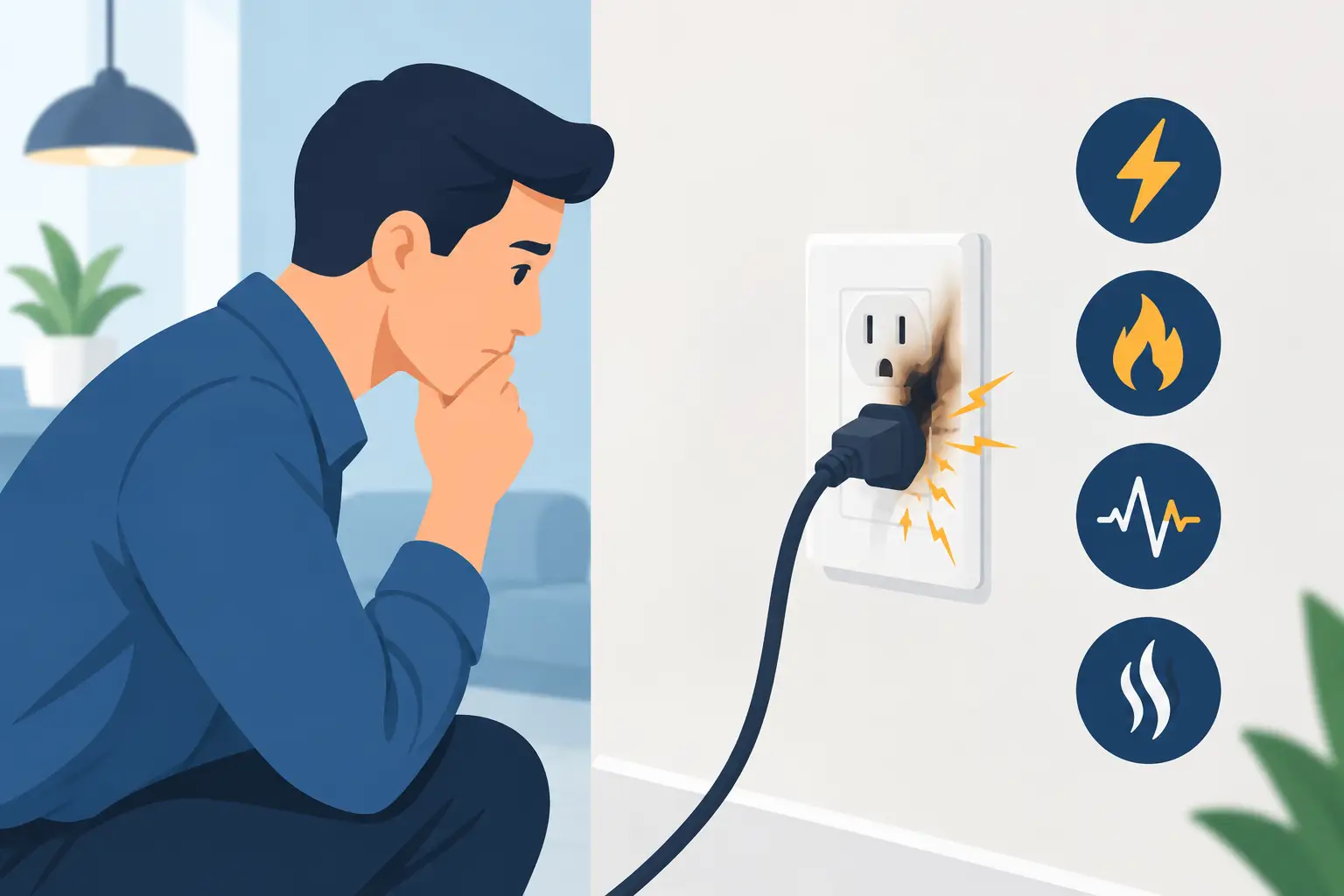
A socket that feels warm, lights that flicker when an appliance starts, or a consumer unit that keeps tripping may seem like separate annoyances. In many cases, they are early signs of electrical faults that need proper investigation. Ignoring them can lead to damaged equipment, disrupted business operations, electric shock or, in serious cases, fire.
For homeowners, landlords and business owners, the right response is not to guess at the cause or repeatedly reset a breaker. It is to make the affected area safe, understand what the warning sign may mean and arrange a qualified electrician to test the installation.
What counts as an electrical fault?
An electrical fault occurs when part of an electrical installation, circuit or connected appliance is not operating as intended. The issue may be a damaged cable, loose connection, overloaded circuit, faulty accessory, ageing wiring or a problem with an appliance.
Some faults are obvious. A burning smell from a socket, exposed wiring or a circuit that will not stay on calls for immediate action. Others are less visible, such as deteriorating insulation behind a wall or a loose connection inside a consumer unit. These can develop gradually and only become apparent through nuisance tripping, intermittent power loss or unusual changes in how equipment performs.
The source matters. A fault limited to one appliance may be resolved by removing and replacing that item. A fault within the fixed wiring, however, requires electrical testing and repair. Replacing a fuse or resetting an RCD without finding the cause can leave the underlying risk in place.
Warning signs that should not be ignored
Electrical systems are designed to operate quietly and consistently. When that changes, it is sensible to act early.
Repeated tripping at the consumer unit
A circuit breaker or RCD trips to protect people and property when it detects an overload, short circuit or earth leakage. One trip after plugging in a faulty appliance can happen. Repeated tripping, especially when the same circuit is in use, is a clear sign that further investigation is needed.
Try to note what was running at the time. Was a kettle, heater, washing machine or piece of office equipment connected? Does the circuit trip immediately, or only after a period of use? This information can help an electrician diagnose the issue efficiently, but do not keep resetting the device in the hope it will hold.
Hot sockets, switches or plugs
A socket, switch or plug should not become noticeably hot in normal use. Warmth can point to a loose terminal, overload, damaged accessory or failing connection. If you notice heat, discolouration, buzzing, crackling or a burning smell, switch off the circuit if it is safe to do so and stop using the affected point.
This is particularly relevant in older properties, busy rental homes and commercial spaces where extension leads and high-load equipment are used regularly. A worn accessory may be a local problem, but it can also indicate that the circuit is not suitable for the way the space is now being used.
Flickering lights and intermittent power
A single lamp may flicker because the bulb is loose or nearing the end of its life. Several lights flickering together, lights dimming when equipment starts, or power cutting in and out is different. It may indicate a loose connection, circuit loading issue or supply-related fault.
In offices, shops and communal areas, intermittent lighting is more than an inconvenience. It can affect safety, productivity and customer experience. In rental properties, it is a maintenance issue that should be addressed before it escalates or affects essential services.
Damaged cables, accessories and fittings
Cracked faceplates, loose sockets, frayed flexes and exposed cable insulation all require attention. Physical damage can allow live parts to become accessible or create a poor connection that generates heat.
Avoid taping over damaged flexes as a permanent fix, and never use a socket that feels loose in the wall. Portable appliances should be removed from service until repaired or replaced. Fixed wiring and accessories should be assessed by an electrician.
Electric shocks, tingling or buzzing
Any electric shock or tingling sensation from an appliance, tap, metal fitting or switch should be treated seriously. The same applies to persistent buzzing from sockets, switches or consumer units. These signs can indicate an earthing issue, faulty appliance or loose connection.
Do not attempt to test the issue by touching it again. Stop using the equipment where possible and arrange urgent electrical assistance. If there is immediate danger, smoke or fire, call the emergency services first.
Common causes of electrical faults
Electrical faults do not always have one simple cause. The age of the installation, how the property is used and the condition of connected equipment all play a part.
Overloading is common where a modern household or workplace relies on too few sockets. Extension leads, multi-way adaptors, portable heaters and kitchen appliances can place significant demand on a circuit. The answer is not always a full rewire. In some cases, additional circuits, properly positioned sockets or a consumer unit upgrade may be the appropriate solution. It depends on the condition and capacity of the existing installation.
Ageing wiring is another concern, particularly in properties that have been altered over many years. Old cables, dated fuse boards, poor-quality past work and undocumented additions can leave a system less able to meet current safety expectations. An Electrical Installation Condition Report, often called an EICR, provides a structured assessment of the fixed installation and identifies observations that need attention.
Moisture can also cause faults. Bathrooms, kitchens, plant rooms, outdoor areas and properties affected by leaks need suitable electrical equipment and correct protection. Water and electricity are a dangerous combination, so any electrical item affected by water should be checked before it is used again.
Finally, the fault may be in an appliance rather than the building wiring. Landlords, offices and organisations with numerous portable electrical items should consider regular PAT testing as part of a wider maintenance approach. PAT testing does not replace an EICR, but it helps identify risks in portable equipment such as kettles, computers, extension leads and power tools.
What to do when an electrical fault occurs
Your first priority is safety. If there is smoke, sparking, signs of fire or a person has received a serious electric shock, contact the emergency services. Do not use water on an electrical fire.
For a non-emergency fault, stop using the affected appliance or circuit. If you can safely identify the relevant circuit at the consumer unit, switch it off. Keep others away from damaged sockets, exposed cables or wet electrical equipment.
It is useful to record what happened before the fault appeared. Note the circuit affected, the equipment in use, whether there was a trip at the consumer unit and any visible signs such as heat, smell or flickering. This gives the electrician a clearer starting point and may reduce time spent tracing an intermittent issue.
Do not remove consumer unit covers, work on live wiring or replace protective devices with a different rating. These actions can create a much more serious hazard and may compromise the installation.
Why professional testing matters
A visual check can identify obvious damage, but many electrical faults cannot be seen. Qualified electricians use specialist test equipment to assess continuity, insulation resistance, polarity, earth fault loop impedance and RCD performance. These tests help locate the cause rather than simply treating the symptom.
Professional assessment also gives you a clear recommendation on the most appropriate repair. That may be a straightforward replacement socket, appliance repair, circuit alteration or a larger programme of remedial work. For landlords and commercial property managers, documented testing and certification also support compliance duties and demonstrate that safety has been taken seriously.
PG Electrical provides fault finding, testing and remedial work for homes, rental properties and commercial premises across Greater London and Kent. The focus is on identifying the issue accurately, explaining the options clearly and carrying out work to professional standards.
Preventing future electrical faults
Not every fault can be predicted, but regular checks reduce the chance of sudden disruption. Avoid overloading adaptors, replace damaged leads promptly and use equipment suitable for the environment. If a property is being renovated, extended or converted, plan the electrical installation around how the space will actually be used rather than relying on existing socket positions.
Landlords should keep EICRs up to date and respond promptly to reports from tenants. Businesses should include fixed wiring, emergency lighting, fire alarm systems and portable equipment within a planned maintenance schedule. This is particularly valuable in HMOs, offices, retail units and multi-occupancy buildings, where a minor fault can affect several people.
Electrical faults rarely improve with time. Acting when the first warning sign appears protects your property, limits downtime and gives you the best chance of resolving the issue before it becomes an emergency.