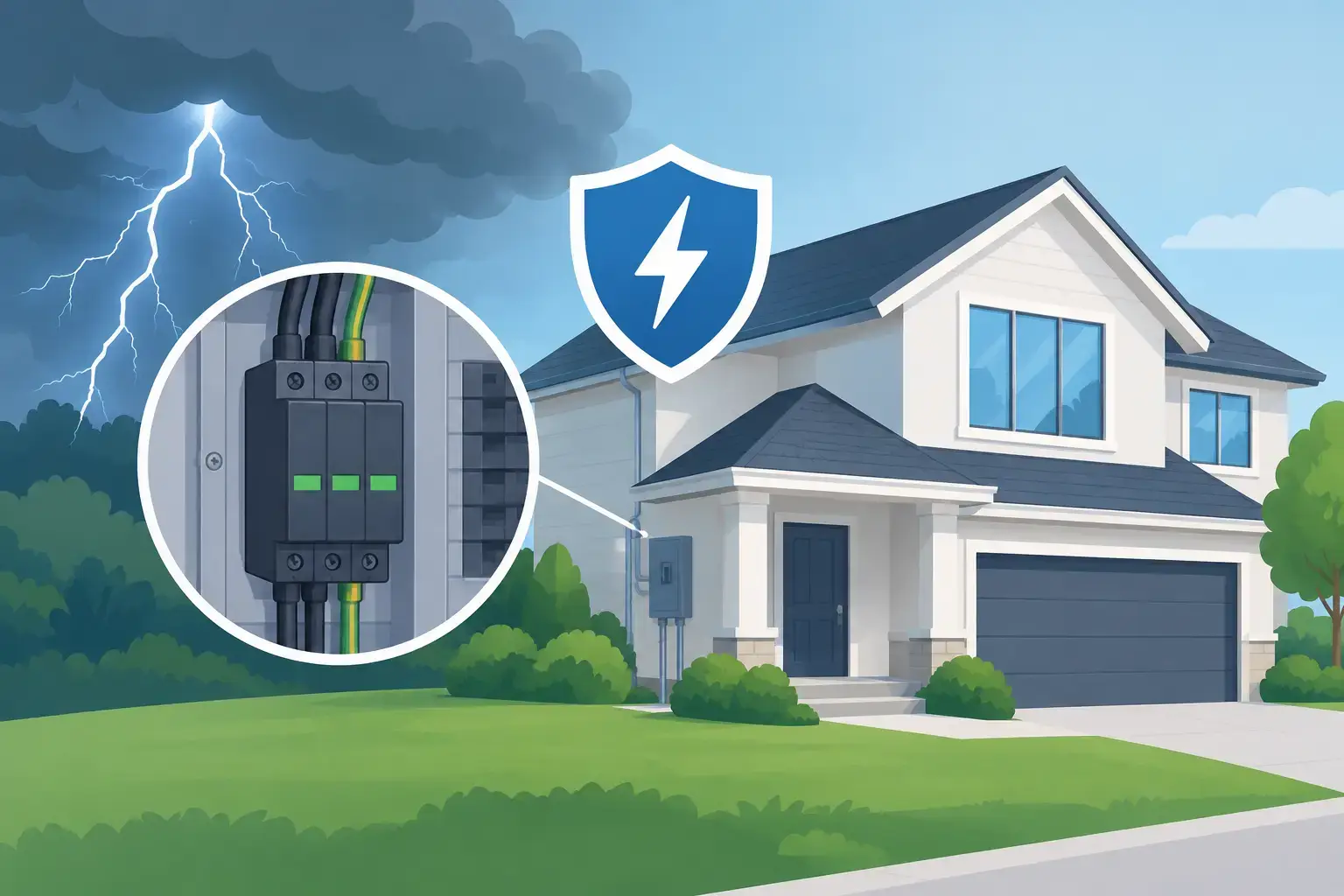
A single voltage spike can damage far more than a mobile phone charger. Boilers, EV chargers, smart controls, appliances, IT equipment and security systems all contain sensitive electronics. Choosing to install surge protection at the consumer unit or distribution board helps protect the systems your home or business depends on, including equipment that may not fail until weeks after a surge occurs.
Surges are brief increases in voltage. They can be caused by lightning activity, switching within the electricity network, faults on nearby circuits, or larger equipment turning on and off within a building. You may never see or hear one happen, yet repeated smaller surges can gradually shorten the working life of connected equipment.
For homeowners, landlords, facilities managers and business owners across London and Kent, surge protection is a practical part of a safer, more resilient electrical installation. The right solution depends on the property, the supply arrangement and the equipment in use.
When to install surge protection
Surge protective devices, often called SPDs, are most commonly fitted during a consumer unit replacement, rewire, extension or major electrical upgrade. This is usually the most efficient time to include them because the board is already being assessed and brought in line with current requirements.
However, a new consumer unit is not the only reason to consider them. Surge protection can often be added to a suitable existing consumer unit or distribution board, subject to space, condition, earthing arrangements and the manufacturer’s requirements. An electrician should inspect the installation before recommending this approach.
It makes particular sense to install surge protection when a property has expensive or sensitive electrical equipment. This includes homes with smart heating controls, home offices, induction hobs, solar or battery systems, CCTV and electric vehicle charging. In commercial settings, the case is often stronger where lost equipment or downtime would disrupt trading, tenant services, communications, security or building management systems.
Landlords and managing agents should also consider the wider cost of a failure. A damaged boiler controller, communal door-entry system or fire alarm component may affect more than one occupier and can require an urgent callout. Protection at the electrical board is not a substitute for maintenance and testing, but it can reduce avoidable risk to connected equipment.
New installations and electrical alterations
Electrical work must be designed and installed in accordance with the relevant requirements of BS 7671. Current wiring regulations include provisions for protection against transient overvoltages, with decisions based on the nature of the installation and the consequences of a surge.
That does not mean every building receives the same device in the same way. A detached home, a converted flat, a shop unit and a light industrial workshop may have different supply characteristics, distribution arrangements and levels of exposure. A proper assessment identifies whether surge protection is required, what form it should take and where it should be positioned.
Where an electrician is replacing a consumer unit, it is sensible to discuss surge protection before the quotation is finalised. Retrofitting later may still be possible, but planning it at the outset can avoid additional labour and disruption.
What surge protection actually does
An SPD monitors the electrical supply and diverts excess transient voltage safely towards earth when a surge occurs. It reacts in a fraction of a second, limiting the voltage that reaches downstream circuits and equipment.
It does not make a property immune to every electrical problem. It will not correct poor wiring, replace earthing and bonding, prevent overloads, or protect against all consequences of a direct lightning strike. It also cannot rescue equipment that is already damaged. Its role is specific: reducing the impact of short-duration overvoltage events on the electrical installation and connected devices.
The device is usually installed within, or alongside, the consumer unit or distribution board. Larger or more complex sites may need protection at more than one level, such as at the main intake and at a sub-board supplying a separate office, workshop or outbuilding. This coordinated approach is especially relevant where data, alarm, fire, communications or control systems extend across a site.
Plug-in protectors are not the same thing
Plug-in extension leads and adaptor blocks with surge protection can offer a limited extra layer for individual items, but they are not a replacement for a correctly selected and installed SPD at the board.
A whole-installation device protects fixed circuits as well as socket outlets. That matters for equipment such as wired lighting controls, boilers, shutters, EV chargers, ventilation units, kitchen appliances and fixed security systems. Plug-in products can still have a place for certain high-value devices, but they should be viewed as supplementary protection rather than the complete answer.
The checks that should come before installation
Fitting an SPD is not simply a matter of adding a component. Its effectiveness depends on correct selection, cable routing, protective devices and the condition of the existing installation. Poor installation can limit performance or create issues with nuisance tripping and coordination.
Before work begins, a qualified electrician should consider the incoming supply, earthing system, main bonding, consumer unit condition and available capacity. They will also look at the circuits being protected and whether the property has external services or equipment that need additional consideration.
In a commercial building, the assessment may include submains, distribution boards, IT and data infrastructure, emergency lighting, fire alarms, machinery and any landlord-controlled communal systems. For a block of flats or HMO, the scope must be clear: protection for one flat does not automatically protect communal equipment or other dwellings.
The installation should then be tested and documented as appropriate. If wider defects are discovered, these should be explained clearly rather than concealed within an unclear quote. A reliable electrical contractor will separate essential remedial work from sensible optional improvements, so you can make an informed decision.
Choosing the right time for your property
If your consumer unit is old, lacks modern protective devices, shows signs of overheating or has limited capacity, surge protection should form part of a wider electrical assessment rather than a stand-alone decision. The condition of the board may make replacement the safer long-term option.
If the board is modern and in good order, a retrofit may be straightforward. The practical questions are whether there is suitable space, whether the chosen SPD is compatible, and whether the installation’s earthing and protective arrangements are satisfactory.
For renovations and extensions, plan ahead. New kitchens, loft conversions, garden offices and commercial fit-outs often introduce more electronic equipment than the original installation was designed to serve. Including surge protection alongside circuit design, RCD protection, lighting, data cabling and EV charging gives the project a more considered foundation.
Businesses should also weigh the cost of interruption, not only the replacement value of equipment. A small surge-related failure can mean cancelled appointments, inaccessible records, failed payment systems, lost security coverage or uncomfortable tenants. The appropriate level of protection should reflect those operational consequences.
A professional installation gives you confidence
The best surge protection installation is one that matches the building and is almost invisible once complete. It should be correctly specified, neatly fitted, tested and explained in plain terms. You should know what has been installed, what it protects, and whether any wider improvements have been recommended.
At PG Electrical, the focus is on assessing the full installation rather than treating every property as identical. Whether you are upgrading a home, managing rental accommodation or planning a commercial electrical project, clear advice and properly certified work help you protect the equipment that keeps the property running.
If you are already arranging a consumer unit upgrade, rewire, EICR remedial work or EV charger installation, ask about surge protection at the same time. A short assessment now can prevent an inconvenient and potentially expensive equipment failure later.