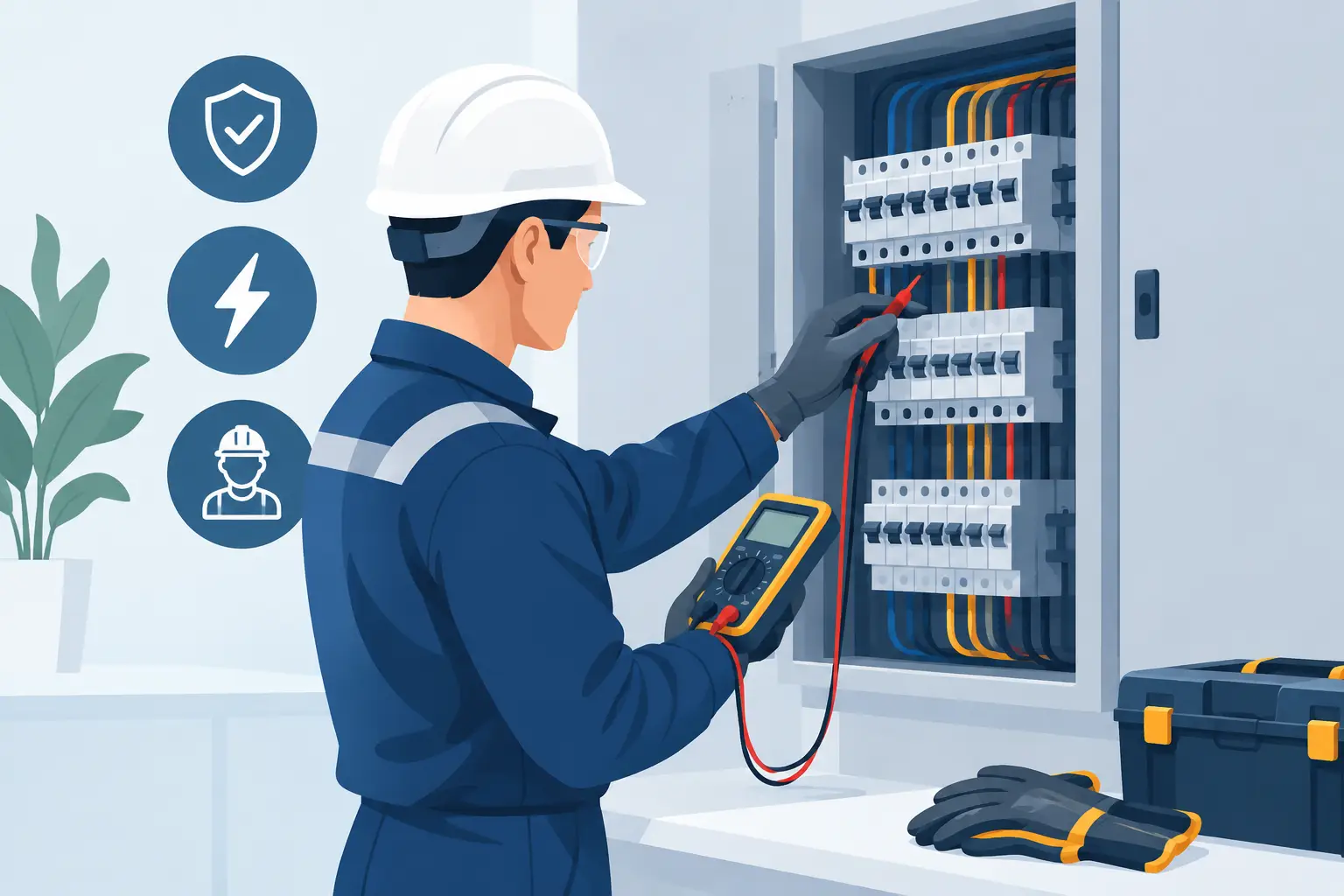
A new electric shower, induction hob or EV charger can place far more demand on an installation than the original property wiring was designed to handle. Knowing how to assess electrical capacity before committing to an upgrade helps prevent nuisance tripping, overheating, costly alterations and avoidable safety risks.
Electrical capacity is not simply a question of how many sockets are available. It is the ability of the incoming supply, consumer unit, protective devices, cables and circuits to carry electrical load safely. In a flat, family home, retail unit or multi-occupancy building, every part of that system must be considered together.
What Electrical Capacity Means in Practice
A property’s electrical capacity begins at the incoming supply. In most UK homes, this is a single-phase supply controlled by a main fuse, often rated at 60A, 80A or 100A. The supply then passes through the meter and into the consumer unit, where separate circuits protect lighting, sockets, cooking equipment, showers and other fixed loads.
The rating on the main fuse is useful, but it is not the whole answer. A 100A supply does not mean a property can safely add unlimited equipment. The consumer unit must have adequate space and rating, the meter tails must be suitable, and each new circuit must be designed for its intended load, cable route and protective device.
Commercial premises may have a larger single-phase supply or a three-phase supply. Three-phase systems can support substantial loads, but capacity still has to be allocated carefully. An imbalance between phases, undersized submains or an overloaded distribution board can create problems even where the headline supply rating appears generous.
How to Assess Electrical Capacity Step by Step
A proper assessment starts with the existing installation, not the appliance you hope to add. A qualified electrician will inspect the supply arrangement, identify current loads and establish whether there is a safe, compliant route for any new circuit.
1. Identify the incoming supply and main fuse rating
The service head, meter and consumer unit are normally located close together. The main fuse is generally the responsibility of the Distribution Network Operator (DNO), not the property owner. It must never be removed, altered or replaced by an unqualified person.
An electrician can identify the available supply information and advise whether a DNO supply upgrade may be required. This is particularly relevant where a property has an older 60A service fuse and is adding high-demand equipment such as an electric vehicle charger, heat pump, electric shower or all-electric kitchen.
2. Review the consumer unit and distribution equipment
Next, assess whether the consumer unit is suitable for additional circuits. There needs to be physical space for a new protective device, but spare ways alone are not enough. The board’s condition, rating, earthing arrangement, RCD or RCBO protection and the condition of the meter tails all matter.
Older fuse boards, consumer units with recalled components, damaged enclosures or poor-quality alterations should be addressed before expanding the installation. In some cases, a consumer unit replacement provides the safest and most practical foundation for planned upgrades.
For commercial sites, the same principle applies to distribution boards, submains and local isolators. A new item of plant may need a dedicated supply from the main board rather than being added to an already heavily used local circuit.
3. List fixed loads and likely simultaneous use
The next stage is to establish what actually uses electricity at the property. Fixed loads often have the greatest effect on capacity: showers, ovens, hobs, immersion heaters, electric heating, air conditioning, pumps, machinery and EV chargers all need close attention.
Portable equipment matters too, especially in offices, workshops and HMOs. A bank of heaters, catering equipment, IT systems or cleaning appliances can create a meaningful combined demand. The key question is not only what is connected, but what is likely to operate at the same time.
This is where diversity is used. Diversity recognises that not every appliance runs at full output continuously. A cooker may have a high connected load but will not necessarily draw its maximum current throughout the day. However, diversity should be applied by someone who understands the installation and the intended use. Assuming that equipment will not run together can be an expensive mistake, especially in commercial settings with predictable peak periods.
4. Calculate demand and allow for future use
An electrician calculates the anticipated maximum demand using the appliance ratings, circuit design and appropriate diversity factors. The result is compared with the rating of the supply, consumer unit, cables and protective devices.
Future demand should form part of this discussion. If a renovation is likely to include an EV charger next year, or a commercial unit expects to add more workstations, it can be more economical to allow for that now. Installing a larger consumer unit, suitable submain or containment route during building work can avoid opening finished walls later.
There is a trade-off. Oversizing every element of an installation can increase cost without delivering a real benefit. The aim is not to install the biggest possible supply, but to provide safe capacity that reflects realistic use and sensible growth.
5. Test the condition of the installation
Capacity is only useful if the existing electrical system is in safe condition. Testing can reveal loose connections, inadequate earthing, incorrect protective devices, overloaded circuits and other defects that a visual check may miss.
An Electrical Installation Condition Report, commonly known as an EICR, is particularly valuable in older properties, rental homes, commercial premises and buildings with unclear electrical history. An EICR is not a load calculation in itself, but it provides essential information about the condition and compliance of the installation before further demand is added.
Warning Signs That Capacity May Be Limited
Some issues point to a capacity problem, while others indicate faults that require urgent investigation. Do not treat repeated tripping as normal, and do not keep resetting a protective device without finding the cause.
Common warning signs include:
- Circuit breakers or RCDs that trip when several appliances are in use.
- Lights dimming when a shower, cooker, heater or machinery starts.
- Warm sockets, switches, consumer unit covers or burning smells.
- Extension leads and multiway adaptors being used as permanent solutions.
- New equipment that cannot be given a dedicated circuit.
These symptoms do not automatically mean that the incoming supply is too small. A faulty appliance, damaged cable, loose connection or unsuitable circuit design can produce similar signs. A professional inspection is the safe way to establish the cause.
Capacity for Common Property Upgrades
Certain upgrades should always trigger a capacity review. EV chargers are a clear example because they can draw significant current for extended periods. Smart chargers can manage load in some circumstances, reducing demand when the property is using power elsewhere, but they do not remove the need for correct design and testing.
Electric showers also require careful planning. A higher-rated shower may need a larger dedicated cable and protective device, and the existing circuit may not be suitable for replacement on a like-for-like basis. Likewise, changing from gas cooking to an induction hob can materially increase electrical demand, particularly in a property already using electric heating or hot water.
For landlords and property managers, additional kitchens, ensuite showers, converted rooms and communal equipment can change the way an installation is used. A circuit arrangement that was adequate for one household may not be appropriate for an HMO or a reconfigured rental property. Commercial fit-outs require the same discipline, particularly where lighting upgrades, data cabling, air conditioning, fire alarm systems or specialist equipment are being introduced together.
When a Supply Upgrade Is Needed
If the calculated demand exceeds, or is uncomfortably close to, the available capacity, the solution may range from a new circuit and consumer unit upgrade to a DNO supply enhancement. The correct option depends on where the limitation sits.
For example, a sound 100A supply may support a new EV charger with suitable load management and a dedicated circuit. In another property, an old service fuse, inadequate meter tails and a full consumer unit may mean several improvements are needed. At a commercial site, a three-phase upgrade or revised distribution arrangement may be the most effective long-term answer.
The process should be coordinated. PG Electrical can assess the installation, explain the practical options, provide a clear quotation and complete the electrical works required around any supply changes. Where DNO involvement is necessary, it is best to identify this early so it does not delay a wider renovation or fit-out programme.
Electrical capacity is best assessed before equipment is ordered, walls are closed or a project timetable is fixed. A clear survey and realistic load calculation give you the confidence to invest in improvements that will perform safely from day one and continue to support the way your property is used.