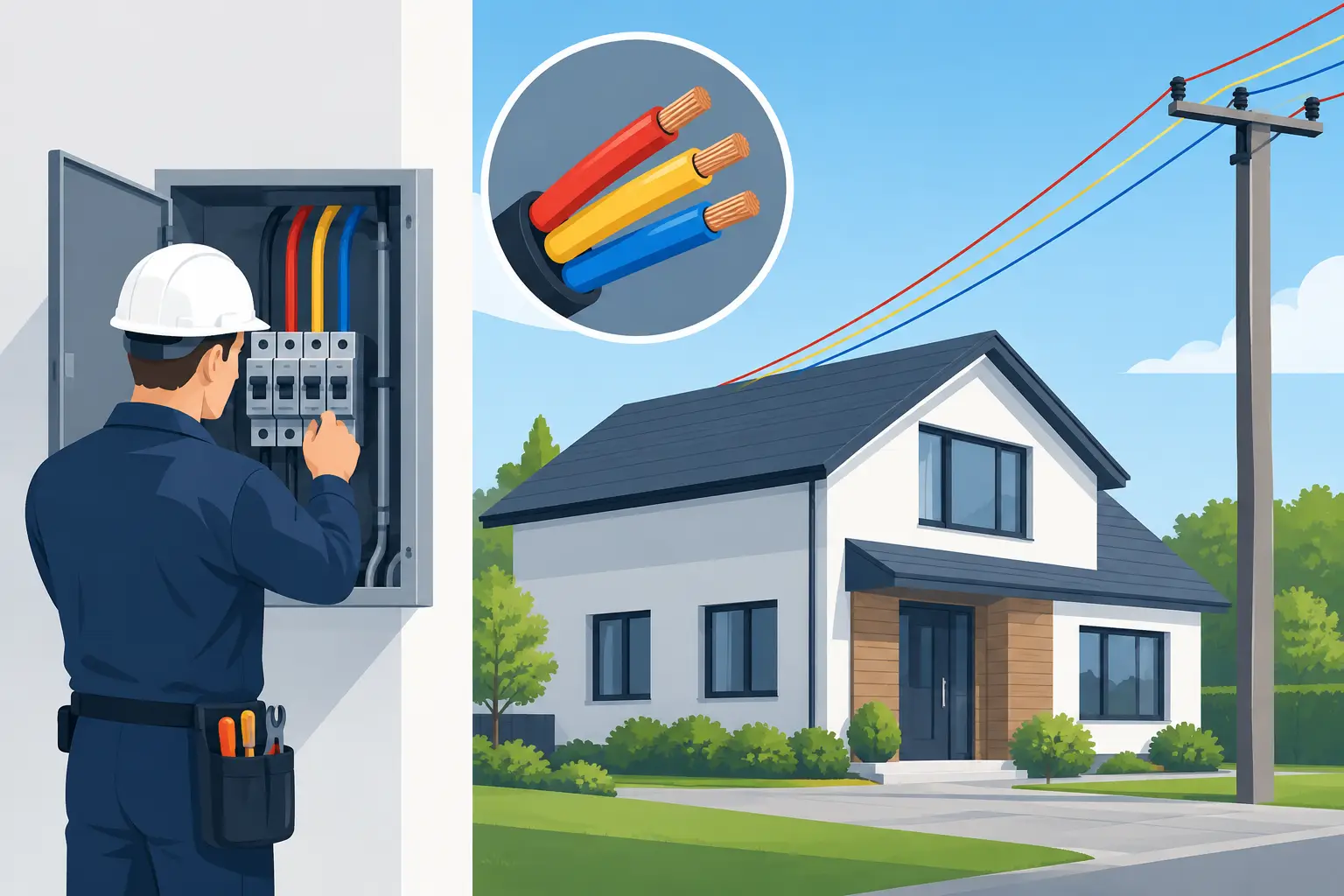
A three phase power installation is often the point where a property moves beyond standard domestic demand. It can support larger machinery, commercial kitchens, workshops, EV charging, heat pumps and multi-unit developments without placing unnecessary strain on a single-phase supply. But it is not simply a case of fitting a larger consumer unit. The incoming supply, distribution design, load balance and approval process all need to be considered before work begins.
For homeowners, landlords and business owners across London and Kent, the right approach starts with understanding what the building needs now and what it may need in the future.
What is three-phase power?
Most homes have a single-phase electrical supply. This is usually suitable for normal household loads such as lighting, sockets, appliances and a typical domestic electric shower. Three-phase supplies use three live conductors rather than one, providing a higher overall capacity and a more consistent delivery of power for larger loads.
In UK properties, a three-phase supply is generally 400V between phases and 230V between any one phase and neutral. This allows an electrician to distribute circuits across the phases and reduce the risk of one part of the installation carrying all the demand.
That does not mean every circuit or appliance will run at 400V. Many standard circuits can still operate at 230V from one phase to neutral. The benefit is the available capacity and flexibility, particularly where the property has several high-demand systems operating at the same time.
When a three phase power installation makes sense
A three-phase supply is commonly considered for commercial premises, light industrial units, restaurants, offices, communal areas and new developments. It can also be appropriate for larger homes undergoing substantial renovation, particularly where there is an all-electric heating strategy, multiple EV chargers, a swimming pool, a workshop or extensive outbuildings.
The decision should be based on a load assessment, not an assumption that three phase is always better. A standard domestic supply may be entirely adequate for one EV charger and a typical household. However, demand can rise quickly where there are two chargers, electric heating, induction cooking, battery storage and air conditioning. In those circumstances, planning ahead may prevent costly alterations later.
For landlords and property managers, three phase can be especially useful in HMOs, mixed-use buildings and blocks with shared plant. It can provide a practical route for supplying communal fire alarm equipment, emergency lighting, lifts, ventilation, electric gates or separate submains, subject to a properly designed installation.
Signs your current supply may be limiting you
Repeated tripping, restricted EV charging capacity or an inability to connect new equipment can point to a supply or distribution issue. They do not automatically mean a three-phase upgrade is required. Faults, undersized cabling, poor circuit design and an outdated consumer unit can produce similar symptoms.
A competent electrician should inspect the existing installation, review the proposed loads and establish whether the limitation sits within your own electrical system or at the network supply. This avoids paying for an upgrade that does not solve the actual problem.
The survey comes before the installation
A professional survey is where the project is properly defined. The electrician will identify the size and condition of the existing supply, the earthing arrangement, meter position, cable routes, distribution boards and the equipment you intend to run.
Load calculations are central to this process. The total rating of every appliance is not simply added together, because not all loads operate at full demand at the same time. Instead, the installation is assessed using recognised diversity principles alongside the real operating pattern of the building. A commercial kitchen at peak service, for example, needs a very different assessment from a house where charging is scheduled overnight.
The survey should also consider future capacity. If you are refurbishing an office, converting a property or fitting out a workshop, it is often sensible to allow for planned expansion while cable routes and distribution equipment are accessible. This is usually more cost-effective than reopening finished walls, ceilings or external groundworks later.
DNO approval and responsibility
One of the most important distinctions is between the network operator's equipment and the electrical installation within your property. Your Distribution Network Operator, or DNO, is responsible for the local electricity network and the incoming supply up to the agreed connection point. The meter operator and energy supplier also have separate roles around metering and billing.
An electrical contractor can design and install the private-side equipment, such as the distribution board, submains, containment and final circuits. However, a new or upgraded three-phase connection normally requires the DNO to assess available network capacity and provide, alter or approve the incoming supply arrangement.
Timescales and costs vary. Some sites have a suitable three-phase network nearby, while others may need excavation, new cabling or network reinforcement. Access restrictions, roadworks, listed-building considerations and the location of the intake position can all affect the programme. Early enquiries are vital if the supply is needed for a development or business opening date.
Designing the distribution system properly
Once the supply arrangement is confirmed, the internal installation needs careful design. A three-phase distribution board must be selected for the intended fault level, load type and number of outgoing circuits. Protective devices, cable sizes and isolation arrangements must be appropriate for the circuits they serve.
Load balancing is a key part of the design. Spreading single-phase loads sensibly across all three phases helps prevent one phase becoming overloaded while the others remain lightly used. This is particularly relevant in buildings with numerous socket circuits, heat pumps, EV chargers or tenant supplies.
Three-phase equipment also needs the correct protection and controls. Motors, ventilation systems and machinery may require contactors, overload protection, emergency isolation or phase-failure protection. Incorrect phase rotation can cause some motors to run in the wrong direction, so testing at commissioning is essential.
In commercial and landlord settings, the design may need to coordinate with fire alarm systems, emergency lighting, data cabling, access control and building management controls. A joined-up plan reduces disruption and ensures that essential services are supplied and protected correctly.
Safety, compliance and certification
Three-phase electrical work should never be treated as a DIY project or a straightforward consumer unit change. The higher available fault energy and more complex isolation requirements demand experienced design, installation and testing.
Work must comply with BS 7671, the IET Wiring Regulations, as well as applicable Building Regulations requirements. Depending on the nature of the works and property, notification requirements may apply. For commercial premises, the dutyholder must also consider the Electricity at Work Regulations and ongoing obligations to maintain a safe installation.
On completion, the installation should be inspected, tested and supplied with the appropriate Electrical Installation Certificate. The certificate records the scope of work, test results, protective measures and any observations. It is valuable evidence for insurers, landlords, property managers and future maintenance teams.
A new installation is not the end of the responsibility. Periodic inspection and testing helps identify deterioration, overloading, damaged equipment and changes in use before they become a safety issue or cause unplanned downtime.
What affects the cost?
The price of a three-phase project depends far more on the site than on the label of the supply. DNO connection charges can be a significant part of the budget, especially if the network needs upgrading or the supply position is changing. Within the property, costs are affected by cable lengths, access, containment, distribution equipment, trenching, fire stopping, metering arrangements and the complexity of the final circuits.
A clear quotation should separate the electrical contractor's scope from third-party DNO, supplier or meter operator charges. It should also state what assumptions have been made about access, making good and existing installation condition. This prevents confusion when a project moves from an initial estimate to an agreed programme of works.
The lowest initial quote is not always the best value. Inadequate capacity, poor phase balancing or no allowance for future circuits can leave a building with expensive limitations shortly after the work is complete.
Choosing the right electrical contractor
For a project of this scale, choose an electrician who can assess the whole system rather than only fit the final distribution board. You need clear advice on the existing supply, realistic coordination with the DNO, accurate load calculations, safe installation practices and complete certification.
PG Electrical provides practical support from initial assessment and detailed quotation through to installation, testing and ongoing maintenance. For properties in Greater London and Kent, that means one experienced team can help turn a complex supply upgrade into a properly planned electrical solution.
If you are considering higher-demand equipment or a major refurbishment, arrange the electrical assessment before plans are finalised. Early decisions about supply capacity and cable routes can protect your budget, your programme and the long-term performance of the property.