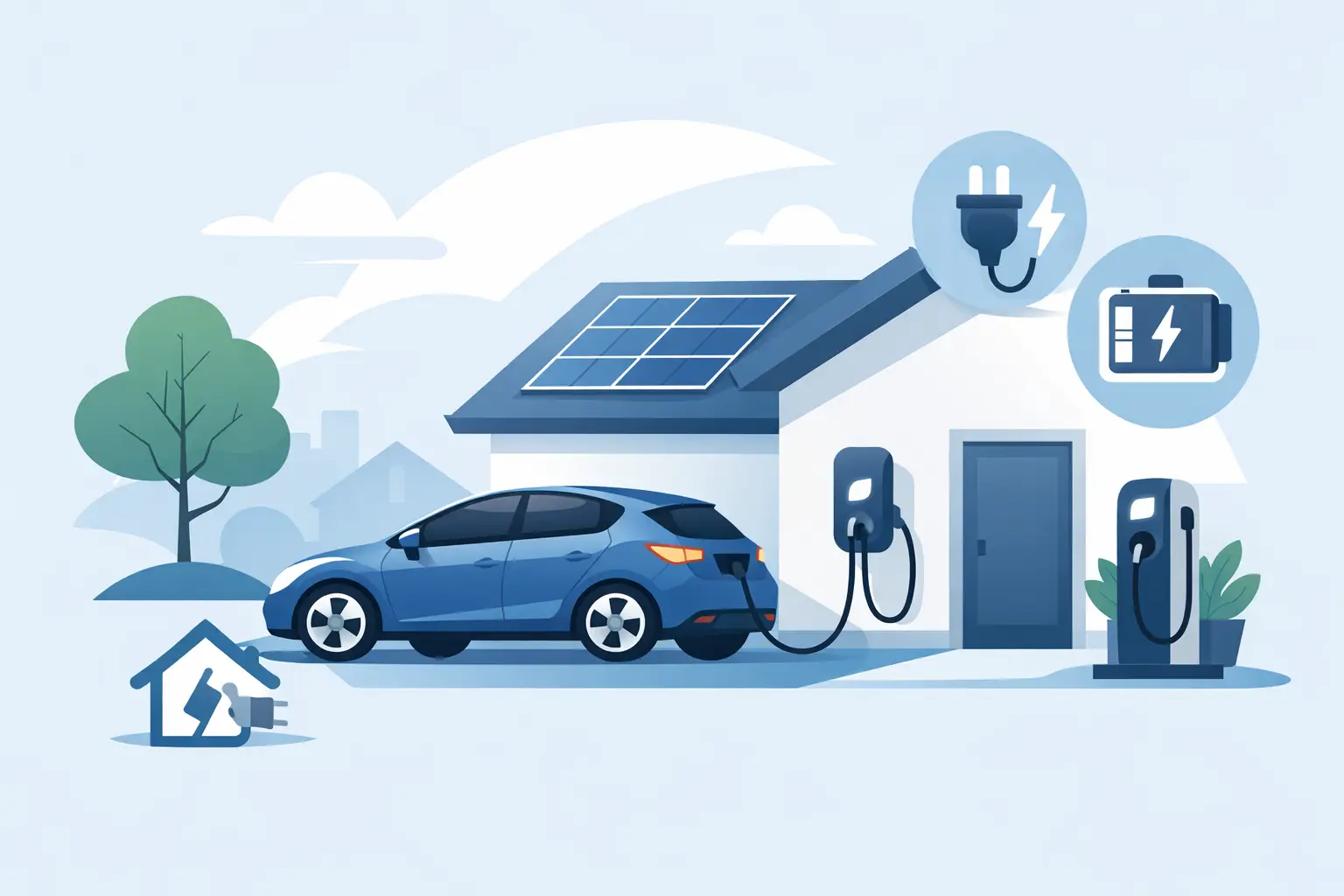
A home EV charger changes the practical side of electric car ownership. Instead of planning stops around public chargers, you can return home, plug in and start the day with the battery ready for the journeys ahead. The best home charging options depend on your vehicle, parking arrangement, electricity supply and how far you typically drive, but safety should always come first.
For most homeowners in Greater London and Kent, a professionally installed dedicated chargepoint is the sensible long-term answer. It is faster, safer and easier to manage than relying on a standard plug socket. However, there are worthwhile differences between charger types, power ratings and smart features that should be considered before installation.
Best home charging options at a glance
The right option is not necessarily the charger with the highest headline power. A household that drives 20 to 30 miles a day has different needs from a family running two EVs, or a landlord planning charging provision for a block of flats.
A standard three-pin socket can provide a slow charge, usually at around 2.3kW. This may suit occasional use or an overnight top-up when no other option is available, but it should not be treated as the default everyday charging arrangement. Long periods of continuous load can expose issues with older sockets or wiring, particularly in properties with ageing electrical installations. Extension leads should never be used for EV charging.
A dedicated 3.6kW chargepoint offers a step up in speed and is suitable where the property has limited electrical capacity or charging time is not a concern. For many homes, though, a 7kW charger is the preferred choice. It can typically add substantially more range overnight and works well with the single-phase electricity supply found in most UK houses.
A 22kW charger can be attractive on paper, but it is rarely the straightforward choice for a domestic property. It requires a three-phase supply and a vehicle capable of accepting that charging rate. Both are less common in typical homes, and upgrading the supply may add significant cost and disruption. It is often more relevant for commercial premises, larger developments and certain multi-vehicle locations.
Why a dedicated EV charger is the safer choice
An EV is one of the largest continuous electrical loads in a home. Charging equipment must therefore be correctly selected, installed and tested rather than simply added to the nearest convenient circuit.
A professional installation normally involves a dedicated circuit from the consumer unit, suitable protective devices, correct cable sizing and a charger positioned for safe, practical use. The work must comply with current electrical requirements, including the relevant provisions of BS 7671. The installer should also assess earthing arrangements, the route of the cabling, external exposure and any potential need for load management.
This assessment matters particularly in London properties, where consumer units may be older, parking can be tight and the cable route may need to pass through a garage, side passage or external wall. In Kent, longer driveways and detached garages can make cable distance a key factor. A proper survey avoids assumptions and gives you a clear picture of the work before installation begins.
Smart charging: useful for more than convenience
Smart chargers allow you to control when and how your vehicle charges. This is valuable if you are on a time-of-use electricity tariff, as you can schedule charging for cheaper overnight periods rather than paying peak rates.
Most smart units can be managed through an app, allowing you to set schedules, review charging history and monitor energy use. Some also support solar integration, prioritising surplus electricity generated by your panels when conditions allow. Solar charging can reduce grid use, although the results depend on the size of your system, weather, daytime parking habits and the vehicle being connected when energy is available.
Load balancing is another feature worth considering. It monitors demand within the property and adjusts the charger’s output where necessary. This helps prevent the combined load from exceeding the available capacity when the oven, electric shower, heat pump or other high-demand equipment is in use. For homes with a modest supply, it can be more cost-effective than a supply upgrade.
Smart functionality does rely on a stable connection for certain features, but charging itself should not become unusable simply because a home broadband service drops out. Ask how the unit behaves offline and whether essential settings can be controlled at the charger itself.
Tethered or untethered charger?
A tethered charger has a cable permanently attached. It is quick to use, keeps the correct lead ready at the driveway and is often the most convenient option for a single household vehicle. The cable needs somewhere tidy to sit when not in use, and it may be more visible at the front of the property.
An untethered charger has a socket instead. You use your own charging lead, which can be useful if you prefer a cleaner-looking installation or need flexibility between vehicle connector types. The trade-off is that you need to take the cable out and store it after each charge. Neither is inherently better - it comes down to everyday habits and the appearance you want outside the property.
Choosing the right location
The charger should be placed where it can reach the vehicle without creating a trip hazard or forcing a cable across a public pavement. In many homes, this means mounting it on an external wall beside the driveway, inside a garage or on a dedicated post near the parking bay.
The best location is not always the closest point to the consumer unit. Ease of parking, cable reach, weather exposure and future use all matter. If you expect to change vehicles, consider whether the chosen position will still work if the charging port is on the opposite side of your next car.
For terraced homes and properties without off-street parking, the decision is more complicated. Running a charging cable over a pavement is unsafe and may create legal or local authority issues. Residents should explore permitted pavement-crossing arrangements, nearby public charging or wider parking solutions rather than attempting an improvised installation.
Charging at flats, rental properties and shared sites
Leaseholders will usually need to check the terms of their lease and obtain any required freeholder or managing agent consent before work starts. The electrical capacity of the building, ownership of parking spaces and the route through communal areas must also be reviewed.
For landlords and property managers, installing one charger may be simple, but planning for future demand is often the better decision. A shared electrical infrastructure designed to accommodate additional chargepoints later can prevent repeated disruption and unnecessary cost. Load management is especially valuable where several residents or staff may charge at the same time.
Developers and commercial property owners should consider charging provision early in refurbishment or construction work. Installing containment, suitable distribution equipment and spare capacity before surfaces are finished is generally more efficient than retrofitting everything later.
What affects EV charger installation cost?
The charger unit is only one part of the cost. Installation pricing depends on the condition and capacity of the existing electrical installation, the distance from the consumer unit, cable routing, groundworks, wall or post mounting, and whether upgrades are needed.
A straightforward installation with a short cable run is very different from one requiring a new consumer unit, trenching to a detached garage or work across a large site. Older properties may need remedial work before a charger can be installed safely. That is not an unnecessary extra - it is the correct response when existing wiring or protective equipment is unsuitable for the new load.
A clear quotation should set out the proposed charger, installation scope, assumptions and any potential additional works. It should also confirm testing and certification once the job is complete. Where notification to the electricity network operator is required, a competent installer can advise on the process and manage the appropriate steps.
Questions to ask before choosing a charger
Before committing to a model, establish how many miles you drive in a typical week, whether you can charge overnight, and whether another EV may be added in the next few years. Check your vehicle’s maximum AC charging rate too - a higher-rated charger cannot make a car charge faster than it is designed to accept.
It is also sensible to ask about warranty cover, app support, solar compatibility, load balancing and the availability of replacement parts. A well-supported 7kW smart charger that suits the property is usually a better investment than an oversized unit with features you will never use.
PG Electrical can assess your existing installation, recommend a practical charging solution and complete the work to professional standards. The aim is simple: a charger that is safe, convenient and ready for the way you actually use your vehicle, not just the way it looks on a specification sheet.
The most useful home charger is the one you can rely on every evening. Start with a proper electrical survey, choose capacity that fits your routine, and leave room for the changes your household may make over the next few years.